Tag Archives: american-mathematics-contest

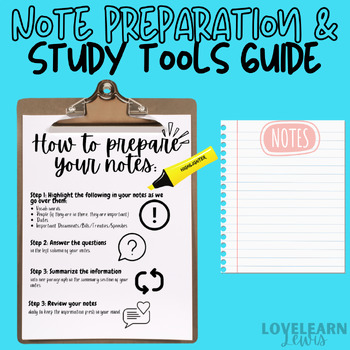
The Learning Trifecta: Preview, Note-taking, and Review

copyright-small Henry Wan, Ph.D.

Learning effectively requires a structured approach. A good study habit includes three essential steps: previewing before class, taking notes during class, and reviewing after class. These are three interconnected and essential steps in the learning process, forming a complete learning cycle. When executed effectively, can significantly enhance your understanding and retention of knowledge.

Previewing Before Class

Before attending a class, students should take time to go through the relevant materials. Previewing helps them get a basic understanding of the topic, identify key points, and formulate any questions they may have.. This preparation not only makes it easier to follow the teacher’s explanations but also enables students to engage more actively in class discussions and absorb new knowledge more effectively.

Taking Notes During Class

During the lesson, taking clear and organized notes is essential. This skill helps students stay focused and systematically organize information. Well-taken notes capture key concepts, important formulas, and explanations that may not be found in textbooks. Writing information in one’s own words enhances understanding and retention, making it easier to review later. Additionally, structured notes serve as a valuable resource for reinforcing learning and preparing for exams.

Reviewing After Class

After class, reviewing the material is crucial for reinforcing what has been learned. Students should go through their notes, clarify any unclear points, and consolidate their knowledge by recalling key concepts and main ideas without referring to their materials. Regular review helps prevent forgetting and promotes a deeper understanding of the subject. Additionally, completing homework assignments and engaging in discussions with classmates can further strengthen their grasp of the material.

Conclusion

These three steps are interconnected and essential for effective learning. Previewing lays the groundwork for understanding new material, note-taking captures key points during the lesson, and reviewing reinforces and solidifies knowledge. By consistently following this cycle, students can enhance their comprehension, retain information more effectively, and improve their academic performance.

Developing this habit not only leads to greater academic success but also cultivates a lifelong ability to learn efficiently. Remember, learning is a continuous journey, not just a destination. By embracing this structured approach and integrating it into your study routine, you can unlock your full potential and achieve your academic goals.

How To Use A Solutions Manual Correctly?

copyright-small Henry Wan, Ph.D.

We have meticulously developed the Solutions Manual to provide detailed, step-by-step solutions for all homework problems. Each problem includes at least one solution, all of which were derived without the use of a calculator to encourage students for developing mathematical reasoning, problem-solving abilities, and creative thinking skills.

In cases where multiple solutions are presented, they are included to highlight key contrasts in problem-solving approaches. These alternative methods help students develop a deeper understanding of mathematical concepts by exploring different perspectives, such as:

  • Algebraic vs. Geometric — Solving problems through symbolic manipulation versus visual or spatial reasoning.
  • Elementary vs. Advanced — Approaching problems using fundamental techniques versus more sophisticated methods.
  • Computational vs. Conceptual — Focusing on numerical calculations versus underlying theoretical principles.
  • Explicit vs. Implicit — Directly solving for unknowns versus deriving solutions through indirect reasoning.
  • Analytic vs. Discrete — Using continuous methods versus discrete, step-by-step reasoning.
  • Forward-Solving vs. Back-Solving — Progressing logically from given information versus working backward from the desired outcome.

Understanding these different approaches helps students become more flexible and adaptable problem solvers, equipping them with the skills necessary for success in mathematical competitions and beyond.

To ensure students use the Solutions Manual as a tool for learning rather than a shortcut to answers, we have written this article, “How to Use a Solutions Manual Correctly?” This guide provides strategies to maximize the manual’s benefits while reinforcing independent problem-solving skills, ultimately fostering deeper comprehension and mathematical growth.

Many of the problems you encounter are subtle or complex, requiring careful thought — and time! — before a clear solution method emerges. The best way to learn is by attempting to solve a problem on your own, even if you don’t succeed at first. This process of grappling with challenges is crucial for deepening your understanding.

Learning mathematics requires a certain amount of “healthy frustration,” which is a natural part of developing problem-solving skills. You may need to try different approaches (some of which may lead nowhere or a dead end) until you find a viable solution. While this process can be time-consuming, it is important to persist without immediately relying on outside help. If you turn to the solutions manual too quickly, you risk missing out on the critical thinking and problem-solving skills that are key to success, particularly in competitive settings like math contests. Simply understanding the solutions provided in the manual does not mean you’ve truly mastered the material!

The solutions manual can be a helpful learning tool if used correctly, but it can also subtly hinder your progress if relied upon too heavily. How you use the manual can significantly affect your learning experience. If you use it prematurely or excessively, you may end up undermining your own efforts to master the material and perform well on contests.

The most important principle to remember is this: Do not consult the solutions manual until you have made a genuine attempt to solve the problem yourself. Ideally, you should use the manual primarily to confirm your answer. In many cases, your solution will align with the one in the manual, but occasionally, you may discover a different approach that is equally correct — or even more efficient — than the one presented. If you find an alternative method, we would love to hear about it! Please send us your solution at mathteam@ivyleaguecenter.org.

If, after a substantial effort, you still can’t find the solution, then it’s appropriate to look at solution offered in the manual. Even then, start by reading only the beginning of the solution to see if you can continue on your own. The goal is not just to arrive at the answer but to fully engage with the process, which will ultimately deepen your understanding and develop your problem-solving.

The goal is not just to reach the answer but to immerse yourself in the process, enhancing your understanding, sharpening your problem-solving skills, and fostering your creative thinking.

The goal is not just to reach the answer but to immerse yourself in the process, enhancing your understanding, sharpening your problem-solving skills, and fostering your creative thinking.

By using the solutions manual in the right way, you will maximize your learning and enhance your ability to solve problems independently — skills that are invaluable in both academic settings and math competitions.

Why Drawing a Good Diagram Is Important to Solve a Geometry Problem?

copyright-small Henry Wan, Ph.D.

Geometry is a branch of mathematics that heavily relies on visualization. Unlike algebra, where equations and numbers dominate problem-solving, geometry problems often involve shapes, angles, measurements, and spatial relationships. One of the most effective tools for tackling geometry problems is a well-drawn diagram. A clear, accurate diagram not only helps in understanding the given information but also reveals hidden relationships that might not be immediately obvious. Below are several reasons why drawing a good diagram is essential when solving geometry problems.

  1. Enhances Understanding of the Problem

A geometry problem often involves complex relationships between points, lines, angles, and shapes. Without a visual representation, these relationships can be difficult to grasp. Drawing a diagram translates abstract descriptions into concrete images, making it easier to grasp the given information and see how different elements interact. By sketching the diagram, you can identify key points, label known values, and ensure that you correctly interpret the problem statement. This step is especially useful for word problems that describe geometric figures verbally rather than presenting them visually.

  1. Helps Identify Important Geometric Properties

When solving a geometry problem, identifying key values and conditions is essential for finding the solution. Drawing a diagram allows one to clearly label known angles, lengths, and relationships such as parallel lines, perpendicular bisectors, or congruent triangles. This visual representation helps organize information systematically, reducing the risk of overlooking important details. More importantly, a well-drawn diagram highlights crucial geometric properties such as symmetry, parallelism, congruence, and similarity, which often hold the key to an efficient solution. For example, a carefully constructed diagram might reveal that two triangles are similar, enabling the straightforward application of proportional reasoning.

  1. Reduces Errors and Misinterpretations

Without a diagram, it is easy to misread a problem or overlook critical details, increasing the risk of misinterpreting given information or making calculation errors. A well-drawn diagram serves as a visual checkpoint, helping problem-solvers verify their steps and ensure their reasoning aligns with the actual figure. Incorrect assumptions can often be identified quickly by reviewing a clearly labeled diagram. Additionally, a diagram ensures that angles, side lengths, and relationships are accurately represented, minimizing the chances of computational or logical errors.

  1. Facilitates the Application of Theorems and Formulas

Many geometric theorems, such as the Pythagorean Theorem, the Angle Bisector Theorem, the properties of similar triangles, the properties of circles, or the sum of interior angles in a polygon, become easier to apply when visualized in a diagram. A well-drawn figure highlights key elements like right angles, perpendicular bisectors, and tangent lines, guiding the solver to the correct approach.

  1. Encourages Logical Thinking and Pattern Recognition

A diagram allows problem-solvers to explore different approaches and recognize patterns that may not be immediately apparent from the text alone. For example, extending a line, drawing an auxiliary shape, or marking equal segments and congruent angles can reveal insights that simplify the problem. Many competition-level geometry problems become significantly easier with a well-placed additional construction.

Additionally, a lot of geometry problems require logical reasoning, and a diagram serves as a structured visual aid to support step-by-step analysis. It helps track the flow of arguments, ensuring that conclusions logically follow from the given premises.

  1. Saves Time in Problem Solving

In competitive math settings, time is a critical factor. A good diagram often leads to a quicker solution by allowing direct visualization of relationships rather than relying on lengthy calculations. Instead of writing out multiple equations, a simple observation in a well-drawn diagram might provide an instant shortcut to the answer.

How to Draw an Effective Diagram?

To maximize the benefits of a diagram, consider the following tips:

  • Use a ruler (if time allows) or draw neatly by hand. A clear, proportional diagram prevents misinterpretation.
  • Label key points, angles, and lengths. This helps keep track of known values and relationships.
  • Mark congruent or similar segments. Highlighting these properties can make important relationships stand out.
  • Add auxiliary lines if necessary. Sometimes, drawing an extra line, such as a perpendicular or a median, simplifies the problem significantly.
  • Avoid cluttering the diagram. Too many unnecessary details can lead to confusion rather than clarity.

Conclusion

Drawing a good diagram is a fundamental skill in solving geometry problems. It enhances understanding, organizes key information, reduces errors, reveals crucial properties, displays patterns, supports logical reasoning, and facilitates the application of theorems. Whether tackling a school assignment, preparing for math competitions, or solving complex geometric proofs, investing a few moments in creating an accurate and well-structured diagram can be the key to success. By developing strong diagram-drawing habits, students can approach geometry problems with confidence and efficiency.

maausasf

How to Prepare for the AMC 10

AMC 10-2017

The AMC 10 is one of the most prestigious high school Math competitions in the USA and the world. It provides a way for students interested in math to use their knowledge and skills to experience the joy of competiting against others.

The best way to prepare for the AMC 10 is to attend our AMC 10/12 training program. This is a comprehensive one-year program offering an entire course to cover all the topics that will be tested on the AMC 10/12. Students who participate in our training program will have free access to video recordings of every single class. Students who are not able to attend our training program can also purchase our course materials and recordings, including tutorial handouts, recorded videos, detailed solutions of homework problems, and mock tests, to learn all our course content. Starting each November just after the AMC 10/12 contests, we offer these sessions in sequence, as shown below.

Sessions Topics Course Outlines
Winter Session Arithmetic and Algebra Course Outline
Spring Session Geometry Course Outline
Summer Session Number Theory, and Counting and Probability Course Outline
Fall Session Comprehensive Problem Reasoning and Solving for AMC 10/12 Course Outline

It imust be stressed that in each session, no old material is repeated. Each session contains new, unique material, as well as a brand new comprehensive art of problem solving. We strongly believe that learning should be a long-term process of acquiring new material, information, and knowledge.

The easiest way to prepare is to practice solving previous official AMC 10 problems. Click the links below to visit our Practice Page for:

More articles about math competitions:

 maausasf

How to Prepare for the AMC 12

AMC 12-New

The AMC 12 is one of the most prestigious high school Math competitions in the USA and the world. It is a great way for younger students to gain valuable experience with math competitions and develop powerful problem solving skills.

The best way to prepare for the AMC 12 is to attend our AMC 10/12 training program. This is a well developed, comprehensive, systematic one-year program offering an entire course to cover all the topics that will be tested on the AMC 12. Students who participate in our training program will have free access to video recordings of every single class. Students who are not able to attend our training program can also purchase our course materials and recordings, including tutorial handouts, recorded videos, detailed solutions of homework problems, and mock tests, to learn all our course content. Starting each November just after the AMC 12 contests, we offer these sessions in sequence, as shown below.

Sessions Topics Course Outlines
Winter Session Arithmetic and Algebra Course Outline
Spring Session Geometry Course Outline
Summer Session Number Theory, and Counting and Probability Course Outline
Special Summer Session Precalculus Course Outline
Fall Session Comprehensive Problem Reasoning and Solving for AMC 10/12 Course Outline

It is very worth emphasizing that in each session, no old material is repeated. Each session contains new, unique material, as well as a brand new comprehensive art of problem solving. We strongly believe that learning should be a long-term process of acquiring new material, information, and knowledge.

The easiest way to prepare is to practice solving previous official AMC 12 problems. Click the links below to visit our Practice Page for:

More articles about math competitions:

 maausasf

How to Prepare for the AIME

aime2

The AIME is a prestigious math competition whose successful completion provides a path towards the International Mathematics Olympiad (IMO), the most premier international high school level problem solving contest. It provides the exceptional students who are invited to take it with yet another opportunity to challenge their mathematical abilities, and means towards furthering mathematical development and interest.

The best way to prepare for the AIME is to attend our AIME training program. This is a well developed, comprehensive, systematic one-year program offering an entire course to cover all the topics that will be tested on the AIME. The course is thoughtfully structured to delve into advanced mathematical concepts and hone problem-solving strategies and arts, with a particular emphasis on the kinds of challenges commonly encountered in questions 5-12 of the AIME, which are renowned for their moderate level of difficulty.

Students who participate in our training program will have free access to video recordings of every single class. Students who are not able to attend our training program can also purchase our course materials and recordings, including tutorial handouts, recorded videos, detailed solutions of homework problems, and mock tests, to learn all our course content. Starting each February just after the AIME contest, we offer these sessions in sequence, as shown below.

Sessions Topics Course Outlines
Spring Session Advanced Algebra Course Outline
Summer Session Combinatorics and Number Theory Course Outline
Fall Session Advanced Geometry Course Outline
Winter Session Comprehensive Problem Reasoning and Solving for AIME Course Outline

It must be pointed out that in each session, no old material is repeated. Each session contains new, unique material, as well as a brand new comprehensive art of problem solving. We strongly believe that learning should be a long-term process of acquiring new material, information, and knowledge.

The easiest way to prepare is to practice solving previous official AIME problems. Click the links below to visit our Practice Page for:

  • Archived Exams: A full archive of every year’s AIME I and II tests. Students can take a practice exam that includes the real questions, timing, and scoring of each exam.
  • AIME Mock Tests: Practice exams are also available for purchase. Our team developed 20 different sets of AIME mock tests for students to practice with. They are intended to mimic the actual AIME exam with 15 brand new questions all calibrated to be at the same style and difficulty level as the real AIME. In particular, they are peer-reviewed by at least two experts in math education outside our center. These simulated tests are extremely helpful for assessing students’ level of preparation for the AIME. Our team also devised detailed solutions to all 15 problems on our 20 sets of AIME mock tests.  All these mock tests and their detailed solutions are a golden fountain of knowledge for our students, who are the ultimate beneficiaries. Surprisingly, some problems in our previous mock tests appeared in the recent official AIME tests.

More articles about math competitions:

Ivy League Education Center | Education is not the filling of a pail, but  the lighting of a fire. Genius is 1% inspiration and 99% perspiration!

There are many math competitions in the United States. Of those, only

AMC → AIME → USAMO sequence

would take you to the IMO (International Math Olympiad), the highest level math competition for high school students in the world!

AMC-AIME-USAMO-IMOAMC-General

Featured Math Instructors

 maausasf