Online Middle School Competitive Math (for 4th to 7th Graders) Special Winter Session Starting Nov. 23

The period of time between 4th-7th grade is most critical to the development of students’ mathematical fascinations, interests, and skills!

See: 2018 AMC 8 Results Just Announced — Three Students Received Perfect Scoresmath-contest

Purpose: To prepare for math competitions, such as

mathequalsawesomelogo

Special Winter Session
8 Weekends (Eastern Time: 6:00 – 8:00 pm), Total: 16 Hours
11/23,  12/7,  12/14 (Monthly Mock Test/Review)
1/4,  1/11,  1/18 (Monthly Mock Test/Review)
1/25, 2/1 (Final Mock Test/Review)

Online Registration is now open! Click HERE to register and pay.

Tuition (including all materials)
New Students: $520  Buy Now Button
Returning Students: $505  Buy Now Button

Click HERE to see payment and refund policy.

You are very welcome to sign up for our online course which offers a quick, efficient way for students to interact with teachers over long distance. We use the Google Meet to video chat and easily connect with students to teach them our tricks and shortcuts to getting an amazing score on their contests, as well as offer them our guidance and support. Students can ask questions face-to-face, and can complete problems with the supervision of our teachers/coaches. Click HERE to see detailed instruction.

commitment to the whole course can maximize the benefit of learning all the math ideas, methods, strategies, tactics, skills, and techniques.

  • This is a live class, not a pre-recorded one. Instructors will ask students questions, and students can also ask questions during the class or email their questions to instructors after class.
  • We record all of our lessons so that our students can watch them after class for review and self-study.
  • We will help students gain a deeper understanding of the fundamental math concepts, build a solid foundation in math, and develop the critical thinking and problem-solving skills different from those in the school classes, motivation, and perseverance for reaching their full potential.
  • We will focus on efficient tricks, shortcuts, and strategies to solve competitive math problems as well as test-taking tactics.
  • The emphasis of this class will be on comprehensive problem-solving, which is very common in competitive math, but is not included in school curriculum.
  • We will utilize a highly effective teaching model as described in the article: Small-sized Class Instruction-focused Model.

Instructors: Dr. Henry Wan

Contact Information:
Ivy League Education Center
Tel:  301-922-9508                Email:  chiefmathtutor@gmail.com

Levels: Grades 4-7

Specific Goal of the AMC 8:Math-Competitions

To become part of the top 5% of scorers on the 2020 AMC 8, and then receive National Honor Roll Certificates.

Specific Goal of the MathCounts:

To become one of the top winners in the individual competition at the school level and then advance to the chapter competition.

AMC-General

There are many math competitions in the United States. Of those, only

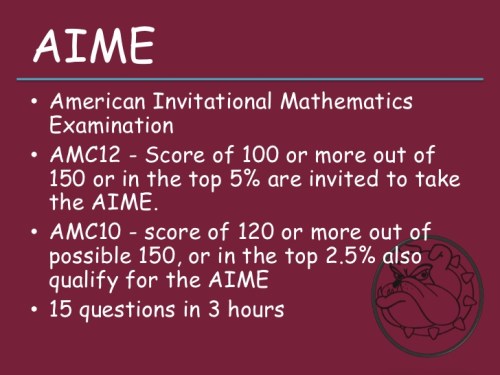
AMC → AIME → USAMO sequence

would take you to the IMO (International Math Olympiad), the highest level math competition for high school students in the world!

Description: Our curriculum focuses on advancing the mathematical skills of 4th-7th graders to prepare them for math competitions, such as Mathcounts, AMC 8, Math Olympiads for Elementary and Middle Schools (MOEMS), Math Kangaroo, and Math League. A variety of contest questions are used to teach students strategies to solve problems and help students prepare for the competitions. These problems stimulate their interest and enthusiasm for critical thinking and problem solving, broaden their mathematical intuition, and develop their brainpower. The topics taught in this class are not covered in regular school math classes, allowing our students to stay one step ahead.

Benefits:

  • 8 tutorial handouts (400 pages) developed by Dr. Henry Wan and 500 new problems similar to AMC 8 level from the licensed AMC Database
  • 3 FREE mock tests, each of which has 25 questions taken from the licensed AMC Database. Mock tests are calibrated to be at the same difficulty level as the real AMC 8. 
  • FREE registration for the AMC 8 Contest on Tuesday, November 17, 2020. 

AMC Logo

Although this year’s AMC 8 contest has been held on November 12, 2019, we must prepare in advance for the 2020 AMC 8. As the great scientist Louis Pasteur said, “Chance favors only the prepared mind.” Those who strive to prepare early, and work hard are the ones who achieve the best results. The AMC is a complex math competition that requires dedication and focus. Therefore, the earlier our students start preparing, the better their scores will be. 

Read more at:

Class Outline:
We will focus on efficient tricks, shortcuts, and strategies to solve competitive math problems as well as test-taking tactics. The emphasis of this class will be on comprehensively problem-solving which is the most important to competitive math.

Class Date Topic
1 11/23, Sat Problem solving in quadratic equations and Vieta’s formulas
2 12/7, Sat Geometric interpretation of quadratic equations
3 12/14, Sat Special factorizations and Special Factoring Trick –– completing the rectangle
4 1/4, Sat Newly defined operations and functions
5 1/11, Sat Primes and efficient strategies for testing primality
6 1/18, Sat Finding the last two digits of a large power
7 1/25, Sat Coordinate geometry
8 2/1, Sat Using the stars and bars method to solve AMC problems associated with number theory, counting, and probability
We reserve the right to adjust the teaching content and method according to students’ understanding and comprehension of new knowledge.

Mock Test:

Three simulated tests will help students assess their level of preparation for the Math Competitions. The test consists of 25 questions similar to AMC 8/MathCounts level from the licensed AMC Database, and is intended to mimic an actual math competition exam. After attempting the test, students get answers, explanations, and a detailed score report and wise performance summary.

Homework
On average, at least 2 hours per week, as described in the article: Homework assignments are a fundamental part of our courses. Click HERE to see a typical homework sample we developed. Each week, we will carefully review and check 3 students’ homework, and correct any mistakes. The next week, we will check another 3 students’ homework, and this will continue on a rotational basis until all students have had their homework checked at least once and the cycle will start again. Based on the work of the 3 students that week, we will provide the those 3 students with individualized proposal and support. More details can be found in the article: Homework Correction is very Important — We Give an Extensive Correction of the Incorrect Answers of All Homework.

lets-do-the-math-1-728

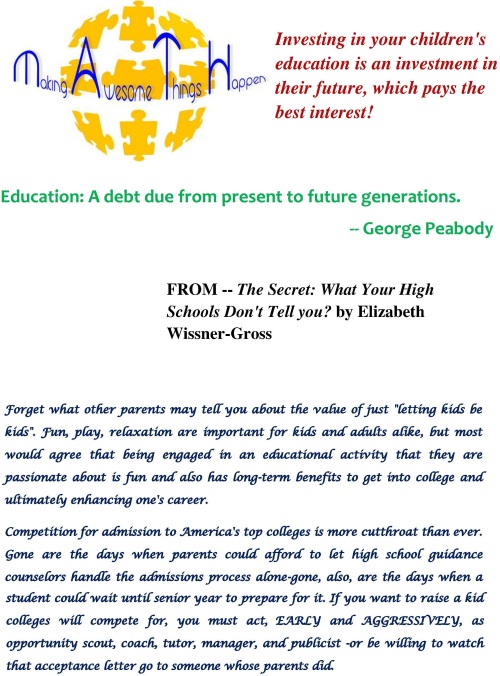
We have to face the simple truth that to do well on these grueling contests, we will need to practice. Just like it is for sports and music, the key to success is repetition and practice. We strongly believe in effort and the malleability of intelligence. Intelligence can be enhanced through effort. People can develop impressive levels of expertise through hard work and practice. Effort and persistence are the keys to success. Hard work always pays off: practice makes perfect!

All problems from past AMC 10 exams (2000-2019) and MathCounts (1990–2019) form our “big data” system. Based on artificial intelligence (AI), machine learning, and deep learning, we devised a data mining and predictive analytics tool for math problem similarity searching. Using this powerful tool, we examined the types, styles, frequencies, characteristics, and traits of questions in all these materials, and then completely “decoded” the AMC and MathCounts. We will show all the “secret code” cracked from the above big data to students, and teach them to totally grasp and “control” the AMC and MathCounts. For all questions on the recent AMC/MathCounts contests, we can find their “ancestors” and “roots” from the old AMC/MathCounts problems. Therefore, the best way to prepare for the contest is to practice by solving old AMC/MathCounts problems.

https___img_evbuc_com_https%253A%252F%252Fcdn_evbuc_com%252Fimages%252F14806251%252F149172474682%252F1%252Foriginal

Main Purpose:

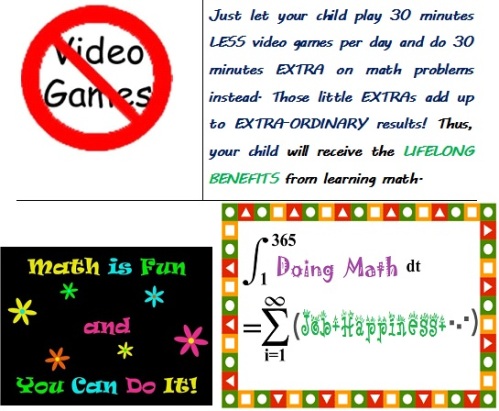
Our main purpose is to help our students gain deeper understanding of the fundamental math concepts, build a solid foundation in math, and develop the critical thinking and problem-solving skills that are so valuable to success in any career. We are big believers in the FUNDAMENTALS! Our students will receive the LIFELONG BENEFITS from learning math.

Regardless of his/her math level, each student will have the opportunity to learn math in a fun, friendly, cooperative, supportive learning environment. The most important thing is to have fun.

Bronze_medal

Our Students

In 2019, we had 4 students qualified for the USAMO and 4 Students for the USAJMO.

  • Of the 280 USA Math Olympiad national qualifiers, 4 are our students: Luke C., Zipeng L., Sameer P., and Peter P.
  • Of the 235 USA Junior Math Olympiad national qualifiers, 4 are our students: Michael H., Noah W., Holden W., and Isabella Z.

Read more at: 2019 USAMO and USAJMO Qualifiers Announced — Four Students Qualified for the USAMO and Four Students for the USAJMO

In 2019, we had 76 students who are qualified to take the AIME either through the AMC 10A/12A or AMC 10B/12B. One of our students was among the 22 Perfect Scorers worldwide on the AMC 10A: Noah W.and one of our students were among the 10 Perfect Scorers worldwide on the AMC 12B: Kenneth WVery impressively, 32 middle schoolers and 7 elementary schoolers qualified for the AIME!

In 2018, we had 64 students who obtained top scores on the AMC 8 contest!

  • of our students were among the top 44 National Winners (Perfect Scorers): Eric B., Kevin Y., and Isabella Z.
  • 40 students received National Distinguished Honor Roll Certificates awarded to top 1% test takers.
  • 21 students received National Honor Roll Certificates awarded to top 5% test takers.
  • 64 out of our 66 students (96.5%) received National Awards for the AMC 8 from the Mathematical Association of America

Read more at: 2018 AMC 8 Results Just Announced — Three Students Received Perfect Scores

In 2018, we had 73 students who are qualified to take the AIME either through the AMC 10A/12A or AMC 10B/12B. Two of our students were among the 35 Perfect Scorers worldwide on the AMC 10A: Austen M. and Jason W.  and two of our students were among the 21 Perfect Scorers worldwide on the AMC 12B: Kaan D. and Edward W. Remarkably, 11 middle schoolers and 2 elementary schoolers qualified for the AIME!

In 2017, we had 63 students who earned top scores on the AMC 8 contest!

  • of our students were among the top 75 National Winners (Perfect Scorers).
  • 34 students received National Distinguished Honor Roll Certificates awarded to top 1% test takers.
  • 22 students received National Honor Roll Certificates awarded to top 5% test takers.
  • 63 out of our 65 students (97%) received National Awards for the AMC 8 from the Mathematical Association of America

Read more at: 2017 AMC 8 Results Just Announced — Seven Students Received Perfect Scores

In 2017, we had 61 students who are qualified to take the AIME either through the AMC 10A/12A or AMC 10B/12B. One of our students was among the 28 Perfect Scorers worldwide on the AMC 10A: Austen M., and two of our students were among the 65 Perfect Scorers worldwide on the AMC 10B: Ashwin A. and Brad Z. Remarkably, eight middle schoolers and one elementary schooler qualified for the AIME, which is geared toward high school students. Very impressively, Bryan Z., a 6th grader, gained a score of 132 out of 150 on the AMC 10B.Read more at: 2017 AIME Qualifiers Announced — 61 Students Qualified for the AIME

In 2016, we had 36 students who are qualified to take AIME either through AMC 10A/12A or AMC 10B/12B. One of our students was among the 23 Perfect Scorers worldwide on the AMC 10A: Joel (Junyao) T. Particularly, seven middle schoolers and one elementary schooler qualified for the AIME, which is geared toward high school students. Pravalika P., a 6th grader, got a 115.5 out of 150 on the AMC10B, which is very impressive. Read more at: 2016 AIME Qualifiers Announced — 36 Students Qualified for AIME

2011 – 2015: In total, 37 students scored above 120 on the American Mathematics Contest 10 (AMC 10) and qualified for the American Invitational Mathematics Examination (AIME); 26 students scored above 100 on the American Mathematics Contest 12 (AMC 12) and qualified for the American Invitational Mathematics Examination (AIME); 3 students qualified for the USA Mathematical Olympiad (USAMO), the highest level of math competition for high school students in the USA

2011 – 2015: In total, 23 students achieved perfect scores of 28 on the AMC 8

Read more at: Notable Achievements of Our Students
AAEAAQAAAAAAAAKeAAAAJDkzYTk2ZjE5LTk1YWQtNDBkNy1hZDhjLTVjOTA2YWQ2NmQ2Mw

Our Uniqueness

We have a long history of close collaboration with the MAA‘s American Mathematics Competitions (AMC), which are dedicated to strengthening the mathematical capabilities of our nation’s youth, and are the first of a series of competitions in high school mathematics that determine the United States team for the International Mathematical Olympiad (IMO).

We are only one in the Washington DC metropolitan area to offer elementary, middle, and high-school level competition math courses. Our students have received top scores and awards at prestigious national math competitions.

Great Benefits of Math Competitions

In an increasingly competitive college application pool, the process of mastering math skills through our courses and participating in the American Math Competitions will help students strengthen and diversify their extracurricular activities. These contests can motivate students’ interest and passion in math, and they can discover their talent through solving challenging problems different from those in the school classes. Many top colleges also request AMC scores as part of the college application process. Both MIT and Caltech have entry blanks on their official admission application forms for the applicant to enter their best AMC and AIME scores. Ivy League Colleges and Stanford ask for to the AMC and AIME scores in their Supplement to the Common Application Forms. Your children deserve the chance to list these scores on their applications! Good AMC scores will greatly enhance admission opportunities for students to elite colleges.

Read more:

2014124135627709

Click HERE find out more about Math Competitions!sat-logo-3

Click HERE to find out more about SAT Prep!

education priceless treasure3HERE

Online Summer Evening Intensive AIME Prep Course Starting July 22

Summer is the golden time to develop students’ math skills and prepare for the American Invitational Mathematics Examination!

See: 2019 USAMO and USAJMO Qualifiers Announced — Four Students Qualified for the USAMO and Four Students for the USAJMO

Two Weeks: 7/22 – 8/2 (Eastern Time: 7:00 – 9:00 pm), Total: 20 Hours
7/22, 7/23, 7/24, 7/25, 7/26 (Midterm Mock Test/Review)
7/29, 7/30, 7/31, 8/1, 8/2 (Final Mock Test/Review)

Online Registration is now open! Click HERE to register and pay.

Tuition (including all materials)
New Students: $1000  Buy Now Button
Returning Students: $960  Buy Now Button

commitment to the whole course can maximize the benefit of learning all the math ideas, methods, strategies, tactics, skills, and techniques.

Click HERE to see payment and refund policy.

aime2
This program has been carefully designed for the students with a busy daytime schedule for internships or other activities. These students usually have higher expectation for their American Invitational Mathematics Examination (AIME) scores. While enriching their resume through exciting internship experience, honing the test skill for AIME becomes even more critical.

The AIME is used to determine qualification for the United States of America Mathematical Olympiad (USAMO). There are many math competitions in the United States. Of those, only AMC → AIME → USAMO sequence would take you to the IMO (International Math Olympiad), the highest level math competition for high school students in the world.

You are very welcome to sign up for our online course which offers a quick, efficient way for students to interact with teachers over long distance. We use the Google Meet to video chat and easily connect with students to teach them our tricks and shortcuts to getting an amazing score on their contests, as well as offer them our guidance and support. Students can ask questions face-to-face, and can complete problems with the supervision of our teachers/coaches. Click HERE to see detailed instruction.

Instructors:

Contact Information:
Ivy League Education Center
Tel:  301-922-9508     or        240-780-8828
Email:  chiefmathtutor@gmail.com

Purpose: To prepare for the AIME I on Wednesday, March 11, 2020 or AIME II on Thursday, March 19, 2020

ObjectivesAIME-Logo

  • Improve student scores by working on both fundamental theorems and ideas
  • Develop and foster creative problem solving strategies
  • Make the USA(J)MO!!!

For Whom?
This AIME course is aimed at those students with AMC 10/12 scores of 100+ to students who have scored around 4 on the AIME.

AIME_RGB

What?
This class will focus mostly on building strong basics in the five main pillars of Combinatorics, Number Theory, Geometry, Algebra, and Probability. The goal is for students to obtain the mental agility required to tackle these complex problems and hopefully get them within and past range of qualification for the USAMO and USAJMO, or around 9 problems.

How?
Focus on basic concepts and essential knowledge before moving on developing the skills and intuition to find and pursue good lines of attack for complex problems.

Class Outline:
In AMIE Prep Class, we will focus on efficient tricks, shortcuts, and strategies to solve AIME problems as well as test-taking tactics.

Class Outline:
In AMIE Prep Class, we will focus on efficient tricks, shortcuts, and strategies to solve AIME problems as well as test-taking tactics.

Class Date Topic
1 7/22, Mon Algebraic Equations: Distance-Rate-Time Problems, Systems of Nonlinear Equations
2 7/23, Tue Combinatorics: Partitions and Bijections, Generating Functions, Combinatorial Identities, the Inclusion-Exclusion Principle, the pigeonhole principle
3 7/24, Wed Probability: Properties of Probability Functions, Geometric probability, Algebraic Probability, Tournaments, Socks, and Dice
4 7/25, Thu Number Theory: Fundamental Theorem of Arithmetic, Greatest Common Divisor and Least Common Multiple, Modular Arithmetic, Divisibility Tests
5 7/26, Fri Diophantine Equations, Systems of Diophantine Equations, Quadratic Diophantine and Pell Equations, Special Factoring Trick –– Completing the Rectangle
6 7/29, Mon Sequences and Series: Arithmetic Series, Geometric Series and the Telescope Tool, Tiling and the Fibonacci Recurrence, The Catalan Recurrence
7 7/30, Tue Logarithmic and Trigonometric Functions: Putting Logarithmic, Exponential,  and Trigonometric Functions Together
8 7/31, Wed Complex Numbers and Polynomials: The Algebra of Complex Numbers, The Geometry of Complex Numbers, Basic Definitions and Facts about Polynomials, Polynomials with Complex Roots
9 8/1, Thu Plane Geometry: Triangle Geometry, Circle Geometry, Geometrical Concepts in the Complex Plane
10 8/2, Fri Spatial Geometry: Rectangular Boxes, Cylinders, Cones, Spheres, Tetrahedra, and Pyramids

Benefits:

  • 10 tutorial handouts (>350 pages) developed by Dr. Henry Wan and 500 new problems at the AIME level from the licensed AMC Database
  • 2 FREE mock tests that are intended to mimic an actual math competition exam, each of which has 15 questions similar to the AIME level taken from the licensed AMC Database. These simulated tests help students assess their level of preparation for the Math Competitions. After attempting the test, students get answers, explanations, and a detailed score report and wise performance summary.

Homework: At least 1 hour of homework per class. Students are expected to complete all of the previous AIME contests in the past 10 years, which is over 60 hours of practice. Our instructors are open to questions on any previous AIMEs.
AIME_large

All problems from all of the previous 54 AIME contests (1983-2019) form our “big data” system. We have used data mining and predictive analytics to examine the types and the frequencies of questions in all these materials, and then completely “decoded” the AIME. We will show all the “secret code” cracked from the above big data to students, and teach them to totally grasp and “control” the AIME. For all questions on the recent AIME contests, we can find their “ancestors” and “roots” from the old AIME problems. Therefore, the best way to prepare for the contest is to practice by solving old AIME problems.

Bronze_medal

Our Students

In 2019, we had 4 Students Qualified for the USAMO and 4 Students for the USAJMO.

  • Of the 280 USA Math Olympiad national qualifiers, 4 are our students: Luke C., Zipeng L., Sameer P., and Peter P.
  • Of the 235 USA Junior Math Olympiad national qualifiers, 4 are our students: Michael H., Noah W., Holden W., and Isabella Z.

Read more at: 2019 USAMO and USAJMO Qualifiers Announced — Four Students Qualified for the USAMO and Four Students for the USAJMO

In 2019, we had 76 students who are qualified to take the AIME either through the AMC 10A/12A or AMC 10B/12B. One of our students was among the 22 Perfect Scorers worldwide on the AMC 10A: Noah W.and one of our students were among the 10 Perfect Scorers worldwide on the AMC 12B: Kenneth WVery impressively, 32 middle schoolers and 7 elementary schoolers qualified for the AIME!

In 2018, we had 64 students who obtained top scores on the AMC 8 contest!

  • of our students were among the top 44 National Winners (Perfect Scorers): Eric B., Kevin Y., and Isabella Z.
  • 40 students received National Distinguished Honor Roll Certificates awarded to top 1% test takers.
  • 21 students received National Honor Roll Certificates awarded to top 5% test takers.
  • 64 out of our 66 students (96.5%) received National Awards for the AMC 8 from the Mathematical Association of America

Read more at: 2018 AMC 8 Results Just Announced — Three Students Received Perfect Scores

In 2018, we had 73 students who are qualified to take the AIME either through the AMC 10A/12A or AMC 10B/12B. Two of our students were among the 35 Perfect Scorers worldwide on the AMC 10A: Austen M. and Jason W.  and two of our students were among the 21 Perfect Scorers worldwide on the AMC 12B: Kaan D. and Edward W. Remarkably, 11 middle schoolers and 2 elementary schoolers qualified for the AIME!

In 2017, we had 63 students who earned top scores on the AMC 8 contest!

  • of our students were among the top 75 National Winners (Perfect Scorers).
  • 34 students received National Distinguished Honor Roll Certificates awarded to top 1% test takers.
  • 22 students received National Honor Roll Certificates awarded to top 5% test takers.
  • 63 out of our 65 students (97%) received National Awards for the AMC 8 from the Mathematical Association of America

Read more at: 2017 AMC 8 Results Just Announced — Seven Students Received Perfect Scores

In 2017, we had 61 students who are qualified to take the AIME either through the AMC 10A/12A or AMC 10B/12B. One of our students was among the 28 Perfect Scorers worldwide on the AMC 10A: Austen M., and two of our students were among the 65 Perfect Scorers worldwide on the AMC 10B: Ashwin A. and Brad Z. Remarkably, eight middle schoolers and one elementary schooler qualified for the AIME, which is geared toward high school students. Very impressively, Bryan Z., a 6th grader, gained a score of 132 out of 150 on the AMC 10B.Read more at: 2017 AIME Qualifiers Announced — 61 Students Qualified for the AIME

In 2016, we had 36 students who are qualified to take AIME either through AMC 10A/12A or AMC 10B/12B. One of our students was among the 23 Perfect Scorers worldwide on the AMC 10A: Joel (Junyao) T. Particularly, seven middle schoolers and one elementary schooler qualified for the AIME, which is geared toward high school students. Pravalika P., a 6th grader, got a 115.5 out of 150 on the AMC10B, which is very impressive. Read more at: 2016 AIME Qualifiers Announced — 36 Students Qualified for AIME

2011 – 2015: In total, 37 students scored above 120 on the American Mathematics Contest 10 (AMC 10) and qualified for the American Invitational Mathematics Examination (AIME); 26 students scored above 100 on the American Mathematics Contest 12 (AMC 12) and qualified for the American Invitational Mathematics Examination (AIME); 3 students qualified for the USA Mathematical Olympiad (USAMO), the highest level of math competition for high school students in the USA

2011 – 2015: In total, 23 students achieved perfect scores of 28 on the AMC 8

Read more at: Notable Achievements of Our Students

AAEAAQAAAAAAAAKeAAAAJDkzYTk2ZjE5LTk1YWQtNDBkNy1hZDhjLTVjOTA2YWQ2NmQ2Mw

Our Uniqueness

We have a long history of close collaboration with the MAA‘s American Mathematics Competitions (AMC), which are dedicated to strengthening the mathematical capabilities of our nation’s youth, and are the first of a series of competitions in high school mathematics that determine the United States team for the International Mathematical Olympiad (IMO).

We are only one in the Washington DC metropolitan area to offer elementary, middle, and high-school level competition math courses. Our students have received top scores and awards at prestigious national and math competitions.

We have extracted 5,000 brand new problems at the level of the AIME from the licensed AMC Database. In addition, we have also collected all AMC8/10/12 and AIME Official Solutions as shown in the article “American Mathematics Competitions (AMC) Materials.” All these materials have formed a golden resource for our students, who are the ultimate beneficiaries.

2014124135627709

Click HERE find out more about Math Competitions!sat-logo-3

Click HERE to find out more about SAT Prep!
beckmathclub-19-728

aime

Aime_hi_res_logo_colour

logo-aime logoaime2

education priceless treasure

Summer Evening Intensive AIME Prep Course Starting July 22

Summer is the golden time to develop students’ math skills and prepare for the American Invitational Mathematics Examination!

See: 2019 USAMO and USAJMO Qualifiers Announced — Four Students Qualified for the USAMO and Four Students for the USAJMO

Two Weeks: 7/22 – 8/2 (Eastern Time: 7:00 – 9:00 pm), Total: 20 Hours
7/22, 7/23, 7/24, 7/25, 7/26 (Midterm Mock Test/Review)
7/29, 7/30, 7/31, 8/1, 8/2 (Final Mock Test/Review)

Tuition: $1000 (including all materials)

Online Registration is now open! Click HERE to register.

aime2
This program has been carefully designed for the students with a busy daytime schedule for internships or other activities. These students usually have higher expectation for their American Invitational Mathematics Examination (AIME) scores. While enriching their resume through exciting internship experience, honing the test skill for AIME becomes even more critical.

The AIME is used to determine qualification for the United States of America Mathematical Olympiad (USAMO). There are many math competitions in the United States. Of those, only AMC → AIME → USAMO sequence would take you to the IMO (International Math Olympiad), the highest level math competition for high school students in the world.

commitment to the whole course can maximize the benefit of learning all the math ideas, methods, strategies, tactics, skills, and techniques.

Click HERE to see payment and refund policy.

Instructors:

Locations:
13902 Bromfield Road, Germantown, MD 20874

Contact Information:
Ivy League Education Center
Tel:  301-922-9508     or        240-780-8828
Email:  chiefmathtutor@gmail.com

Purpose: To prepare for the AIME I on Wednesday, March 11, 2020 or AIME II on Thursday, March 19, 2020

ObjectivesAIME-Logo

  • Improve student scores by working on both fundamental theorems and ideas
  • Develop and foster creative problem solving strategies
  • Make the USA(J)MO!!!

For Whom?
This AIME course is aimed at those students with AMC 10/12 scores of 100+ to students who have scored around 4 on the AIME.

AIME_RGB

What?
This class will focus mostly on building strong basics in the five main pillars of Combinatorics, Number Theory, Geometry, Algebra, and Probability. The goal is for students to obtain the mental agility required to tackle these complex problems and hopefully get them within and past range of qualification for the USAMO and USAJMO, or around 9 problems.

How?
Focus on basic concepts and essential knowledge before moving on developing the skills and intuition to find and pursue good lines of attack for complex problems.

Class Outline:
In AMIE Prep Class, we will focus on efficient tricks, shortcuts, and strategies to solve AIME problems as well as test-taking tactics.

Class Outline:
In AMIE Prep Class, we will focus on efficient tricks, shortcuts, and strategies to solve AIME problems as well as test-taking tactics.

Class Date Topic
1 7/22, Mon Algebraic Equations: Distance-Rate-Time Problems, Systems of Nonlinear Equations
2 7/23, Tue Combinatorics: Partitions and Bijections, Generating Functions, Combinatorial Identities, the Inclusion-Exclusion Principle, the pigeonhole principle
3 7/24, Wed Probability: Properties of Probability Functions, Geometric probability, Algebraic Probability, Tournaments, Socks, and Dice
4 7/25, Thu Number Theory: Fundamental Theorem of Arithmetic, Greatest Common Divisor and Least Common Multiple, Modular Arithmetic, Divisibility Tests
5 7/26, Fri Diophantine Equations, Systems of Diophantine Equations, Quadratic Diophantine and Pell Equations, Special Factoring Trick –– Completing the Rectangle
6 7/29, Mon Sequences and Series: Arithmetic Series, Geometric Series and the Telescope Tool, Tiling and the Fibonacci Recurrence, The Catalan Recurrence
7 7/30, Tue Logarithmic and Trigonometric Functions: Putting Logarithmic, Exponential,  and Trigonometric Functions Together
8 7/31, Wed Complex Numbers and Polynomials: The Algebra of Complex Numbers, The Geometry of Complex Numbers, Basic Definitions and Facts about Polynomials, Polynomials with Complex Roots
9 8/1, Thu Plane Geometry: Triangle Geometry, Circle Geometry, Geometrical Concepts in the Complex Plane
10 8/2, Fri Spatial Geometry: Rectangular Boxes, Cylinders, Cones, Spheres, Tetrahedra, and Pyramids

Benefits:

  • 10 tutorial handouts (>350 pages) developed by Dr. Henry Wan and 500 new problems at the AIME level from the licensed AMC Database
  • 2 FREE mock tests that are intended to mimic an actual math competition exam, each of which has 15 questions similar to the AIME level taken from the licensed AMC Database. These simulated tests help students assess their level of preparation for the Math Competitions. After attempting the test, students get answers, explanations, and a detailed score report and wise performance summary.

Homework: At least 1 hour of homework per class. Students are expected to complete all of the previous AIME contests in the past 10 years, which is over 60 hours of practice. Our instructors are open to questions on any previous AIMEs.
AIME_large

All problems from all of the previous 54 AIME contests (1983-2019) form our “big data” system. We have used data mining and predictive analytics to examine the types and the frequencies of questions in all these materials, and then completely “decoded” the AIME. We will show all the “secret code” cracked from the above big data to students, and teach them to totally grasp and “control” the AIME. For all questions on the recent AIME contests, we can find their “ancestors” and “roots” from the old AIME problems. Therefore, the best way to prepare for the contest is to practice by solving old AIME problems.

Bronze_medal

Our Students

In 2019, we had 4 Students Qualified for the USAMO and 4 Students for the USAJMO.

  • Of the 280 USA Math Olympiad national qualifiers, 4 are our students: Luke C., Zipeng L., Sameer P., and Peter P.
  • Of the 235 USA Junior Math Olympiad national qualifiers, 4 are our students: Michael H., Noah W., Holden W., and Isabella Z.

Read more at: 2019 USAMO and USAJMO Qualifiers Announced — Four Students Qualified for the USAMO and Four Students for the USAJMO

In 2019, we had 76 students who are qualified to take the AIME either through the AMC 10A/12A or AMC 10B/12B. One of our students was among the 22 Perfect Scorers worldwide on the AMC 10A: Noah W.and one of our students were among the 10 Perfect Scorers worldwide on the AMC 12B: Kenneth WVery impressively, 32 middle schoolers and 7 elementary schoolers qualified for the AIME!

In 2018, we had 64 students who obtained top scores on the AMC 8 contest!

  • of our students were among the top 44 National Winners (Perfect Scorers): Eric B., Kevin Y., and Isabella Z.
  • 40 students received National Distinguished Honor Roll Certificates awarded to top 1% test takers.
  • 21 students received National Honor Roll Certificates awarded to top 5% test takers.
  • 64 out of our 66 students (96.5%) received National Awards for the AMC 8 from the Mathematical Association of America

Read more at: 2018 AMC 8 Results Just Announced — Three Students Received Perfect Scores

In 2018, we had 73 students who are qualified to take the AIME either through the AMC 10A/12A or AMC 10B/12B. Two of our students were among the 35 Perfect Scorers worldwide on the AMC 10A: Austen M. and Jason W.  and two of our students were among the 21 Perfect Scorers worldwide on the AMC 12B: Kaan D. and Edward W. Remarkably, 11 middle schoolers and 2 elementary schoolers qualified for the AIME!

In 2017, we had 63 students who earned top scores on the AMC 8 contest!

  • of our students were among the top 75 National Winners (Perfect Scorers).
  • 34 students received National Distinguished Honor Roll Certificates awarded to top 1% test takers.
  • 22 students received National Honor Roll Certificates awarded to top 5% test takers.
  • 63 out of our 65 students (97%) received National Awards for the AMC 8 from the Mathematical Association of America

Read more at: 2017 AMC 8 Results Just Announced — Seven Students Received Perfect Scores

In 2017, we had 61 students who are qualified to take the AIME either through the AMC 10A/12A or AMC 10B/12B. One of our students was among the 28 Perfect Scorers worldwide on the AMC 10A: Austen M., and two of our students were among the 65 Perfect Scorers worldwide on the AMC 10B: Ashwin A. and Brad Z. Remarkably, eight middle schoolers and one elementary schooler qualified for the AIME, which is geared toward high school students. Very impressively, Bryan Z., a 6th grader, gained a score of 132 out of 150 on the AMC 10B.Read more at: 2017 AIME Qualifiers Announced — 61 Students Qualified for the AIME

In 2016, we had 36 students who are qualified to take AIME either through AMC 10A/12A or AMC 10B/12B. One of our students was among the 23 Perfect Scorers worldwide on the AMC 10A: Joel (Junyao) T. Particularly, seven middle schoolers and one elementary schooler qualified for the AIME, which is geared toward high school students. Pravalika P., a 6th grader, got a 115.5 out of 150 on the AMC10B, which is very impressive. Read more at: 2016 AIME Qualifiers Announced — 36 Students Qualified for AIME

2011 – 2015: In total, 37 students scored above 120 on the American Mathematics Contest 10 (AMC 10) and qualified for the American Invitational Mathematics Examination (AIME); 26 students scored above 100 on the American Mathematics Contest 12 (AMC 12) and qualified for the American Invitational Mathematics Examination (AIME); 3 students qualified for the USA Mathematical Olympiad (USAMO), the highest level of math competition for high school students in the USA

2011 – 2015: In total, 23 students achieved perfect scores of 28 on the AMC 8

Read more at: Notable Achievements of Our Students

AAEAAQAAAAAAAAKeAAAAJDkzYTk2ZjE5LTk1YWQtNDBkNy1hZDhjLTVjOTA2YWQ2NmQ2Mw

Our Uniqueness

We have a long history of close collaboration with the MAA‘s American Mathematics Competitions (AMC), which are dedicated to strengthening the mathematical capabilities of our nation’s youth, and are the first of a series of competitions in high school mathematics that determine the United States team for the International Mathematical Olympiad (IMO).

We are only one in the Washington DC metropolitan area to offer elementary, middle, and high-school level competition math courses. Our students have received top scores and awards at prestigious national and math competitions.

We have extracted 5,000 brand new problems at the level of the AIME from the licensed AMC Database. In addition, we have also collected all AMC8/10/12 and AIME Official Solutions as shown in the article “American Mathematics Competitions (AMC) Materials.” All these materials have formed a golden resource for our students, who are the ultimate beneficiaries.

2014124135627709

Click HERE find out more about Math Competitions!sat-logo-3

Click HERE to find out more about SAT Prep!
beckmathclub-19-728

aime

Aime_hi_res_logo_colour

logo-aime logoaime2

education priceless treasure

AMC 8/Mathcounts Prep (for Rising 4th to 8th Graders) Special Summer Session Starting July 20

Summer is the golden time to prepare for the American Math Competitions!

The period of time between 4th-8th grade is critical to the development of students’ math skills!

See: 2018 AMC 8 Results Just Announced — Two Students Received Perfect Scores

Special Summer Session
6 Classes (Eastern Time: 1:00 – 4:00 pm), Total: 18 Hours
7/20, 7/21, 7/27 (Mock Exam/Review), 7/28, 8/3, 8/4 (Mock Exam/Review)

Online Registration is now open! Click HERE to register and pay.

Tuition (including all materials)
New Students: $540 
Returning Students: $530

Click HERE to see payment and refund policy.

  • This is a live class, not a pre-recorded one. Instructors will ask students questions, and students can also ask questions during the class or email their questions to instructors after class.
  • We record all of our lessons so that our students can watch them after class for review and self-study.
  • We will help students gain a deeper understanding of the fundamental math concepts, build a solid foundation in math, and develop the critical thinking and problem-solving skills different from those in the school classes, motivation, and perseverance for reaching their full potential.
  • We will focus on efficient tricks, shortcuts, and strategies to solve competitive math problems as well as test-taking tactics.
  • The emphasis of this class will be on geometry, discrete math, and comprehensive problem-solving, which are very common in competitive math, but is not included in school curriculum. See: Why Discrete Math is very Important
  • We will utilize a highly effective teaching model as described in the article: Small-sized Class Instruction-focused Model.

commitment to the whole course can maximize the benefit of learning all the math ideas, methods, strategies, tactics, skills, and techniques.

Instructor: Dr. Henry Wan

Location: 
18206 Endora Cir, Germantown, MD 20841 (Three spots are available!)

Contact Information:
Ivy League Education Center
Tel:  301-922-9508
Email:  chiefmathtutor@gmail.com

mathequalsawesomelogo

Purpose:
To help rising 5th to 8th graders prepare for the AMC 8 (See: The AMC 8 Contest at the Montgomery College on Tuesday, November 12, 2019), MATHCOUNTS, Math Olympiads for Elementary and Middle Schools (MOEMS), Math KangarooMath League, and Continental Mathematics League (CML)

Math-Competitions

Specific Goal of the AMC 8:
To become part of the top 5% of scorers on the 2018 AMC 8, and then receive National Honor Roll Certificates.

Specific Goal of the AMC 10:
To earn a score of 90 or more out of 150 on the 2019 AMC 10, and then receive National Achievement Honor Roll Certificates.

Specific Goal of the MathCounts:
To become one of the top winners in the individual competition at the chapter level and then advance to the state competition.

There are many math competitions in the United States. Of those, only AMC → AIME → USAMO sequence would take you to the IMO (International Math Olympiad), the highest level math competition for high school students in the world!

Description: Our curriculum focuses on advancing the mathematical skills of 5th-8th graders to prepare them for math competitions, such as Mathcounts, AMC 8, Math Olympiads for Elementary and Middle Schools (MOEMS), Math Kangaroo, and Math League. A variety of contest questions are used to teach students strategies to solve problems and help students prepare for the competitions. These problems stimulate their interest and enthusiasm for critical thinking and problem solving, broaden their mathematical intuition, and develop their brainpower. The topics taught in this class are not covered in regular school math classes, allowing our students to stay one step ahead.

Benefits:

  • 6 tutorial handouts (480 pages) developed by Dr. Henry Wan and 500 new problems similar to AMC 8 level from the licensed AMC Database
  • 2 FREE mock tests, each of which has 25 questions taken from the licensed AMC Database. Mock tests are calibrated to be at the same difficulty level as the real AMC 8. These simulated tests will help students assess their level of preparation for the Math Competitions. After attempting the test, students get answers, explanations, and a detailed score report and wise performance summary.
  • FREE registration for the AMC 8 Contest on Tuesday, November 12, 2019. Please see: The AMC 8 Contest at the Montgomery College on Tuesday, November 12, 2019

Grade Levels: Rising Grades 4-8

AMC Logo

Read more at:

Class Outline:
In AMC 8/Mathcounts Prep Class, we will focus on efficient tricks, shortcuts, and strategies to solve competitive math problems as well as test-taking tactics. The emphasis of this class will be on problem-solving which is the most important to competitive math.

Special Summer Session

Class Date Topic
1 7/20, Sat Divisibility, Number Bases, and Primes
2 7/21, Sun Testing Primality
3 7/27, Sat Modular Arithmetic
4 7/28, Sun Patters of the Last Two Digits
5 8/3, Sat Integer Divisions, Integer Equations, And Diophantine Equations
6 8/4, Sun The Stars And Bars Method

Homework:

The focus will be on the final 15 problems on the AMC 8, and the first 10 problems on the AMC 10, as well as those Those medium and hard-level difficulty questions on the MathCounts. We will provide students with 500 brand new problems, extracted from the licensed AMC Database, having similar difficulty and style as the hard real AMC 8 problems.

On average, at least 6 hours per week, as described in the article: Homework assignments are a fundamental part of our coursesWe will carefully review and check students’ homework, and correct any mistakes. Based on the student work, we will provide him/her with individualized help and support.

Click HERE to see a typical homework sample we developed.

do math

We have to face the simple truth that to do well on these grueling contests, we will need to practice. Just like it is for sports and music, the key to success is repetition and practice. We strongly believe in effort and the malleability of intelligence. Intelligence can be enhanced through effort. People can develop impressive levels of expertise through hard work and practice. Effort and persistence are the keys to success. Hard work always pays off: practice makes perfect!

All problems from past AMC 8 exams (1985-2018) and MathCounts (1990–2019) form our “big data” system. Based on artificial intelligence (AI), machine learning, and deep learning, we devised a data mining and predictive analytics tool for math problem similarity searching. Using this powerful tool, we examined the types, styles, frequencies, characteristics, and traits of questions in all these materials, and then completely “decoded” the AMC 8 and MathCounts. We always completely show all the “secret code” cracked from the above big data to our students, and teach them to totally grasp and “control” the AMC and MathCounts. For all questions on the recent AMC/MathCounts contests, we can find their “ancestors” and “roots” from the old AMC/MathCounts problems. Therefore, the best way to prepare for the contest is to practice by solving old AMC/MathCounts problems.

https___img_evbuc_com_https%253A%252F%252Fcdn_evbuc_com%252Fimages%252F14806251%252F149172474682%252F1%252Foriginal

Main Purpose: Our main purpose is to help our students gain deeper understanding of the fundamental math concepts, build a solid foundation in math, and develop the critical thinking and problem-solving skills that are so valuable to success in any career. We are big believers in the FUNDAMENTALS! Our students will receive the LIFELONG BENEFITS from learning math.

Regardless of his/her math level, each student will have the opportunity to learn math in a fun, friendly, cooperative, supportive learning environment. The most important thing is to have fun.

Bronze_medal

Our Students

In 2019, we had 4 Students Qualified for the USAMO and 4 Students for the USAJMO.

  • Of the 280 USA Math Olympiad national qualifiers, 4 are our students: Luke C.,Zipeng L., Sameer P., and Peter P.
  • Of the 235 USA Junior Math Olympiad national qualifiers, 4 are our students: Michael H., Noah W., Holden W., and Isabella Z.

Read more at: 2019 USAMO and USAJMO Qualifiers Announced — Four Students Qualified for the USAMO and Four Students for the USAJMO

In 2019, we had 76 students who are qualified to take the AIME either through the AMC 10A/12A or AMC 10B/12B. One of our students was among the 22 Perfect Scorers worldwide on the AMC 10A: Noah W.and one of our students were among the 10 Perfect Scorers worldwide on the AMC 12B: Kenneth WVery impressively, 32 middle schoolers and 7 elementary schoolers qualified for the AIME!

In 2018, we had 64 students who obtained top scores on the AMC 8 contest!

  • of our students were among the top 44 National Winners (Perfect Scorers): Eric B., Kevin Y., and Isabella Z.
  • 40 students received National Distinguished Honor Roll Certificates awarded to top 1% test takers.
  • 21 students received National Honor Roll Certificates awarded to top 5% test takers.
  • 64 out of our 66 students (96.5%) received National Awards for the AMC 8 from the Mathematical Association of America

Read more at: 2018 AMC 8 Results Just Announced — Three Students Received Perfect Scores

In 2018, we had 73 students who are qualified to take the AIME either through the AMC 10A/12A or AMC 10B/12B. Two of our students were among the 35 Perfect Scorers worldwide on the AMC 10A: Austen M. and Jason W.  and two of our students were among the 21 Perfect Scorers worldwide on the AMC 12B: Kaan D. and Edward W. Remarkably, 11 middle schoolers and 2 elementary schoolers qualified for the AIME!

In 2017, we had 63 students who earned top scores on the AMC 8 contest!

  • of our students were among the top 75 National Winners (Perfect Scorers).
  • 34 students received National Distinguished Honor Roll Certificates awarded to top 1% test takers.
  • 22 students received National Honor Roll Certificates awarded to top 5% test takers.
  • 63 out of our 65 students (97%) received National Awards for the AMC 8 from the Mathematical Association of America

Read more at: 2017 AMC 8 Results Just Announced — Seven Students Received Perfect Scores

In 2017, we had 61 students who are qualified to take the AIME either through the AMC 10A/12A or AMC 10B/12B. One of our students was among the 28 Perfect Scorers worldwide on the AMC 10A: Austen M., and two of our students were among the 65 Perfect Scorers worldwide on the AMC 10B: Ashwin A. and Brad Z. Remarkably, eight middle schoolers and one elementary schooler qualified for the AIME, which is geared toward high school students. Very impressively, Bryan Z., a 6th grader, gained a score of 132 out of 150 on the AMC 10B.Read more at: 2017 AIME Qualifiers Announced — 61 Students Qualified for the AIME

In 2016, we had 36 students who are qualified to take AIME either through AMC 10A/12A or AMC 10B/12B. One of our students was among the 23 Perfect Scorers worldwide on the AMC 10A: Joel (Junyao) T. Particularly, seven middle schoolers and one elementary schooler qualified for the AIME, which is geared toward high school students. Pravalika P., a 6th grader, got a 115.5 out of 150 on the AMC10B, which is very impressive. Read more at: 2016 AIME Qualifiers Announced — 36 Students Qualified for AIME

2011 – 2015: In total, 37 students scored above 120 on the American Mathematics Contest 10 (AMC 10) and qualified for the American Invitational Mathematics Examination (AIME); 26 students scored above 100 on the American Mathematics Contest 12 (AMC 12) and qualified for the American Invitational Mathematics Examination (AIME); 3 students qualified for the USA Mathematical Olympiad (USAMO), the highest level of math competition for high school students in the USA

2011 – 2015: In total, 23 students achieved perfect scores of 28 on the AMC 8

Read more at: Notable Achievements of Our Students

AAEAAQAAAAAAAAKeAAAAJDkzYTk2ZjE5LTk1YWQtNDBkNy1hZDhjLTVjOTA2YWQ2NmQ2Mw

Our Uniqueness

We have a long history of close collaboration with the MAA‘s American Mathematics Competitions (AMC), which are dedicated to strengthening the mathematical capabilities of our nation’s youth, and are the first of a series of competitions in high school mathematics that determine the United States team for the International Mathematical Olympiad (IMO).

We are only one in the Washington DC metropolitan area to offer elementary, middle, and high-school level competition math courses. Our students have received top scores and awards at prestigious national and math competitions.

We have extracted 5,000 brand new problems at the level of the AMC 8 from the licensed AMC Database. In addition, we have also collected all AMC8/10/12 and AIME Official Solutions as shown in the article “American Mathematics Competitions (AMC) Materials.” All these materials have formed a golden resource for our students, who are the ultimate beneficiaries.

2014124135627709

Click HERE find out more about Math Competitions!sat-logo-3

Click HERE to find out more about SAT Prep!

AMC 8-New

1090007ad4f9061d818

AMCAMC_Airlines_logo_svg

education priceless treasure

3.jpgMathCompetition4

tumblr_o0ejoktVY91u80xalo1_500

Online AMC 8/Mathcounts Prep (for Rising 4th to 8th Graders) Special Summer Session Starting July 20

Summer is the golden time to prepare for the American Math Competitions!

The period of time between 4th-8th grade is critical to the development of students’ math skills!

See: 2018 AMC 8 Results Just Announced — Two Students Received Perfect Scores

Special Summer Session
6 Classes (Eastern Time: 1:00 – 4:00 pm), Total: 18 Hours
7/20, 7/21, 7/27 (Mock Exam/Review), 7/28, 8/3, 8/4 (Mock Exam/Review)

Online Registration is now open! Click HERE to register and pay.

Tuition (including all materials)
New Students: $540 Buy Now Button
Returning Students: $530 Buy Now Button

Click HERE to see payment and refund policy.

  • We record all of our lessons so that our students can watch them after class for review and self-study.
  • We will help students gain a deeper understanding of the fundamental math concepts, build a solid foundation in math, and develop the critical thinking and problem-solving skills different from those in the school classes, motivation, and perseverance for reaching their full potential.
  • We will focus on efficient tricks, shortcuts, and strategies to solve competitive math problems as well as test-taking tactics.
  • The emphasis of this class will be on geometry, discrete math, and comprehensive problem-solving, which are very common in competitive math, but is not included in school curriculum. See: Why Discrete Math is very Important
  • We will utilize a highly effective teaching model as described in the article: Small-sized Class Instruction-focused Model.

Instructor: Dr. Henry Wan

You are very welcome to sign up for our online course which offers a quick, efficient way for students to interact with teachers over long distance. We use the Google Meet to video chat and easily connect with students to teach them our tricks and shortcuts to getting an amazing score on their contests, as well as offer them our guidance and support. Students can ask questions face-to-face, and can complete problems with the supervision of our teachers/coaches. Click HERE to see detailed instruction.

commitment to the whole course can maximize the benefit of learning all the math ideas, methods, strategies, tactics, skills, and techniques.

mathequalsawesomelogo

Purpose:
To help rising 5th to 8th graders prepare for the AMC 8 (See: The AMC 8 Contest at the Montgomery College on Tuesday, November 12, 2019), MATHCOUNTS, Math Olympiads for Elementary and Middle Schools (MOEMS), Math KangarooMath League, and Continental Mathematics League (CML)

Contact Information:
Ivy League Education Center
Tel:  301-922-9508
Email:  chiefmathtutor@gmail.com

Math-Competitions

Specific Goal of the AMC 8:
To become part of the top 5% of scorers on the 2018 AMC 8, and then receive National Honor Roll Certificates.

Specific Goal of the AMC 10:
To earn a score of 90 or more out of 150 on the 2019 AMC 10, and then receive National Achievement Honor Roll Certificates.

Specific Goal of the MathCounts:
To become one of the top winners in the individual competition at the chapter level and then advance to the state competition.

There are many math competitions in the United States. Of those, only AMC → AIME → USAMO sequence would take you to the IMO (International Math Olympiad), the highest level math competition for high school students in the world!

Description: Our curriculum focuses on advancing the mathematical skills of 5th-8th graders to prepare them for math competitions, such as Mathcounts, AMC 8, Math Olympiads for Elementary and Middle Schools (MOEMS), Math Kangaroo, and Math League. A variety of contest questions are used to teach students strategies to solve problems and help students prepare for the competitions. These problems stimulate their interest and enthusiasm for critical thinking and problem solving, broaden their mathematical intuition, and develop their brainpower. The topics taught in this class are not covered in regular school math classes, allowing our students to stay one step ahead.

Benefits:

  • 6 tutorial handouts (480 pages) developed by Dr. Henry Wan and 500 new problems similar to AMC 8 level from the licensed AMC Database
  • 2 FREE mock tests, each of which has 25 questions taken from the licensed AMC Database. Mock tests are calibrated to be at the same difficulty level as the real AMC 8. These simulated tests will help students assess their level of preparation for the Math Competitions. After attempting the test, students get answers, explanations, and a detailed score report and wise performance summary.
  • FREE registration for the AMC 8 Contest on Tuesday, November 12, 2019. Please see: The AMC 8 Contest at the Montgomery College on Tuesday, November 12, 2019

Grade Levels: Rising Grades 4-8

AMC Logo

Read more at:

Class Outline:
In AMC 8/Mathcounts Prep Class, we will focus on efficient tricks, shortcuts, and strategies to solve competitive math problems as well as test-taking tactics. The emphasis of this class will be on problem-solving which is the most important to competitive math.

Special Summer Session

Class Date Topic
1 7/20, Sat Divisibility, Number Bases, and Primes
2 7/21, Sun Testing Primality
3 7/27, Sat Modular Arithmetic
4 7/28, Sun Patters of the Last Two Digits
5 8/3, Sat Integer Divisions, Integer Equations, And Diophantine Equations
6 8/4, Sun The Stars And Bars Method

Homework:

The focus will be on the final 15 problems on the AMC 8, and the first 10 problems on the AMC 10, as well as those Those medium and hard-level difficulty questions on the MathCounts. We will provide students with 500 brand new problems, extracted from the licensed AMC Database, having similar difficulty and style as the hard real AMC 8 problems.

On average, at least 6 hours per week, as described in the article: Homework assignments are a fundamental part of our coursesWe will carefully review and check students’ homework, and correct any mistakes. Based on the student work, we will provide him/her with individualized help and support.

Click HERE to see a typical homework sample we developed.

do math

We have to face the simple truth that to do well on these grueling contests, we will need to practice. Just like it is for sports and music, the key to success is repetition and practice. We strongly believe in effort and the malleability of intelligence. Intelligence can be enhanced through effort. People can develop impressive levels of expertise through hard work and practice. Effort and persistence are the keys to success. Hard work always pays off: practice makes perfect!

All problems from past AMC 8 exams (1985-2018) and MathCounts (1990–2019) form our “big data” system. Based on artificial intelligence (AI), machine learning, and deep learning, we devised a data mining and predictive analytics tool for math problem similarity searching. Using this powerful tool, we examined the types, styles, frequencies, characteristics, and traits of questions in all these materials, and then completely “decoded” the AMC 8 and MathCounts. We always completely show all the “secret code” cracked from the above big data to our students, and teach them to totally grasp and “control” the AMC and MathCounts. For all questions on the recent AMC/MathCounts contests, we can find their “ancestors” and “roots” from the old AMC/MathCounts problems. Therefore, the best way to prepare for the contest is to practice by solving old AMC/MathCounts problems.

https___img_evbuc_com_https%253A%252F%252Fcdn_evbuc_com%252Fimages%252F14806251%252F149172474682%252F1%252Foriginal

Main Purpose: Our main purpose is to help our students gain deeper understanding of the fundamental math concepts, build a solid foundation in math, and develop the critical thinking and problem-solving skills that are so valuable to success in any career. We are big believers in the FUNDAMENTALS! Our students will receive the LIFELONG BENEFITS from learning math.

Regardless of his/her math level, each student will have the opportunity to learn math in a fun, friendly, cooperative, supportive learning environment. The most important thing is to have fun.

Bronze_medal

Our Students

In 2019, we had 4 Students Qualified for the USAMO and 4 Students for the USAJMO.

  • Of the 280 USA Math Olympiad national qualifiers, 4 are our students: Luke C., Zipeng L., Sameer P., and Peter P.
  • Of the 235 USA Junior Math Olympiad national qualifiers, 4 are our students: Michael H., Noah W., Holden W., and Isabella Z.

Read more at: 2019 USAMO and USAJMO Qualifiers Announced — Four Students Qualified for the USAMO and Four Students for the USAJMO

In 2019, we had 76 students who are qualified to take the AIME either through the AMC 10A/12A or AMC 10B/12B. One of our students was among the 22 Perfect Scorers worldwide on the AMC 10A: Noah W.and one of our students were among the 10 Perfect Scorers worldwide on the AMC 12B: Kenneth WVery impressively, 32 middle schoolers and 7 elementary schoolers qualified for the AIME!

In 2018, we had 64 students who obtained top scores on the AMC 8 contest!

  • of our students were among the top 44 National Winners (Perfect Scorers): Eric B., Kevin Y., and Isabella Z.
  • 40 students received National Distinguished Honor Roll Certificates awarded to top 1% test takers.
  • 21 students received National Honor Roll Certificates awarded to top 5% test takers.
  • 64 out of our 66 students (96.5%) received National Awards for the AMC 8 from the Mathematical Association of America

Read more at: 2018 AMC 8 Results Just Announced — Three Students Received Perfect Scores

In 2018, we had 73 students who are qualified to take the AIME either through the AMC 10A/12A or AMC 10B/12B. Two of our students were among the 35 Perfect Scorers worldwide on the AMC 10A: Austen M. and Jason W.  and two of our students were among the 21 Perfect Scorers worldwide on the AMC 12B: Kaan D. and Edward W. Remarkably, 11 middle schoolers and 2 elementary schoolers qualified for the AIME!

In 2017, we had 63 students who earned top scores on the AMC 8 contest!

  • of our students were among the top 75 National Winners (Perfect Scorers).
  • 34 students received National Distinguished Honor Roll Certificates awarded to top 1% test takers.
  • 22 students received National Honor Roll Certificates awarded to top 5% test takers.
  • 63 out of our 65 students (97%) received National Awards for the AMC 8 from the Mathematical Association of America

Read more at: 2017 AMC 8 Results Just Announced — Seven Students Received Perfect Scores

In 2017, we had 61 students who are qualified to take the AIME either through the AMC 10A/12A or AMC 10B/12B. One of our students was among the 28 Perfect Scorers worldwide on the AMC 10A: Austen M., and two of our students were among the 65 Perfect Scorers worldwide on the AMC 10B: Ashwin A. and Brad Z. Remarkably, eight middle schoolers and one elementary schooler qualified for the AIME, which is geared toward high school students. Very impressively, Bryan Z., a 6th grader, gained a score of 132 out of 150 on the AMC 10B.Read more at: 2017 AIME Qualifiers Announced — 61 Students Qualified for the AIME

In 2016, we had 36 students who are qualified to take AIME either through AMC 10A/12A or AMC 10B/12B. One of our students was among the 23 Perfect Scorers worldwide on the AMC 10A: Joel (Junyao) T. Particularly, seven middle schoolers and one elementary schooler qualified for the AIME, which is geared toward high school students. Pravalika P., a 6th grader, got a 115.5 out of 150 on the AMC10B, which is very impressive. Read more at: 2016 AIME Qualifiers Announced — 36 Students Qualified for AIME

2011 – 2015: In total, 37 students scored above 120 on the American Mathematics Contest 10 (AMC 10) and qualified for the American Invitational Mathematics Examination (AIME); 26 students scored above 100 on the American Mathematics Contest 12 (AMC 12) and qualified for the American Invitational Mathematics Examination (AIME); 3 students qualified for the USA Mathematical Olympiad (USAMO), the highest level of math competition for high school students in the USA

2011 – 2015: In total, 23 students achieved perfect scores of 28 on the AMC 8

Read more at: Notable Achievements of Our Students

AAEAAQAAAAAAAAKeAAAAJDkzYTk2ZjE5LTk1YWQtNDBkNy1hZDhjLTVjOTA2YWQ2NmQ2Mw

Our Uniqueness

We have a long history of close collaboration with the MAA‘s American Mathematics Competitions (AMC), which are dedicated to strengthening the mathematical capabilities of our nation’s youth, and are the first of a series of competitions in high school mathematics that determine the United States team for the International Mathematical Olympiad (IMO).

We are only one in the Washington DC metropolitan area to offer elementary, middle, and high-school level competition math courses. Our students have received top scores and awards at prestigious national and math competitions.

We have extracted 5,000 brand new problems at the level of the AMC 8 from the licensed AMC Database. In addition, we have also collected all AMC8/10/12 and AIME Official Solutions as shown in the article “American Mathematics Competitions (AMC) Materials.” All these materials have formed a golden resource for our students, who are the ultimate beneficiaries.

2014124135627709

Click HERE find out more about Math Competitions!sat-logo-3

Click HERE to find out more about SAT Prep!

AMC 8-New

1090007ad4f9061d818

AMCAMC_Airlines_logo_svg

education priceless treasure

3.jpgMathCompetition4

tumblr_o0ejoktVY91u80xalo1_500

Online Intensive AMC 10/12 Prep (for Rising 7th to 12th Graders) Special Summer Session Starting July 20

Summer is the golden time to develop students’ math skills and prepare for the American Math Competitions!

See: 2019 USAMO and USAJMO Qualifiers Announced — Four Students Qualified for the USAMO and Four Students for the USAJMO

Special Summer Session
6 Classes (Eastern Time: 6:00 – 9:00 pm), Total: 18 Hours
7/20, 7/21, 7/27 (Mock Exam/Review), 7/28, 8/3, 8/4 (Mock Exam/Review)

Tuition (including all materials)
New Students: $720 Buy Now Button
Returning Students: $705 Buy Now Button

Online Registration is now open! Click HERE to register and pay.

commitment to the whole course can maximize the benefit of learning all the math ideas, methods, strategies, tactics, skills, and techniques.

Click HERE to see payment and refund policy.

You are very welcome to sign up for our online course which offers a quick, efficient way for students to interact with teachers over long distance. We use the Google Meet to video chat and easily connect with students to teach them our tricks and shortcuts to getting an amazing score on their contests, as well as offer them our guidance and support. Students can ask questions face-to-face, and can complete problems with the supervision of our teachers/coaches. Click HERE to see detailed instruction.

  • This is a live class, not a pre-recorded one. Instructors will ask students questions, and students can also ask questions during the class or email their questions to instructors after class.
  • We record all of our lessons as a big bonus for our students so that they can watch class videos after class for review and self-study.
  • We will help students gain a deeper understanding of the fundamental math concepts, build a solid foundation in math, and develop the critical thinking and problem-solving skills different from those in the school classes, motivation, and perseverance for reaching their full potential.
  • We will focus on efficient tricks, shortcuts, and strategies to solve competitive math problems, especially those hard problems on the AMC 10/12 and easy problems on the AIME, as well as test-taking tactics.
  • The emphasis of this class will be on discrete math, and comprehensive problem-solving, which are very common in competitive math, but are not included in school curriculum.
  • We will utilize a highly effective teaching model as described in the article: Small-sized Class Instruction-focused Model.

Instructors:

Contact Information:
Ivy League Education Center
Tel:  301-922-9508     or        240-406-3402
Email:  chiefmathtutor@gmail.com

AMC 10-12-New

We must prepare in advance for the 2020 AMC 10/12 contests. As the great scientist Louis Pasteur said, “Chance favors only the prepared mind.” Those who strive to prepare early, and work hard are the ones who achieve the best results. The AMC is a complex math competition that requires dedication and focus. Therefore, the earlier our students start preparing, the better their scores will be.

Read more at:

math-olympiad-web

Purpose: To prepare for the AMC 10/12A — Thursday, January 30, 2020
and Wednesday, February 05, 2020.

BANNER_Top_Mathletics

Specific Goal: To earn a score of 120 or more out of 150 on the American Mathematics Contest 10 (AMC 10), or a score of 100 or more out of 150 on the American Mathematics Contest 12 (AMC 12), and then qualify for the American Invitational Mathematics Examination (AIME), which is used to determine qualification for the United States of America Mathematical Olympiad (USAMO). See for more details: Optimal Strategies to Solve Hard AMC Problems

There are many math competitions in the United States. Of those, only AMC → AIME → USAMO sequence would take you to the IMO (International Math Olympiad), the highest level math competition for high school students in the world.

imagesFX9CEY3L

Who should take this class: This class is very appropriate for 6th-11th grade students who are hoping to qualify for the AIME.

Benefits:

  • 6 tutorial handouts (>500 pages) developed by Dr. Henry Wan and 600 new problems similar to AMC 10/12 level from the licensed AMC Database
  • 2 FREE mock tests that are intended to mimic an actual math competition exam, each of which has 25 questions similar to AMC 10/12 level taken from the licensed AMC Database. These simulated tests help students assess their level of preparation for the Math Competitions. After attempting the test, students get answers, explanations, and a detailed score report and wise performance summary.
  • FREE registration for the AMC 10/12 A — Thursday, January 30, 2020 and/or AMC 10/12 B and Wednesday, February 5, 2020. Please see: The AMC 10/12 Contests at the Montgomery College on January 30, 2020, and February 5, 2020

Weekly Homework:

At least 6 hours per week. Problem sets include all problems on the past AMC 10/12 and ARML, and 500 brand new problems having similar difficulty and style as the real AMC 10/12 problems, extracted from the licensed AMC Database.

The focus will on the final 15 problems on the AMC 10/12, and the first 5 problems on the AIME, as well as those hard problems on the ARML. Note that some hard problems on the recent AMC 10 and 12 are exactly the same as previous ARML Problems. See: Some Problems on the 2016 AMC 10/12 are Exactly the Same as Previous AMC/ARML Problems

Each week, we will carefully review and check 2 students’ homework, and correct any mistakes. The next week, we will check another 2 students’ homework, and this will continue on a rotational basis until all students have had their homework checked at least once and the cycle will start again. Based on the work of the 2 students that week, we will provide the those 2 students with individualized proposal and support.

Qualifying AIME

Class Outline:

In our AMC 10/12 Prep class, we will focus on efficient tricks, shortcuts, and strategies to solve AMC problems as well as test-taking tactics. The emphasis of this class will be on advanced discrete math and comprehensive problem-solving which are very common in competitive math. We will also help students develop quick problem solving strategies and effective time management skills.

AMC 10/12 Prep Special Summer Session

Class Date Topic
1 7/20, Sat Constructive Counting and One to One Correspondences
2 7/21, Sun Combinations with Repetitions, and Ordered and Unordered Partitions
3 7/27, Sat The Principle of Inclusion and Exclusion, and the Pigeonhole Principle
4 7/28, Sun Fibonacci Numbers and Recursions
5 8/3, Sat Statistics and Discrete Probability
6 8/4, Sun  Advanced Probability Theory

AMC Logo

Small-sized Class Teaching Model: We utilize the highly effective small-sized class teaching model. Smaller classes lead to pupils receiving more individual attention from teachers, and having more active interactions with them. We focus on every individual, not the whole class. Students will thrive from the smaller class sizes that allow them to reach their full potential. Particularly, students can benefit tremendously from high-frequent individualized student-teacher interactions leading to establishment of a stronger foundation for lifelong learning.

Our main purpose is to help our students gain deeper understanding of the fundamental math concepts, build a solid foundation in math, and develop the critical thinking and problem-solving skills that are so valuable to success in any career. We are big believers in the FUNDAMENTALS! Our students will receive the LIFELONG BENEFITS from learning math.

IMG_2563_0

Regardless of his/her math level, each student will have the opportunity to learn math in a fun, friendly, cooperative, supportive learning environment. The most important thing is to have fun.

Bronze_medal

Our Students

In 2019, we had 4 Students Qualified for the USAMO and 4 Students for the USAJMO.

  • Of the 280 USA Math Olympiad national qualifiers, 4 are our students: Luke C., Zipeng L., Sameer P., and Peter P.
  • Of the 235 USA Junior Math Olympiad national qualifiers, 4 are our students: Michael H., Noah W., Holden W., and Isabella Z.

Read more at: 2019 USAMO and USAJMO Qualifiers Announced — Four Students Qualified for the USAMO and Four Students for the USAJMO

In 2019, we had 76 students who are qualified to take the AIME either through the AMC 10A/12A or AMC 10B/12B. One of our students was among the 22 Perfect Scorers worldwide on the AMC 10A: Noah W.and one of our students were among the 10 Perfect Scorers worldwide on the AMC 12B: Kenneth WVery impressively, 32 middle schoolers and 7 elementary schoolers qualified for the AIME!

In 2018, we had 64 students who obtained top scores on the AMC 8 contest!

  • of our students were among the top 44 National Winners (Perfect Scorers): Eric B., Kevin Y., and Isabella Z.
  • 40 students received National Distinguished Honor Roll Certificates awarded to top 1% test takers.
  • 21 students received National Honor Roll Certificates awarded to top 5% test takers.
  • 64 out of our 66 students (96.5%) received National Awards for the AMC 8 from the Mathematical Association of America

Read more at: 2018 AMC 8 Results Just Announced — Three Students Received Perfect Scores

In 2018, we had 73 students who are qualified to take the AIME either through the AMC 10A/12A or AMC 10B/12B. Two of our students were among the 35 Perfect Scorers worldwide on the AMC 10A: Austen M. and Jason W.  and two of our students were among the 21 Perfect Scorers worldwide on the AMC 12B: Kaan D. and Edward W. Remarkably, 11 middle schoolers and 2 elementary schoolers qualified for the AIME!

In 2017, we had 63 students who earned top scores on the AMC 8 contest!

  • of our students were among the top 75 National Winners (Perfect Scorers).
  • 34 students received National Distinguished Honor Roll Certificates awarded to top 1% test takers.
  • 22 students received National Honor Roll Certificates awarded to top 5% test takers.
  • 63 out of our 65 students (97%) received National Awards for the AMC 8 from the Mathematical Association of America

Read more at: 2017 AMC 8 Results Just Announced — Seven Students Received Perfect Scores

In 2017, we had 61 students who are qualified to take the AIME either through the AMC 10A/12A or AMC 10B/12B. One of our students was among the 28 Perfect Scorers worldwide on the AMC 10A: Austen M., and two of our students were among the 65 Perfect Scorers worldwide on the AMC 10B: Ashwin A. and Brad Z. Remarkably, eight middle schoolers and one elementary schooler qualified for the AIME, which is geared toward high school students. Very impressively, Bryan Z., a 6th grader, gained a score of 132 out of 150 on the AMC 10B.Read more at: 2017 AIME Qualifiers Announced — 61 Students Qualified for the AIME

In 2016, we had 36 students who are qualified to take AIME either through AMC 10A/12A or AMC 10B/12B. One of our students was among the 23 Perfect Scorers worldwide on the AMC 10A: Joel (Junyao) T. Particularly, seven middle schoolers and one elementary schooler qualified for the AIME, which is geared toward high school students. Pravalika P., a 6th grader, got a 115.5 out of 150 on the AMC10B, which is very impressive. Read more at: 2016 AIME Qualifiers Announced — 36 Students Qualified for AIME

2011 – 2015: In total, 37 students scored above 120 on the American Mathematics Contest 10 (AMC 10) and qualified for the American Invitational Mathematics Examination (AIME); 26 students scored above 100 on the American Mathematics Contest 12 (AMC 12) and qualified for the American Invitational Mathematics Examination (AIME); 3 students qualified for the USA Mathematical Olympiad (USAMO), the highest level of math competition for high school students in the USA

2011 – 2015: In total, 23 students achieved perfect scores of 28 on the AMC 8

Read more at: Notable Achievements of Our Students

AAEAAQAAAAAAAAKeAAAAJDkzYTk2ZjE5LTk1YWQtNDBkNy1hZDhjLTVjOTA2YWQ2NmQ2Mw

Our Uniqueness

We have a long history of close collaboration with the MAA‘s American Mathematics Competitions (AMC), which are dedicated to strengthening the mathematical capabilities of our nation’s youth, and are the first of a series of competitions in high school mathematics that determine the United States team for the International Mathematical Olympiad (IMO).

We are only one in the Washington DC metropolitan area to offer elementary, middle, and high-school level competition math courses. Our students have received top scores and awards at prestigious national and math competitions.

We have extracted 5,000 brand new problems at the level of the AMC 8 from the licensed AMC Database. In addition, we have also collected all AMC8/10/12 and AIME Official Solutions as shown in the article “American Mathematics Competitions (AMC) Materials.” All these materials have formed a golden resource for our students, who are the ultimate beneficiaries.

2014124135627709

Click HERE find out more about Math Competitions!sat-logo-3

Click HERE to find out more about SAT Prep!

1090007ad4f9061d818

AIME_RGBAMCAMC_Airlines_logo_svg

education priceless treasure

31eaba7d8a4376fedc290c94d5702d429

AMC 10/12 Prep (for Rising 7th to 12th Graders) Special Summer Session Starting July 20

Summer is the golden time to develop students’ math skills and prepare for the American Math Competitions!

See: 2019 USAMO and USAJMO Qualifiers Announced — Four Students Qualified for the USAMO and Four Students for the USAJMO

Special Summer Session
6 Classes (Eastern Time: 6:00 – 9:00 pm), Total: 18 Hours
7/20, 7/21, 7/27 (Mock Exam/Review), 7/28, 8/3, 8/4 (Mock Exam/Review)

Tuition (including all materials)
New Students: $720
Returning Students: $705

Online Registration is now open! Click HERE to register and pay.

commitment to the whole course can maximize the benefit of learning all the math ideas, methods, strategies, tactics, skills, and techniques.

Click HERE to see payment and refund policy.

  • We record all of our lessons as a big bonus for our students so that they can watch class videos after class for review and self-study.
  • We will help students gain a deeper understanding of the fundamental math concepts, build a solid foundation in math, and develop the critical thinking and problem-solving skills different from those in the school classes, motivation, and perseverance for reaching their full potential.
  • We will focus on efficient tricks, shortcuts, and strategies to solve competitive math problems, especially those hard problems on the AMC 10/12 and easy problems on the AIME, as well as test-taking tactics.
  • The emphasis of this class will be on discrete math, and comprehensive problem-solving, which are very common in competitive math, but are not included in school curriculum.
  • We will utilize a highly effective teaching model as described in the article: Small-sized Class Instruction-focused Model.

Instructors:

Location:
18206 Endora Cir, Germantown, MD 20841 (Two spots are available!)

Contact Information:
Ivy League Education Center
Tel:  301-922-9508     or        240-406-3402
Email:  chiefmathtutor@gmail.com

AMC 10-12-New

We must prepare in advance for the 2020 AMC 10/12 contests. As the great scientist Louis Pasteur said, “Chance favors only the prepared mind.” Those who strive to prepare early, and work hard are the ones who achieve the best results. The AMC is a complex math competition that requires dedication and focus. Therefore, the earlier our students start preparing, the better their scores will be.

Read more at:

math-olympiad-web

Purpose: To prepare for the AMC 10/12A — Thursday, January 30, 2020
and Wednesday, February 05, 2020.

BANNER_Top_Mathletics

Specific Goal: To earn a score of 120 or more out of 150 on the American Mathematics Contest 10 (AMC 10), or a score of 100 or more out of 150 on the American Mathematics Contest 12 (AMC 12), and then qualify for the American Invitational Mathematics Examination (AIME), which is used to determine qualification for the United States of America Mathematical Olympiad (USAMO). See for more details: Optimal Strategies to Solve Hard AMC Problems

There are many math competitions in the United States. Of those, only AMC → AIME → USAMO sequence would take you to the IMO (International Math Olympiad), the highest level math competition for high school students in the world.

imagesFX9CEY3L

Who should take this class: This class is very appropriate for 6th-11th grade students who are hoping to qualify for the AIME.

Benefits:

  • 6 tutorial handouts (>500 pages) developed by Dr. Henry Wan and 600 new problems similar to AMC 10/12 level from the licensed AMC Database
  • 2 FREE mock tests that are intended to mimic an actual math competition exam, each of which has 25 questions similar to AMC 10/12 level taken from the licensed AMC Database. These simulated tests help students assess their level of preparation for the Math Competitions. After attempting the test, students get answers, explanations, and a detailed score report and wise performance summary.
  • FREE registration for the AMC 10/12 A — Thursday, January 30, 2020 and/or AMC 10/12 B and Wednesday, February 5, 2020. Please see: The AMC 10/12 Contests at the Montgomery College on January 30, 2020, and February 5, 2020

Weekly Homework:

At least 6 hours per week. Problem sets include all problems on the past AMC 10/12 and ARML, and 500 brand new problems having similar difficulty and style as the real AMC 10/12 problems, extracted from the licensed AMC Database.

The focus will on the final 15 problems on the AMC 10/12, and the first 5 problems on the AIME, as well as those hard problems on the ARML. Note that some hard problems on the recent AMC 10 and 12 are exactly the same as previous ARML Problems. See: Some Problems on the 2016 AMC 10/12 are Exactly the Same as Previous AMC/ARML Problems

Each week, we will carefully review and check 2 students’ homework, and correct any mistakes. The next week, we will check another 2 students’ homework, and this will continue on a rotational basis until all students have had their homework checked at least once and the cycle will start again. Based on the work of the 2 students that week, we will provide the those 2 students with individualized proposal and support.

Qualifying AIME

Class Outline:

In our AMC 10/12 Prep class, we will focus on efficient tricks, shortcuts, and strategies to solve AMC problems as well as test-taking tactics. The emphasis of this class will be on advanced discrete math and comprehensive problem-solving which are very common in competitive math. We will also help students develop quick problem solving strategies and effective time management skills.

AMC 10/12 Prep Special Summer Session

Class Date Topic
1 7/20, Sat Constructive Counting and One to One Correspondences
2 7/21, Sun Combinations with Repetitions, and Ordered and Unordered Partitions
3 7/27, Sat The Principle of Inclusion and Exclusion, and the Pigeonhole Principle
4 7/28, Sun Fibonacci Numbers and Recursions
5 8/3, Sat Statistics and Discrete Probability
6 8/4, Sun  Advanced Probability Theory

AMC Logo

Small-sized Class Teaching Model: We utilize the highly effective small-sized class teaching model. Smaller classes lead to pupils receiving more individual attention from teachers, and having more active interactions with them. We focus on every individual, not the whole class. Students will thrive from the smaller class sizes that allow them to reach their full potential. Particularly, students can benefit tremendously from high-frequent individualized student-teacher interactions leading to establishment of a stronger foundation for lifelong learning.

Our main purpose is to help our students gain deeper understanding of the fundamental math concepts, build a solid foundation in math, and develop the critical thinking and problem-solving skills that are so valuable to success in any career. We are big believers in the FUNDAMENTALS! Our students will receive the LIFELONG BENEFITS from learning math.

IMG_2563_0

Regardless of his/her math level, each student will have the opportunity to learn math in a fun, friendly, cooperative, supportive learning environment. The most important thing is to have fun.

Bronze_medal

Our Students

In 2019, we had 4 Students Qualified for the USAMO and 4 Students for the USAJMO.

  • Of the 280 USA Math Olympiad national qualifiers, 4 are our students: Luke C., Zipeng L., Sameer P., and Peter P.
  • Of the 235 USA Junior Math Olympiad national qualifiers, 4 are our students: Michael H., Noah W., Holden W., and Isabella Z.

Read more at: 2019 USAMO and USAJMO Qualifiers Announced — Four Students Qualified for the USAMO and Four Students for the USAJMO

In 2019, we had 76 students who are qualified to take the AIME either through the AMC 10A/12A or AMC 10B/12B. One of our students was among the 22 Perfect Scorers worldwide on the AMC 10A: Noah W.and one of our students were among the 10 Perfect Scorers worldwide on the AMC 12B: Kenneth WVery impressively, 32 middle schoolers and 7 elementary schoolers qualified for the AIME!

In 2018, we had 64 students who obtained top scores on the AMC 8 contest!

  • of our students were among the top 44 National Winners (Perfect Scorers): Eric B., Kevin Y., and Isabella Z.
  • 40 students received National Distinguished Honor Roll Certificates awarded to top 1% test takers.
  • 21 students received National Honor Roll Certificates awarded to top 5% test takers.
  • 64 out of our 66 students (96.5%) received National Awards for the AMC 8 from the Mathematical Association of America

Read more at: 2018 AMC 8 Results Just Announced — Three Students Received Perfect Scores

In 2018, we had 73 students who are qualified to take the AIME either through the AMC 10A/12A or AMC 10B/12B. Two of our students were among the 35 Perfect Scorers worldwide on the AMC 10A: Austen M. and Jason W.  and two of our students were among the 21 Perfect Scorers worldwide on the AMC 12B: Kaan D. and Edward W. Remarkably, 11 middle schoolers and 2 elementary schoolers qualified for the AIME!

In 2017, we had 63 students who earned top scores on the AMC 8 contest!

  • of our students were among the top 75 National Winners (Perfect Scorers).
  • 34 students received National Distinguished Honor Roll Certificates awarded to top 1% test takers.
  • 22 students received National Honor Roll Certificates awarded to top 5% test takers.
  • 63 out of our 65 students (97%) received National Awards for the AMC 8 from the Mathematical Association of America

Read more at: 2017 AMC 8 Results Just Announced — Seven Students Received Perfect Scores

In 2017, we had 61 students who are qualified to take the AIME either through the AMC 10A/12A or AMC 10B/12B. One of our students was among the 28 Perfect Scorers worldwide on the AMC 10A: Austen M., and two of our students were among the 65 Perfect Scorers worldwide on the AMC 10B: Ashwin A. and Brad Z. Remarkably, eight middle schoolers and one elementary schooler qualified for the AIME, which is geared toward high school students. Very impressively, Bryan Z., a 6th grader, gained a score of 132 out of 150 on the AMC 10B.Read more at: 2017 AIME Qualifiers Announced — 61 Students Qualified for the AIME

In 2016, we had 36 students who are qualified to take AIME either through AMC 10A/12A or AMC 10B/12B. One of our students was among the 23 Perfect Scorers worldwide on the AMC 10A: Joel (Junyao) T. Particularly, seven middle schoolers and one elementary schooler qualified for the AIME, which is geared toward high school students. Pravalika P., a 6th grader, got a 115.5 out of 150 on the AMC10B, which is very impressive. Read more at: 2016 AIME Qualifiers Announced — 36 Students Qualified for AIME

2011 – 2015: In total, 37 students scored above 120 on the American Mathematics Contest 10 (AMC 10) and qualified for the American Invitational Mathematics Examination (AIME); 26 students scored above 100 on the American Mathematics Contest 12 (AMC 12) and qualified for the American Invitational Mathematics Examination (AIME); 3 students qualified for the USA Mathematical Olympiad (USAMO), the highest level of math competition for high school students in the USA

2011 – 2015: In total, 23 students achieved perfect scores of 28 on the AMC 8

Read more at: Notable Achievements of Our Students

AAEAAQAAAAAAAAKeAAAAJDkzYTk2ZjE5LTk1YWQtNDBkNy1hZDhjLTVjOTA2YWQ2NmQ2Mw

Our Uniqueness

We have a long history of close collaboration with the MAA‘s American Mathematics Competitions (AMC), which are dedicated to strengthening the mathematical capabilities of our nation’s youth, and are the first of a series of competitions in high school mathematics that determine the United States team for the International Mathematical Olympiad (IMO).

We are only one in the Washington DC metropolitan area to offer elementary, middle, and high-school level competition math courses. Our students have received top scores and awards at prestigious national and math competitions.

We have extracted 5,000 brand new problems at the level of the AMC 8 from the licensed AMC Database. In addition, we have also collected all AMC8/10/12 and AIME Official Solutions as shown in the article “American Mathematics Competitions (AMC) Materials.” All these materials have formed a golden resource for our students, who are the ultimate beneficiaries.

2014124135627709

Click HERE find out more about Math Competitions!sat-logo-3

Click HERE to find out more about SAT Prep!

1090007ad4f9061d818

AIME_RGBAMCAMC_Airlines_logo_svg

education priceless treasure

31eaba7d8a4376fedc290c94d5702d429

Important Dates for the AMC Competitions (2019 — 2020 School Year)

CompetitionCompetition DateTeacher’s Manual
AMC 8Tuesday, November 12, 2019AMC 8 Manual
AMC 10/12 AThursday, January 30, 2020AMC 10 Manual
AMC 10/12 BWednesday, February 05, 2020AMC 12 Manual
AIME IWednesday, March 11, 2020
AIME IIThursday, March 19, 2020
USAMO/USAJMOApril 15 & 16, 2020
MOPJune 20120
AMC 8-New

AMC 8 Contest:  Tuesday, November 12, 2019

We will offer the AMC 8 contest to our local students at the Montgomery College. See:

AMC 10-12-New

AMC 10/12 A:  Thursday, January 30, 2020

 AMC 10/12 B:  Wednesday, February 05, 2020  

We will offer the AMC 10/12 A&B contests to OUR LOCAL students at the Montgomery College.  See:

aime new


AIME I:  Wednesday, March 11, 2020

 AIME II:  Thursday, March 19, 2020

We will offer the AIME I&II contests at the Montgomery College. 

USAMO2

USAMO/USAJMO:  April 15 & 16, 2020

ff4af710f58084d0b71518d96e3efea0

MOP:  June 2020

IMOLogo_400px

IMO: Russian Federation, 2020

About the MAA American Mathematics Competitions

More than 500,000 students participate in the MAA American Mathematics Competitions each year, which leads the nation in strengthening the mathematical capabilities of the next generation of problem solvers.

The program begins at the middle school level of competition, AMC 8 and extends through high school with the AMC 10 and 12. Finally, the students with top scores are invited to take a series of invitational exams culminating in the USA Mathematical Olympiad and the International Mathematical Olympiad.

There are many math competitions in the United States. Of those, only

AMC → AIME → USAMO sequence

would take you to the IMO (International Math Olympiad), the highest level math competition for high school students in the world!

AMC-General

Our Students

In 2019, we had 4 students qualified for the USAMO and 4 Students for the USAJMO.

  • Of the 280 USA Math Olympiad national qualifiers, 4 are our students: Luke C., Zipeng L., Sameer P., and Peter P.
  • Of the 235 USA Junior Math Olympiad national qualifiers, 4 are our students: Michael H., Noah W., Holden W., and Isabella Z.

Read more at: 2019 USAMO and USAJMO Qualifiers Announced — Four Students Qualified for the USAMO and Four Students for the USAJMO

In 2019, we had 76 students who are qualified to take the AIME either through the AMC 10A/12A or AMC 10B/12B. One of our students was among the 22 Perfect Scorers worldwide on the AMC 10A: Noah W.and one of our students were among the 10 Perfect Scorers worldwide on the AMC 12B: Kenneth WVery impressively, 32 middle schoolers and 7 elementary schoolers qualified for the AIME!

In 2018, we had 64 students who obtained top scores on the AMC 8 contest!

  • of our students were among the top 44 National Winners (Perfect Scorers): Eric B., Kevin Y., and Isabella Z.
  • 40 students received National Distinguished Honor Roll Certificates awarded to top 1% test takers.
  • 21 students received National Honor Roll Certificates awarded to top 5% test takers.
  • 64 out of our 66 students (96.5%) received National Awards for the AMC 8 from the Mathematical Association of America

Read more at: 2018 AMC 8 Results Just Announced — Three Students Received Perfect Scores

In 2018, we had 73 students who are qualified to take the AIME either through the AMC 10A/12A or AMC 10B/12B. Two of our students were among the 35 Perfect Scorers worldwide on the AMC 10A: Austen M. and Jason W.  and two of our students were among the 21 Perfect Scorers worldwide on the AMC 12B: Kaan D. and Edward W. Remarkably, 11 middle schoolers and 2 elementary schoolers qualified for the AIME!

In 2017, we had 63 students who earned top scores on the AMC 8 contest!

  • of our students were among the top 75 National Winners (Perfect Scorers).
  • 34 students received National Distinguished Honor Roll Certificates awarded to top 1% test takers.
  • 22 students received National Honor Roll Certificates awarded to top 5% test takers.
  • 63 out of our 65 students (97%) received National Awards for the AMC 8 from the Mathematical Association of America

Read more at: 2017 AMC 8 Results Just Announced — Seven Students Received Perfect Scores

In 2017, we had 61 students who are qualified to take the AIME either through the AMC 10A/12A or AMC 10B/12B. One of our students was among the 28 Perfect Scorers worldwide on the AMC 10A: Austen M., and two of our students were among the 65 Perfect Scorers worldwide on the AMC 10B: Ashwin A. and Brad Z. Remarkably, eight middle schoolers and one elementary schooler qualified for the AIME, which is geared toward high school students. Very impressively, Bryan Z., a 6th grader, gained a score of 132 out of 150 on the AMC 10B.Read more at: 2017 AIME Qualifiers Announced — 61 Students Qualified for the AIME

In 2016, we had 36 students who are qualified to take AIME either through AMC 10A/12A or AMC 10B/12B. One of our students was among the 23 Perfect Scorers worldwide on the AMC 10A: Joel (Junyao) T. Particularly, seven middle schoolers and one elementary schooler qualified for the AIME, which is geared toward high school students. Pravalika P., a 6th grader, got a 115.5 out of 150 on the AMC10B, which is very impressive. Read more at: 2016 AIME Qualifiers Announced — 36 Students Qualified for AIME

2011 – 2015: In total, 37 students scored above 120 on the American Mathematics Contest 10 (AMC 10) and qualified for the American Invitational Mathematics Examination (AIME); 26 students scored above 100 on the American Mathematics Contest 12 (AMC 12) and qualified for the American Invitational Mathematics Examination (AIME); 3 students qualified for the USA Mathematical Olympiad (USAMO), the highest level of math competition for high school students in the USA

2011 – 2015: In total, 23 students achieved perfect scores of 28 on the AMC 8

Read more at: Notable Achievements of Our Students

AAEAAQAAAAAAAAKeAAAAJDkzYTk2ZjE5LTk1YWQtNDBkNy1hZDhjLTVjOTA2YWQ2NmQ2Mw

Our Uniqueness

We have a long history of close collaboration with the MAA‘s American Mathematics Competitions (AMC), which are dedicated to strengthening the mathematical capabilities of our nation’s youth, and are the first of a series of competitions in high school mathematics that determine the United States team for the International Mathematical Olympiad (IMO).

We are only one in the Washington DC metropolitan area to offer elementary, middle, and high-school level competition math courses. Our students have received top scores and awards at prestigious national and math competitions.

We have extracted 10,000 brand new problems at the level of the AMC 8/10/12 from the licensed AMC Database. In addition, we have also collected all AMC8/10/12 and AIME Official Solutions as shown in the article “American Mathematics Competitions (AMC) Materials.” All these materials have formed a golden resource for our students, who are the ultimate beneficiaries.

2014124135627709
sat-logo-3

Click HERE find out more about Math Competitions!

Click HERE to find out more about SAT Prep!

IMO_logo
romani_olimpici_matematica
logoregionalreducido
Olympic.png

伍鸿熙:看着一群人败坏数学,我很愤怒

伍鸿熙

国际著名微分几何学家,美国加州大学伯克利分校数学教授,美国国家数学教育专家咨询组成员。

伍鸿熙:看着一群人正在败坏数学,使我很愤怒——谈美国中小学数学教育

目睹教材、试题的问题,我们能愤怒吗?

原文”Mathematics K-12:Crisis in Education, Interview of Wu Hung-Hsi by YK Leong” 刊登于Mathematical Medley, Vol. 38, No. 1 (June 2012), 2-15。本文乃根据Asia Pacific Mathematics Newsletter, Vol. 3, No. 1 (January 2013), 31-40 转载的版本翻译。

前言

伍教授现为加州大学柏克莱分校名誉教授,从1973年任数学系教授迄今。他是著名的数学家,原先研究兴趣为实、复微分几何。过去二十年,他将几乎全部的时间、精力和数学专业倾注于改善美国的K-12[注:K指幼儿园。K-12就是从幼儿园到高中,即我们所说的中小学。]数学教育。1992年开始他以部分时间从事美国数学教育现状的批评,但很快的对既有的教科书品质、教师的知识内容,尤其是大学的中小学师资养成方式感到忧心。这份专业的担忧不久便具体化成为个人使命,针对与数学师资培育及教育者等有关的议题提出许多看法。结果积极参与了无数有关数学课程、标准,与K-12数学教师专业发展的委员会和专门小组。他以其专业担任加州数学师资培育学院、美国国家教育进展评估数学领航委员会和国家数学咨询小组的成员。

梁耀强代表Mathematical Medley 于2010 年9 月1 日在新加坡国立大学数学系访问伍教授。以下是编辑、润饰过的访谈, 在坦诚而热情的谈话中, 伍教授提供他起初并不情愿, 却意外地成为加州K-12数学教育改革提倡者的背景。他对于现代数学的看法, 以及现代数学对中小学数学教育的影响, 也可从中窥见一斑。

一、遭禁的真相

梁耀强(以下简称):你什么时候、以及如何开始深深涉入数学教育议题,尤其是中小学学校数学教学和教师的训练?

伍鸿熙(以下简称):那完全是个意外。我当时很开心地做数学, 但是1992 年刚写完一篇长论文——那篇论文花了我两年——正在休息。我太太接到监督当地学区的学校委员会委员打来的电话, 对方问她:“你先生在(加州大学柏克莱分校)数学系, 他知不知道有谁愿意看看新教科书, 这套教材只有教育家审查过, 或许我们应该找数学家来看看。” 当时我太累了, 好几个礼拜无法做任何数学, 所以我说, “好吧, 我来审查。” 我以为只要到那里去, 简短看看, 讲几句话, 就没事了。顶多一、两天, 就可以回到数学。所以答应去学区办公室一趟, 瞧瞧有什么样的新教科书。

我去的时候, 他们说:“嗯, 我们出两千块钱请你写两篇报告。”我大笑, 我没打算写东西或领钱, 可是已经答应在先, 不得不做。他们说:“写一份报告只要一周, 所以一共是两个礼拜。” 因为从来没有碰过数学教育,我完全不知道怎么写那种报告。他们解释给我听:“有两个新课程, 我们想请你评估, 一份报告一千块”。我还花得起两个礼拜, 所以我说OK。其中一份报告很好写, 很单纯, 很容易得出结论。可是另一份, 是一套还在美国现场测试的新教科书, 书还没出版正在学校里试用, 给我看的是草稿。

我拿了草稿, 回到家里开始读, 自忖, “我还没看过这样的数学”。对我而言, 数学是很清楚、很实在的, 有明确的定理和证明。(在K-12脉络中, “定理”及“证明”可能有不同的称呼, 但事实上相同。) 即便是中小学数学, 还是应该能够说:“这是公式, 可以用它推导出一些事实, 我可以告诉你为什么这是正确的。” 不过这本教科书没完没了, 所有的东西都不正规, 几乎不给任何准确的定义。它尽可能的避免使用符号, 宁可用语言陈述来代替符号表述。尤有甚者, 它常常以下面这种方式阐述:使用计算机, 借着浅显的推论获得真实世界问题的答案, 但一旦真实世界的问题解决了, 并不回头说明使用计算机后面推理的数学脉络。换言之, 这本教科书没有用数学来讨论数学范畴里的东西。这不是我遇过的数学, 我问自己, “这是怎么回事?”我变得很疑惑, 也很不高兴。开始问问题, 还约谈其中一个作者。一个月后——没想到会那么久, 因为我希望越快写完越好—— 我开始意识到中小学数学教育中有些十分严重(而且不一定受欢迎) 的事正在发生。我们面临了新的东西。我问朋友, 甚至不曾谋面的人:“出了什么情况?”但似乎没有人知道。

然后慢慢的,我得知1989年,国家数学教师协会(National Council of Teachers of Mathematics, NCTM)出版了《学校数学课程与评量标准》 (简称NCTM标准) 。我想这份文件在新加坡也是知道的,它对于如何教学生数学有崭新的观点。我买了份NCTM标准来看。它相当奇怪,但我渐渐明白他们想要做什么。接着,东看西看两个月之后,我又花了一个月写报告。为了一千块,总共花了三个月。我写了自认诚实的报告。事实上,那份报告还在我的网站上,题目是“互动式数学教育评论(“Review of the Interactive Mathematics Program(IMP)” http://math.berkeley.edu/~wu/IMP2.pdf ) ”我赞许IMP做了些对的事情,也很严厉的批评了我觉得做错的部份。我指出,数学不应该在什么是对、什么是错上让人疑惑,应当点明对错,否则就直接说不知道,不应当说了一件事情,让它悬在半空中,留给学生自己判断对错。这是无法接受的,而且无论如何这都不是我所理解的数学。当时我不知道数学教育竟然能够完全和政治相互牵连,以至数学中的智识部份妥协于真实世界的考量。那时我已经做了三十年数学,但我对于中小学数学简直无知,到现在,我的结论是,中小学数学教育中有80%的政治,只有20%是和智识有关的。那时,我犯了一个错,就是把中小学数学教育与学术界的数学训练搞混了。

在我看来我的报告是对IMP的公正批评, 这个看法在后来所谓“数学战争”双方中都有人同意。不过IMP的作者并不喜欢我的报告, 有些学校的委员会成员是政客, 为了政治目的支持IMP, 也不喜欢我的报告, 无法接受我批评IMP。有一天我接到地方学区打来电话说, 因为这份报告由他们出钱, 就是他们的财产, 他们毫不含糊的决定对这份报告下禁令, 制止它的流通。我很震惊, 因为在研究圈, 跟朋友交流研究论文是理所当然的事, 当时我正把报告和其他数学家分享, 问他们知不知道中小学数学当下发生的事情。我的路被挡死了。

不许我对自己的报告发表言论, 那是对言论自由彻底的打压, 是民主社会中所能做出最不民主的事情。我非常愤怒竟然有人敢压抑我的言论自由。此外, 一份教育的文献(IMP教科书) 竟能激起这样的狂热, 不惜践踏我的公民权, 这点使我忧虑不安。我试着打电话给几个律师, 最后找上了美国大学教授联盟的法律顾问, 虽然我不是会员, 那位联络人非常好, 我把一切告诉她。最后她说:“把所有文件传真给我, 我来看看。”隔天, 或是两天后, 她回电:“他们只是虚张声势, 因为他们无权禁止任何事情。那是你的智慧财产, 你可以拿它做任何想做的事。” 我松了口气, 但也开始觉得不对劲, 我想知道原因, 那是我涉入教育的起点。回头看, 如果他们没有妨害我的言论自由, 我会把报告写完, 寄给朋友, 过了几个礼拜就把这件事忘了。可是他们企图封杀我的文章, 惹毛了我, 我要了解为什么。我知道得越多, 对于中小学数学教育的态度也越认真。

事情是这样的, 有一群人得到联邦奖助撰写新书。我亲自去了解了一些IMP之外的新书, 我的判断是, 它们(如同IMP) 歪曲了数学, 因为下面列出来的项目, 它们一致的, 都至少有一项没有做到:

(1)精准而清楚的说明定义与数学结论(也就是定理)。

(2)提供支持每个数学命题的推理。

(3)阐明每个观念或技巧在数学结构层次上的位置, 并且依照这个层次循序渐进地呈现数学。

(4)告诉学生每个观念或技巧的数学目的。

(1)精准而清楚的说明定义与数学结论(也就是定理)。

(2)提供支持每个数学命题的推理。

(3)阐明每个观念或技巧在数学结构层次上的位置, 并且依照这个层次循序渐进地呈现数学。

(4)告诉学生每个观念或技巧的数学目的。

关于最后一点, 可以做进一步的说明; 数学是目标明确的科目, 标准课程中每个观念或技巧的存在, 都是为了某个数学目的; 学生们应该知道那个目的是什么, 让他们有学习的动机。看着一群人正在败坏数学使我很愤怒, 如果他们只是把败坏数学当作喜爱的消遣, 那是他们的事, 他们也有权利做他们高兴做的事, 与我无涉。但他们是在撰写下一代的教科书, 在这个情形之下, 我无法袖手旁观, 任由他们用这样的书教育下一代。

: 那是在加州吗?

: 那些书全美国都用, 我对数学教育的概况知道越多, 越觉得焦虑。还有其它事情。我开始询问老师、跟家长谈, 有人打电话给我, 有的家长说:“我的小孩学不到东西, 你可以怎么帮我吗?” 那时候我才完全意识到状况有多危急, 就连要让他们学习真正的数学, 都找不到教科书或教材可以推荐。我发现教科书和相关的数学教材退化到了不可读的地步。我仿佛在恶梦里, 走在河边, 河中有人溺水呼救, 我却只能站在岸边, 无助而恐惧的看着。我是个数学家, 想要帮忙, 但除非我自己教学生——但这是不切实际的——我无法告诉学生去上什么课或读什么书来帮助他们。实际上, 好的中小学数学教育根本不存在。所以我觉得必须做点什么。

: 令人惊讶。那是1990 年代吗?

: 那是1992年, 1992年1月,我4 月写的报告。“新数学”运动 大约是1960 至1970, “回归基本” 运动大约在1975 年开始。回归基本数学, 基本上是把中小学数学简化到没有推理程序, 而NCTM 标准则是对“回归基本”的反动。

二、教师的标准, 教科书品质

: 你正在写一些书, 是吗?

: 写书有几个原因。第一个是一旦参与中小学数学教育, 我就察觉教师的知识内涵有真正的危机。首先, 已经有人告诉我教科书不好, 学生从中学不到东西。当然, 作为数学家, 除了听他人的意见, 还必须有自己的判断。我对既有的教科书作了批判性的考察, 发现果然很糟。不过我也发现, 如果教师们数学够好, 他们或许能够弥补教科书的不足。可是我们的教师数学不够好, 所以他们无法帮助学生理解教科书里的数学意义。因此我的首要之务是教老师们数学。

我应该告诉你一件可笑的事。我以为教老师很容易:一告诉他们我愿意免费教学, 他们就会蜂拥而至。那时我太天真了, 不清楚一般教师的工作量, (美国)教师当时(和现在)都负荷过重[注:现在中国实行的小学下午三四点放学,是在给教师减负吧!。我跟一位本地教师说:“嘿, 我愿意免费教学, 你说个时间, 我就来教, 如果你能找一群想学的教师, 我可以教他们所有需要知道的数学。” 她用一种很委婉的方式告诉我为什么我的提议石沈大海。老师们在学年中辛勤工作, 没有多余的时间学新东西, 至于暑期, 虽然放假, 有些人需要放松, 还有些人利用时间赚取需要的额外收入。即便我只提议在暑假教他们两周, 他们也不会给我两周。于是, 就算我知道教师的品质才是真正的问题, 还是经过了一段很长的时间我才能直接介入教师的专业进修。2000 年我终于获得这个机会, 而一开始教学, 我知道必须亲自撰写教材, 因为市面上的教科书品质低落得难以置信。

巧的是,1999年我已经深入参与加州数学教育的实务。由于某种原因, 当时州政府信任我, 我担任了州政府的几个官方职务, 包括加州教科书采用的负责人之一。加州是少数有教科书采用程序的州, 也就是所有出版社必须把教科书送给州审查, 由州来决定这些书是否值得采用。严格来说, 1999年没有一套书够好, 只能从既有的书中选出最好的, 因为学生需要教科书。那时加州有一套新的标准, 我们想要借着采用示范怎么教数学, 所以州方告诉出版商这个期待。由于我的官方职务, 很多出版商代表来找我, 问我加州想要的品质, 以及教学的“正确方法”是什么等等。就在那时我惊觉到:我无法举出一本书, 说, “参考这本, 要比它更好。” 显然必须有人写一套合理的K-12数学教科书。

: 不是有掌管教育的单位?

: 并不是这样。在新加坡, 教育部决定所有事情, 在美国, 情况很复杂。首先, 美国有五十个州, 但是美国宪法里没有提到联邦政府在学校教育中的角色, 中小学教育于是成为各州的责任。所以上述的教科书采购政策仅适用于加州。我应该顺带一提, 因为加州是很大的州, 做任何事情都有份量, 加州采用的也可能在其它州产生效应。

我正在写一套给教师的书。第一本是给小学教师的。[注:此书已在2011年由美国数学会出版,书名为《了解小学数学中的数》 ( Understanding Numbers in Elementary School Mathematics , American Mathematical Society, 2011)。中译本2016年由北京大学出版,书名为《数学家讲解小学数学》]接着还有两套,一册给初中教师(注:2016年已经出版,英文版可在这里下载:http://libgen.io/search.php?req=Hung-Hsi%20Wu&column[]=author),另一套三册给高中教师(注:将在今年——2018年——出版)。这些书组成一系列完全配合中小学数学课程发展的K-12教科书。

《数学家讲解小学数学》,北京师范大学出版社2016年出版,伍鸿熙教授在主页上给出了动动手这部分的答案,下载地址如下:

https://math.berkeley.edu/~wu/Solutions-Activities.pdf

这是为教师写的,读者是老师不是学生,没有太多废话。我不打算写学生的教科书,这样的书,教学和心理的成分比较重,我不想处理那些。如果我做了,会有一堆原因让我成为众矢之的。这套书的主要目的,是展现数学上正确的中小学数学。说来简单,但一点也不。

在美国出版教科书非常、非常复杂, 必须政治正确、心理上可接受, 地方学校教育委员会同意, 等等。第二, 写书给学生还不够, 必须另外写一套教师手册, 告诉老师怎么使用学生的教科书, 以及提供习题解答。此外, 还得准备所谓的教具, 也就是昂贵的图表, 习作单、各式各样的工具。这是个大工程。我这一辈子也出不了这种东西。我对中小学数学够了解, 我想传达的是如何在数学识见下正确地发展中小学数学, 不希望有人告诉我“这政治正确吗?心理上可接受吗?”我做数学, 就这样。

三、在职专业进修, 真正的需求

: 下面的问题你可能已经回答了一部份; 一开始跟中小学老师沟通数学最基本的面向时, 你遇到的主要障碍是什么?

: 这是个好问题。我希望我的答案, 能帮助其他想为中小学数学贡献己力的数学家。

教老师的时候, 一开始我犯了一个致命的错误。我以一般对待大学生的方式对待他们, 但他们是不一样的。教大学生, 上课的第一天我会告诉学生:“这是我要教的内容, 这是我的评分方式, 这是我对考试及作业的期待。” 我设定的标准, 不喜欢的学生可以不选, 一旦留下来, 他们知道要嘛达到标准, 不然就被当。不过, 这个方法对老师们未必恰当。

我教在职教师至今已经超过十年, 暑期班的课程长度从一周到三周都有。经过一段时间我才明白教在职教师和教大学生其间的不同。假设专业发展的焦点是数学, 我可以总结出下面的不同:

(1) 大学生直接从中学上来, 还停留在学习模式中; 知道应该学习。在职教师习惯于教学生, 而不是自己当学生, 聆听和吸收资讯的能力打了折扣。在学习一贯的逻辑论证微妙的地方时, 差异尤其显著。教老师的时候, 应该要察觉这些不同。

(2) 我们教给大学生的数学, 对他们而言大部份是新的, 有时候他们在K-12所受的错误教育会被新的主题掩盖。然而, 教中小学老师从K到8年级数学, 迫使他们无可逃避的面对所受过的错误教育:在学会新知识之前, 他们必须先忘记以前在学校所学的。忘掉东西是很困难的。

(3) 人为因素:在职老师教学多年都是对学生做评量, 轮到自己被评量, 就有“自我”这个细致而不容忽略的议题。大学生的自我问题相较之下小多了。

(4) 如果把大学课程想做大学生的障碍超越过程, 我们毫不犹豫接受一个事实——每个障碍, 都可能有人过不了。可是教在职的老师, 必须摒除“允许有人不及格”的想法, 因为任何老师不及格, 就会殃及他或她教书生涯中成百上千受教的学生。必须穷尽所能, 排除万难让每位教师都跟上来。

(1) 大学生直接从中学上来, 还停留在学习模式中; 知道应该学习。在职教师习惯于教学生, 而不是自己当学生, 聆听和吸收资讯的能力打了折扣。在学习一贯的逻辑论证微妙的地方时, 差异尤其显著。教老师的时候, 应该要察觉这些不同。

(2) 我们教给大学生的数学, 对他们而言大部份是新的, 有时候他们在K-12所受的错误教育会被新的主题掩盖。然而, 教中小学老师从K到8年级数学, 迫使他们无可逃避的面对所受过的错误教育:在学会新知识之前, 他们必须先忘记以前在学校所学的。忘掉东西是很困难的。

(3) 人为因素:在职老师教学多年都是对学生做评量, 轮到自己被评量, 就有“自我”这个细致而不容忽略的议题。大学生的自我问题相较之下小多了。

(4) 如果把大学课程想做大学生的障碍超越过程, 我们毫不犹豫接受一个事实——每个障碍, 都可能有人过不了。可是教在职的老师, 必须摒除“允许有人不及格”的想法, 因为任何老师不及格, 就会殃及他或她教书生涯中成百上千受教的学生。必须穷尽所能, 排除万难让每位教师都跟上来。

: 不过他们应该在中小学里学过了。

: 这是恶性循环。我前面说过, 美国中小学数学教育糟糕已久, 中学毕业生不会数学, 只会教科书上的很不幸的有缺陷的数学。上了大学, 他们期待得到帮助, 但得不到, 因为我们的大学假装只要是从中小学毕业的, 都已经会中小学数学, 不需要再多讨论。于是当大学生回到学校教书, 他们会的中小学数学与当初中学毕业时一样多, 那个有缺陷的数学版本就此代代相传。

我还没有研究其他国家的教育系统, 是否我刚刚说的问题是美国独有的。我想不是。我们孩子的未来这么重要的事情,显然需要彻底地研究。

美国大学的中小学数学师资培育课程, 不教中小学数学, 喜欢教些其它东西:针对高中老师, 他们教微分方程, 或群、环这类进阶的主题, 小学老师则是教学策略。然而, 由于学生上大学时数学知识已经不足, 教育他们比较实际的方法是握住他们的手, 告诉他们, “小心, 如果你要当小学老师, 教学生乘法, 你能够解释乘法的演算法是怎么回事?” 想想, 哪一门大学数学课, 以一种实事求是的态度, 教学生为何乘法的演算法是对的?举例来说, 如果这是个演算法, (也就是说, 有限的机械过程), 它到底是什么, 主要的数学意义又是什么?至于长除法的演算, 我什至不知道有哪一本书试着正确地解释这个演算要达成什么, 以及它为什么有效。再举一个例子, 解方程式的意思是什么?这是个比大多数人所理解还要难的问题。目前, 全美国几乎所有的老师和教科书都不是以正确的方法教如何解代数方程。

如果希望某人成为好老师, 必须仔细教他/她将来要教的内容。然而, 我们似乎从不把这个简单的事实放在心上。我们责怪老师们不懂数学, 其实几乎全是由于我们的疏忽, 导致大部分老师不懂数学。我们没有教老师们工作所需的知识。我涉入教育不久就发现这个事实, 所以我下定决心, 教老师们数学是最重要的课题。

现在美国的在职专业进修是个大事业。许多业者靠着到各个学区告诉老师们:“你付我一天两天的钱, 我保证有成果。” 因此而赚大发了。你知道大部份业者做什么吗?他们的主要目标似乎是让老师们感觉良好[注:这不就是打鸡血吗?], 拍拍老师们的背, 告诉他们:“嗯, 数学很有趣, 我们会讨论解一些特殊题目的诀窍, 介绍一些课堂活动, 把这些带回课堂,孩子们会很爱你。” 有些机构付钱, 让老师们参加这类的专业进修。当然我也希望老师们感觉良好, 希望他们相信数学很有趣, 但如果他们对于所要教的最基本的东西不懂, 这些都没有意义。这些业者不谈数学教学切身的议题:分数是什么?为什么除分数时要先将分数倒过来再相乘?

下面这个比喻不见得特别贴切, 不过我还是要说。假设有一群人快饿死了, 你要帮他们, 首要之务是什么?

当然是给他们基本的东西, 像是蔬菜、米和肉。但有些人不这么想, 他们对饥民说:“我来教你们做舒芙蕾。”这就是大部份专业进修业者对老师做的。大家都会同意,做舒芙蕾非常好玩然而,这不是饿肚子的人需要的。挨饿的人需要最基本的营养, 才能重获力气、继续生活。我们的老师渴望知识希望把书教好, 不知为什么这个需求没有受到重视。我认为首要之务, 应该提供老师们基本的数学知识。传递这个知识是我的目标, 奇怪的事实是许多教育学者对这个建议的反应居然是“教学很复杂, 懂数学并非全部。” 人生也很复杂, 即使能免于挨饿,也无法解决深奥的人生问题。可是如果你时时刻刻都在担心挨饿, 很难想像你能解决任何人生的真正问题。所以在我们能提供老师们足够的数学知识之前, 数学教育哪儿也去不了。当下, 美国似乎没有任何系统性的学程能够提供老师们基本的数学知识, 但教育体制宣称尽力解决数学教育危机。很奇怪, 不是吗?

四、“新数学”和数学改革

: 1960年代, “新数学”被当作很重要的一部份纳入美国中小学数学课程, 或许全球皆然。这是否大部分源于当时数学家对其时盛行的抽象概念和公理化的热衷与乐观?

: 那确实有份,无法否认。然而,新数学的种子是由50年代早期教育家——老师Max Beberman 播下。现在,我们倾向将新数学等同于由Ed Begle 为首的中小学数学考察小组(School Mathematics Study Group, SMSG),因为SMSG是1960年代早期官方委托办理国家改革中小学数学课程的单位。SMSG获得国家科学基金会前所未有的资助,由数学家与老师组成的团队撰写实验教材。学者们对于Bourbaki 工作的热忱与乐观当然影响了新数学那一派人改革老旧课程和教科书的尝试,有时也许过头。新数学未能改善中小学数学,因为负责的人似乎不能准确地拿捏中小学数学中形式化与抽象概念该有多少才适当,或者说学生能够接受多少。这里让人想起他们死板地区分number(数)和numeral(数字)的不同,以及坚持使用集合论语言。更重要的是,虽然新数学那些人预见需要教育所有将要教新式数学(尤其是K-8)的老师,却彻底败给出版商来势汹汹的数学盲教科书,最后,被这些数学盲教科书教育的老师远比被SMSG教育的多。新数学运动导致的,就是知识短缺的老师和数学盲教科书的致命组合。

: 1970年代的“回归基本”运动是对“新数学”的反动吗?这个运动达成了什么?

: 嗯, 我不是“回归基本”运动的专家, 就我粗浅所知, 这个运动除了纠正新数学运动中一些明显的错误, 并没有太多成就。举例来说, 回归基本至少重建了数学课程的标准公式, 学生能够流畅的做基本运算。另一方面, 回归基本运动过份强调数学的步骤面向, 忽略推理和连贯性, 这是致命的错误。

: 对于没有受过教学训练的数学家来说, 训练数学老师必定是不简单的事。有多少比例是关于有效教学, 又有多少是关于主题内涵?

: 大部分是关于数学主题内容,但最终两者都有。让我解释一下,教老师时,内容的选择不是标准数学,而是规划过,适合K-12情境的数学。(参见H. Wu, How mathematicians can contribute to K-12 mathematics education, Proceedings of International Congress of Mathematicians . Madrid 2006 , Volume III , European Mathematical Society , Zürich , 2006 , 1676 – 1688 , https://math.berkeley. edu/~wu/ICMtalk.pdf

有中译文《数学家如何为K-12数学教育做贡献》,这是伍鸿熙教授在2006年国际数学家大会上做的数学教育报告,我们将在最近推送。)

这个规划的过程, 包含考量如何最优化呈现, 让特定年级的学生最容易接受的内容。这些考量的本质必然是教学的。人们经常有个印象, 以为数学家只做数学, 所以不懂教学, 其实不然。在柏克莱以及其它地方, 我的很多同行都是非常好的老师, 他们显然对自己需要的教学法驾轻就熟。数学家不应该假装是教学专家, 但这不表示他们对于教学无可贡献。

: 最近数学教育改革的特色是鼓吹回到概念与证明, 或许是一种“回到严谨”类型的运动?

: 我认为新数学的领袖们(大部份, 但不是全部, 是大学数学学者) 犯的一个关键的错误是, 对于中小学没有足够的了解。相较之下, 在最近的改革中教育家犯的错误则是, 没有尽力去了解必需的数学。从事数学教育, 必须做两件事:了解数学和中小学, 只知道数学是不够的, 只知道中小学也不够。很不幸的, 美国的数学家和教育家少有对话, 缺乏沟通阻碍了数学教育真正的进步。没有一个领域(例如数学) 在教育家和专家(例如数学家) 分道扬镳的情形下能成就好的教育。我这十年来做的, 就是不断提醒他们必须重新结合起来, 彼此学习与合作。我自己经常与老师们保持对话。

五、数学, 电脑和中小学

: 有很多大学里的数学家到中小学演讲吗?

: 有, 并不多。美国的数学研究者当中, 有多少对当地之外的中小学数学教育有兴趣?非常少。因此, 很少数学研究者会到中小学演讲—— 没理由这么做—— 除非他们有兴趣改善中小学数学教育。当然, 可能恰巧, 一辈子有一次去中小学对学生演讲, 因为有人找你, 问你:“愿意到中小学跟学生讲讲吗?” 否则, 中小学数学教育的政治层面倾向于阻挡数学家参与。一位几何同行曾经告诉我:“中小学数学教育是个无底洞。”[注:此人可能是更早投身于数学教育的项武义教授,参见项武义:普渡众生的数学教育家 。]

: Serge Lang 过去常到学校演讲。

: 他有闲。他写了不少书, 包括一本平面几何和一本基础数学的书。就我看来, 这些对有兴趣学些东西的学生, 是好书。有些老师们读了并不喜欢, 因为太简短了。我想这是个公正的评价; 这些书相当难。即使对老师来说都是, 因为读者需要费点工夫来填补阐述中的落差。Serge喜欢临场发挥, 大概是为了好玩, 他对学生们演讲的时候几乎都如此。我不觉得他是以专业的态度对待中小学教育, 他听到我这么说也许会很不舒服, 但是如果他是认真的, 首先他会尝试改变中小学文化。我不觉得他做了这点, 他喜欢争论和批判, 可是我觉得批判在这个节骨眼上对老师们没什么帮助。

: 中小学老师通常对定理的证明感到不自在, 如果用基本算术和几何为例子教他们逻辑, 会有帮助吗?

: 我不这么认为。让我打个比方。假设有个人英文写不好, 你觉得应该做什么:给他好的阅读材料, 让他大量阅读, 然后指出其中的写作好在哪里, 还是就让他读文法书?这基本上是同样的问题。不要让老师们直接学逻辑, 但让他们在实际的数学情境下学习逻辑, 他们学到的机会比较高。只要给老师一本程度合适、写得好的数学书, 有实质内容, 清楚而有逻辑的解释数学。让他们先从书上学习一些有趣的数学, 然后聚焦在几个好的定理上, 分析每个定理的内容, 解释定理的证明如何能显示定理是对的。用这些证明, 让他们明白证明的目的,是借着使用逻辑, 从A点(假设) 走到B点(结论) 。所有的数学,都不过是从A 点走到B 点, 如果老师们能从研读有趣的定理中学到这一点, 他们就看到逻辑运作。这样他们更有可能学会什么是证明。我不相信,学习逻辑本身对大部分的人有帮助。

: 你自己的数学研究是实、 复几何。陈省身对于你的专业选择有甚么影响?

: 也许令人意外,但我选择微分几何并不是陈教授的缘故。我还是大学生的时候,就认定几何是我唯一能做的数学。当然后来认识他,我们同事大约三十年。陈教授比我年长三十岁,他过世以来,我写了两篇有关他的文章。他确实影响了我对数学整体的视野与态度。顺带一提,不只陈教授,丘成桐 我有同样的影响。我的指导教授是Ambrose ,他从陈教授的文章中学了很多微分几何。(可是Ambrose总是说自己不懂陈的写法,必须重建陈的所有论证。) Ambrose从泛函分析转换到微分几何的时候,已经是公认的数学家。我可以象征性地列为陈教授的“徒孙”。我不以为直接从他身上学了多少微分几何,我学到的是更重要的东西:数学品味与判断。至于丘成桐,他是陈教授的学生,也修过一门我的课。他们两位都教会我,做数学要寻找重要的东西,忽略其它的事。用这样的态度,你会专注中心议题,略过次要议题。这也是我面对数学教育的态度,活用从这两位——陈和丘——身上学到的。

: 电脑视觉化的进步, 对中小学几何的教学与了解有多少帮助?

: 我对这个议题的看法并不专业, 因为没有研究过, 也不是心理学家, 无法对这个议题发表任何权威的意见。话说回来, 我不相信电脑视觉化能够帮助学生学习几何。我认为, 开始学几何的唯一方法, 是动手画很多图。不少人认同我的看法——学习是从指尖到大脑—— 没有其它方法。必须画图, 或做模型, 因为起初学的几何是二维, 或三维的。当然, 最后进入高维, 或许需要电脑制作模型或帮助思考; 举例来说, 六维Calabi-Yau 流型的三维投影。可是在中小学, 还是动手画这个实在的方法比较好, 没有捷径。

: 不过, 有很多几何的软件, 例如建筑师画三维图用的软件。

: 建筑师需要的是, 建筑物建造之前很好的影像呈现完工后的样子, 所以软体对于精确的图像呈现是重要的。但是几何需要精准绘图则是误解, 一般需要的只是本质正确的略图。举例而言, 二维欧氏几何的一些东西, 在证明定理时用手画圆和直线, 得到大略的图, 通常就够了, 几乎从不用直尺和圆规。我不觉得准确度有这么重要。

: 你最近的数学或数学教育计划是什么?

: 我说过正在写一套给各级老师的教科书, 如果有时间, 我也想写一本给老师的数学史。我觉得老师应该了解一些数学史, 但大部分这类的书跟历史比较相关——我认为是无聊的历史细节——而不是数学想法。老师们应该知道伟大数学想法的演进, 像是中世纪代数的出现, 平行公设的影响, 历来十进位系统与极限观念的演进, 等等。

——本文受访者伍鸿熙为美国加州大学柏克莱分校名誉教授。伍教授关于数学教育的工作,请见其网页http://math.berkeley.edu/~wu/。访问者梁耀强任教新加坡国立大学。译者甘济维曾任中央研究院数学研究所助理

伍鸿熙教授谈中小学数学教育存在的主要问题

《数学家讲解小学数学》,伍鸿熙著,赵洁、林开亮译,北京大学出版社,2016 年

数学课要讲得孩子们有兴趣。孩子们都是有好奇心的。他们对数学本来也有好奇心。可是如果教得不好,把数学讲得干巴巴的,扼杀了好奇心,数学就难了。

陈省身(见【28】)

如果我们希望得到更多更好的社会支持,那么作为团体,我们必须做得更好。特别的,我们必须培养出更好的数学教师。我要非常谨慎地说,促使我决定成为职业数学家的最重要的人是 Lottie Wilson,她是我从前的高中数学教师。Wilson 夫人让人理解到她的课有一个本质的特征,她明白数学的崇高和神秘,她还知道,得到正确的答案无法用别的来代替。

P. A. Griffith(见【12】)

当然读者要问,是否必须要求学生学习正确的数学?要知道,不正确的数学是非理性的产品,不是从按部就班、有迹可循的思路得到的结果。我们不可能要求中小学生学习这种不合情理的数学。譬如说,要让学生掌握“负负得正”而不讲逻辑推理,唯一的办法就是说服学生某些数学只能死记硬背不能推理。一旦有了这个心理状态,学生难道还有希望去学习高深的数学吗?又譬如说,一般的课本要求学生了解“变量”是什么才能学习代数。在这种情况下,学生们不免产生一种错觉,每见一个符号就提心吊胆,以为这个符号一定是一个在纸上跳动的“变量”。这种数学是能够让学生学习的吗?

伍鸿熙

概述

近些年来,中小学的数学教育引起了世界各国的数学家的广泛关注,其中的代表者有:俄国的阿诺尔德(Arnold【2,3】),美国的巴斯(Bass【5,6】),匈牙利的罗瓦兹(Lovász【16】),中国的吴文俊(【26】)、姜伯驹(【14】)等。这里我们要介绍的是美籍华人伍鸿熙(Hung-Hsi Wu)关于中小学数学教育的理念与工作。

为了提高美国大、中、小学的数学教育水平,加州大学伯克利分校的知名数学教授伍鸿熙十年前正式转行投身数学教育,特别是为中小学数学教师做师资培训。伍教授的目标很明确,就是要让数学老师教好数学,最终让学生明白数学是能够学懂的。近十余年里,伍教授发表了多篇关于数学教育的文章,见诸数学教育的各种期刊杂志、会议文集。一些代表性的文章可见于伍鸿熙教授的个人主页,https://math.berkeley.edu/~wu/

近二十年来,伍教授对中小学数学作了系统的剖析,融合师资培训的经验,将其成果总结成三套师资培训专著《数学家讲解小学数学》、《初中代数序曲》与《初中代数》、《高中数学教程 I-III》,分别适用于小学、初中、高中数学教师,真可谓“廿年辛苦不寻常”。下面我们就来简单地介绍一下这些专著。

《数学家讲解小学数学》(【19】)主要介绍了小学数学教师应该掌握的关于数的一些理论,包括自然数、分数、有理数、无理数以及涉及到的某些初等数论,分别详细地讨论了这些概念及其运算性质。在首都师范大学数学科学学院李庆忠教授的鼓励和丁洁、王盼盼、王丽芳等同学的帮助下,笔者已将《数学家讲解小学数学》翻译成中文,并由北京大学出版社出版。本文第三节将对此书展开详细的介绍与评述。

《初中代数序曲》(【20】)从分数讲到初等几何,目的是要把初中代数所需要的一切知识都说清楚。特别值得一提的是,书中对初等几何的讨论,开始尝试用直观的方法解释了“全等”与“相似”的基本概念,然后用同样直观的方法解释了两个三角形“相似”的刻划条件。这个处理初中几何的方法,是目前美国国家统一核心数学标准中从初二到高中的几何标准的基础。

《初中代数》(【20】)介绍初等代数的基本概念,包括正确运用符号、线性方程及其图形(为什么是一条直线)、函数的概念、一次与二次函数及其图形,等等。值得指出的是,这部分说明了,为什么懂得恰当地运用符号就可以明白“变量”是一个惯用的名词而不是一个数学上的概念。另一方面,这部分也指出了,为什么配方的技巧是了解二次函数所有问题的基本工具。

《高中数学教程 I-III》(【21】)内容涵盖了分数、负数、初等数论、代数(多项式、指数、对数、复数、代数基本定理)、几何(全等、相似、平面三角形的几何、圆的几何、面积与体积)以及初等的微积分。

2010 年 6 月,美国颁布了国家统一核心数学标准(Common Core State Mathematics Standard,以下简称 CCSMS),这也是伍教授自始至终参与完成的。

2011 年 9 月,伍教授在首都师范大学为数学院的师生做了题为“高观点下的中小学数学”的系列讲座,其间笔者有幸与伍教授近距离接触,从而对伍教授关于数学教育的想法和工作有了进一步的了解。这里笔者想谈谈我们的一点心得,与各位读者分享一下我们的点滴收获。本文旨在引起读者对伍教授所做工作的兴趣,最终目的则是希望引起教育同行们对数学教育的关注。

1 伍教授其人

伍鸿熙,1940 年出生于香港,1961 年在哥伦比亚大学取得数学学士学位,1963 年在麻省理工学院取得数学博士学位。他先后担任过麻省理工学院的研究员、普林斯顿高等研究院成员,1965-2009 年任教于加州大学伯克利分校,2009 年至今是该校名誉退休教授。1997-2005 年期间,伍教授与加州政府就数学教育进行了全方位的合作。

640-17.jpeg

伍鸿熙教授,图片来自 math.berkeley.edu

2000-2001 年任美国国家教育进展评估数学指导委员会委员,2006-2008 年担任美国总统的国家数学顾问组的成员。他目前是 2011 数学与自然科学项目 TIMSS (Third International Mathematics and Science Study,第三次国际数学和科学评测)评审委员会成员。

伍鸿熙是知名的几何学家,是陈省身先生在伯克利所营建的几何王国的核心人物之一。他与学生 R. E. Greene 合作,对复流形的曲率与函数论关系作了精细的研究,得到了许多深刻的结果。受陈省身先生关于多复变函数的 Nevanlinna 理论几何化观点的影响,他在微分几何的框架下重新诠释并进一步发展了 Ahlfors-Weyl 关于全纯曲线的 Nevanlinna 理论,并形成专著《全纯函数的值分布论》,作为普林斯顿大学 Annals of Mathematics Study 丛书第 64 号出版。他还与萨克斯(R. K. Sachs)合作写了一本《广义相对论:给学数学的人》以及《广义相对论和宇宙学》,前一本书作为 GTM 丛书第 48 号出版,并且有萧欣忠先生的中译本(台北晓园出版社出版)。

在陈省身先生的带动与鼓舞下,伍教授多次回国讲学,其讲义经整理出版的有《黎曼几何引论》、《黎曼几何选讲》、《紧黎曼曲面引论》、《微分几何中的 Bochner 技巧》。这些著作脍炙人口、引人入胜,深受读者欢迎,培养了广大本科生和研究生对几何的兴趣,掀起了国内学习、研究几何的阵阵热潮,造就了一批又一批年轻的几何学者。

从 1992 年起,伍教授开始关注数学教育工作。他注意到,当时的中小学数学教育体系、教育方式以及教材中存在一系列问题。由于教师不能给予正确的指导,学生受不到正确的数学教育,以致逐渐丧失了学习数学的信心。作为数学家,他认为仅仅提出这些问题是远远不够的,关键是要想办法解决这些问题。如果仅仅指出问题而不提出解决问题的方法,那么隐含的意思就是这些问题很容易解决。但事实上,对于数学教育来说,我们必须重新思考数学知识方面存在的种种误区。如果数学家想致力于改进数学教育而不仅仅是想引发争论,那么他们就应该努力针对每个问题进行解决。正是这种想法促使伍教授逐渐转行走上了数学教育之路。

从 2000 年起,伍教授开始在美国组织一年一度的为期三周的中小学数学暑期师资培训,这一项目陆续受到了加州政府、洛杉矶教育办公室、Stephen D. Bechtel. Jr. 基金会的资助。这种师资培训以数学知识为主要载体,经受住了时间的考验,逐渐得到了大众的认可。十多年来,受到培训的教师的人数已成百上千,并且还将有更多的教师因此而受益。

2008 年,在从事数学教育近十年之后,伍教授在第四届世界华人数学家大会中学数学教育论坛上(见【18】)谈到了他的三点心得:

第一,数学教育是“数学工程”,与“数学”有异;

第二,数学家如要改善数学教育,需要作建设性的批评;

第三,数学家应该致力于师资培训。但要有收获,就需要对中小学数学有深切的认识。

2 伍教授谈中小学数学教育

存在的主要问题

伍教授认为,美国中小学数学教育的问题主要来自于三个方面:教师、教材和师资培训。同样的问题在大陆也相当严重,下面我们就分别来谈一谈这三个方面的问题。

2.1 教师方面的问题

伍教授认真思考美国中小学数学教育的问题根源所在,得出这样一个惊人的结论(见【29】):“在美国,中小学数学教育的最大问题是,很多中小学数学教师不懂数学。”伍教授举例说,有的数学教师甚至不明白定义和定理之间的差别。根据在三大洲(北美洲,亚洲和大洋洲)进行的教师培训的经验,他发现,这种情况其实很普遍。如果教师对他所讲授的学科缺乏很好的理解(见【23】),而妄图“以其昏昏使人昭昭”,那么后果可想而知,他根本不可能教好学生。反之,如果教师对所教的科目有透彻的了解,他本人的脑海中有一幅整体上清晰的图景,那么他教好这门课的可能性就大得多。举例来说,美国当代著名数学家格列菲斯(Griffiths)就是因为有幸遇到了这样一位出色的高中数学教师而对数学发生兴趣并最终走上了职业数学家的道路(见本文标题下的第二段引用),在另一个场合,他这样说道(见【8】的结尾部分):

在当今世界,科学知识尤为重要。许多工作都要求具备定量的、分析的技能。科学所教给你的事实就是实事求是(evidence- based reasoning)的精神,而我们正是在这一点上失败了。要成为本国的好公民,你需要对科学有一般的认识。

看看进化论的争辩、看看新闻和报纸上的种种资料,你会发现:事实上,对于进化论的大意以及如何理解新闻报纸上的资料,许多人连最模糊的观念都没有。造成这一问题的部分原因在于中小学的教学。教学体系的教师主要来自于教育院校。他们更多地停留在教学技能的层面而并没有深入到教育的本质部分。一个数学教师,哪怕是一个小学数学教师,都应该对这个科目有一个硕士水平的了解。唯有具备了如此深刻的了解,你才能用一种简单的方式更好地去教初等的内容。否则,你可能会弄得不必要地过分复杂。威尔逊(Wilson)夫人,我的第一个数学教师,绝对是一个富有天分的数学家,这一点使她成为一个伟大的教师。

格里菲斯是幸运的,但幸运往往只属于少数人。事实上,好的数学教师并不多见。让我们来看看世界著名的“杂交水稻之父”袁隆平的经历(见【27】):

我在学习方面喜欢凭兴趣,从小学到中学直到大学都是这样:对喜欢的功课,就特别注意听讲,还读这方面的参考书,成绩就很好;不喜欢的,就考 60 分,只求及格就行。我喜欢地理、外文,化学我也喜欢,我考试就拿高分。我最不喜欢数学,得 60 分就心满意足。记得当时学“负数乘以负数得正数”时,我很不理解,说正数乘以正数得到的是正数,这还好理解,为什么负数乘以负数也得正数?我就问老师为什么,老师不讲,只要我呆记。我不懂,那怎么呆记呢?要讲道理呀!从此我便对数学不感兴趣了。

可以想见,像袁隆平一样,绝大部分学生遇见这样的教师唯有“敢怒不敢言”(正如伍教授在做报告时所说的)。长此以往,学生不仅会泯灭对数学的兴趣,甚至会丧失对教师的信任。可以说,学生学不好数学,教师应负大部分的责任。再来看袁隆平的例子,事实上,不懂“负负得正”的中小学生何止他一个,最有趣的一个例子居然是后来成为大数学家的吴文俊先生,这也是袁隆平透露给我们的(见【27】):

记得有一件十分有趣的事,就是这次到北京,中央电视台对我和吴文俊先生做一个专访。这是我们两人头一次见面,但却是一见如故,相谈甚欢。……我说起小时候数学成绩不好,初中时向老师提问为什么“负负得正”,到现在还是没有弄清楚。吴老听后大笑起来。后来听说,原来他老先生在中学时对“负负得正”也是很不理解的。结果呢,他知难而进,成了大数学家。

由此可见,“负负得正”的问题绝非个人案例。事实上,《数学家讲解小学数学》第 29 章(这一章的标题就是负负得正)开篇的一句就是:“可以说,在中小学数学中,学生问得最多的问题就是负负得正的问题。”据笔者所知,这个问题不仅仅是学生的问题,也是许多中小学数学教师的问题:他们根本无法向学生解释清楚为什么“负负得正”。

2.2 教材方面的问题

伍教授指出的第二个问题是中小学数学教材中存在的各种问题:基本概念缺乏清晰的定义、数学推理论证含糊不清、数学符号的使用不恰当、内容设置缺乏整体的把握等。伍教授在【29】中说道,“中小学课本不及格,几乎完全不是数学。……美国的中小学课本几乎没有定义,2 除以 3 弄不清,分数学不了,数学的基本精神没有了。”同样的问题也暴露在大陆的中小学数学教材中。事实上,早在 1980 年代,著名数学家苏步青教授就曾指出合理编写中学教材的重要性,他在【17】中说道:

其次,要做好教材的编写工作。教材是进行教学的工具。……我把美国、德国、俄国、日本等国家的中学数学和理科课本翻阅了一遍,觉得有些地方值得借鉴。现在,我国中学数学和理科教材,比较重视基础知识和基本技能,注重启发学生的智力和培养学生的能力,这是好的。但是,有些内容陈旧,需要更新;有些内容浓缩、跳跃,如中学代数,把几何、三角混合编排;不少教师反映,按这样的顺序讲课不习惯。因此,编写教材也要广泛地征求中小学教师和科研部门专家的意见和建议,进行适当修改,编出一套比较理想的教材。

2.3 师资培训方面的问题

当然,对于教师和教材中出现的问题,我们不能简单地将责任全部推卸给教师与编者,而是要追究到他们所接受的教育上。伍教授指出(见【29】):“不论是职前的还是在职的对中小学教师的师资培训,到目前为止,常常文不对题,教师们学到的数学与他们教的数学离题万里。”如果教师自身所接受的培训不完善不合理、甚至带有根本性的错误,那么他们误人子弟就在所难免了。

首先,职前的师资培训,也就是大学里为师范生所开设的课程,通常只涉及高等数学,如微积分、线性代数、解析几何、抽象代数等等。这些课程讲解的都是正确的数学知识,具有完整的理论体系,强调精确的逻辑推理,有助于教师更深刻地理解数学。但是,未来的教师不仅要了解高等数学,更要学会给中小学生讲解他们听得懂的 (acceptable) 初等数学。我们仍用“负负得正”来说明。假定我们的出发点是分配律,那么“负负得正”就是其必然推论。伍教授在【22】的一篇附录中提到,在大学水平下,可以对所有的实数给出一个逻辑严密的证明:

这个证明无懈可击,但是却因为太抽象了而难以为中小学生所理解。作为比较,读者可以在本文第 3 节找到负负得正的一个初等证明。

由上面两个例子可以看出,“正确的中小学数学”与“正确的抽象数学”可能有天壤之别。目前在讨论中小学数学时,许多师范类专业学生对“数学正确性”的了解,还只停留在“正确的抽象数学”的阶段,而对“正确的中小学数学”一无所知。所以,大学里的师范类数学专业需要设置专门的针对性课程,帮助未来的教师更好地讲授初等数学。对此,他打了一个巧妙的比方:拉丁语是法语的起源语言,而且比法语更复杂。那么为了造就一名好的小学法语教师,难道让他们只学习拉丁语就够了吗?

此外,大学的数学师范类课程中通常也开设了一些由教育学方面的教师讲授的教学方法类的课程。伍教授认为,这些教育理论确实有必要学习,但更好的办法应该是,把要教的正确的数学知识融入到这些理论框架中去。这就要求,数学界与教育学界一起合作共同设置合理的课程,确保未来的数学教师既对数学有深刻的理解,又能懂得如何正确地讲授中小学数学。

其次,在职教师的师资培训也是一项巨大的工程。多年来,数学师资培训里充斥了复杂的教育理论、课堂教学策略、教具使用、教学效果评估等等。这些对于教学固然重要,但最重要的还应当是所讲授的知识本身:要确保教的是正确的数学。许多在职的数学教师多年积累下来的教学经验大多是基于不合理的数学(参见本文标题下第三段引言),所以,更有价值的师资培训应当以正确的数学知识为主要内容。(未完待续)

640-23.jpeg

左起:伍鸿熙教授、林开亮、赵洁、王盼盼(由伍鸿熙夫人 Kuniko 摄于首师大数学院)

3《数学家讲解小学数学》简介

3.1 总论

总的来说,伍教授的这些著作都是针对 “正确的中小学数学” 而写的。就是说,这些书是根据从小学到高中的数学课程而写的。所以书中的一切概念和推理,都是可以适用于中小学课堂的正确的数学(而不是为了追求严格性而写的数学)。伍教授之所以非常强调正确的数学,是因为他发现,目前公众对中小学数学的误解恰恰在于,他们认为学校讲授的数学基本上是正确的。但事实上,如果去翻看中小学数学教材,就立即看见错误百出。所以,当务之急就是要更正这些错误,确保所讲授的数学是正确的。本着这一宗旨,《数学家讲解小学数学》的致读者部分这样结尾:

我希望你们已经开始发现,阅读这本书需要下大力气,这样才能保证学到并讲授正确的数学。正确的数学比不正确的要好教,正如一篇好文章比一篇差文章要容易读。你所下的功夫最终将有助于你成为一个更出色的数学教师。这便是本书要讲的全部内容。

谈到伍教授的这些著作,笔者忍不住想要将它们与 20 世纪最有影响的两个数学教育家克莱因(F. Klein,1849-1925)的著作《高观点下的初等数学》(【15】)和弗兰登塔尔(H.Freudenthal,1905-1990)的著作《作为教育任务的数学》(【11】)做一个比较。先来看弗兰登塔尔《作为教育任务的数学》。正如作者在序言(见【11,第 4 页】)中所说的,“本书虽然也研究了许多细节,但它首先绝对是一本数学教育哲学的书。” 他在书中研究了哪些课题是可以教的,提纲挈领地论述了中小学数学的一些基本课题,强调要将近代数学的某些思想渗透到中小学数学中去。可以发现,伍教授《数学家讲解小学数学》与之形成鲜明的对比:《作为教育任务的数学》是构建抽象理论框架,宏观概括地指出问题,谈的是一种理想和目标;而《数学家讲解小学数学》则是论述具体的基本数学知识,直面学生可能遇到的各种问题并一一化解,处理的是现实和实践。我们举一个例子以说明《作为教育任务的数学》的风格(见【11】):

乘法的矩形模型关于两个因子是对称的,但是当具体的数量相乘时就失去了对称性:如果件数乘以单价、工作时数乘以小时工资,月数乘以 30,那么在乘数与被乘数之间或多或少地存在着明显的区别。

教学法专家在除法中觉察到了这个不对称性,由于除法是一种高度直观的运算,所以 “5 个人分 20 块面包,每人分多少?” 与“20 块面包,每个人分 4 块,可以分给多少人?”从直观上来看,这两个问题就是截然不同的事情。前者 20 块面包由 5 个人分称为分配除法,后者 20 块面包除以 4 块面包是比的除法。这就要求学生用不同的方法解两个问题,特别是,两种情况下的长除法是不同的。……我也认为,应该训练学生解两类问题,例如,“4 乘以什么数等于 20?”与 “什么数乘以 4 等于 20?” 等等。但是,不要在每一种情况下得出一个特殊的法则,而应理解为它们具有共同的模型,所以一种法则就足够了。我之所以提出这个问题,就是因为,如果某些教学法专家不是从量的基础理论出发来考虑除法,那么除法的两重问题就会一代一代地死灰复燃。

弗兰登塔尔这里所说的 “除法的两重问题” 在《数学家讲解小学数学》§7.1 中有详细的讨论,分别被称为等分除解释和包含除解释。伍教授进一步指出,除法的这两种解释相互对偶,因为乘法满足交换律。

再来看克莱因的《高观点下的初等数学》,伍教授在首都师范大学所做报告的大标题是 “高观点下的中小学数学”,看似与此非常相像,实则大相径庭。吴大任先生曾经为中译本写了专门的介绍(见【24】),对这三卷书赞誉极高。这一点不容否认:一个中小学数学教师如果能把这三卷书读下来,那么他的修养必定可以得到极大的提高。但是,应该坦白承认,这三卷书其实并不适合教师直接应用于中小学数学课堂。因为该书要求读者事先掌握了初等数学,然后再进一步拔高,这就是克莱因所谓的 “高观点下的初等数学”。事实上,这一点早就被弗兰登塔尔指出过了,他在【11】如是说:

有许多初等数学的现象只有在非初等的理论框架下才能深刻地理解。克莱因的观点就是想为教师日常的课堂活动提供一个科学的背景。但是,克莱因在《高观点下的初等数学》中提供的背景对中学教师而言,只能作为周末的风景观赏,却不能作为间接的手段进入课堂。因此,不能影响中学数学。例如,克莱因详细说明了伽罗瓦理论是中学求解二次方程、三次方程的背景,但是,事实上伽罗瓦理论高踞于中学数学水平之上。

因此,克莱因《高观点下的初等数学》对中小学数学教师的教学过程并不能有直接的帮助。相比之下,伍教授的这套师资培训教材则是直接论述教材中的基本知识,直面学生有可能遇到的理解上的困难和疑惑,所以对改进中小学的数学教学会有立竿见影的效果。

3.2《数学家讲解小学数学》的基本特色

根据笔者的体会和理解,总结起来,《数学家讲解小学数学》一书至少有以下十点基本特色:

一、等级森严:循序渐进。

这本书是写给中小学数学教师的,但基本上是从零开始,除了要求读者对基本的加减乘除四则运算有所了解以外,不需要任何其他的准备知识,所以即便是对一般的读者(特别地,包括学生家长)来说,读这本书也应该是毫无困难的。正是因为这本书没有对读者做过多的要求,所以在材料的选择和内容的安排上,先后次序非常有讲究。本书的主题是数,内容上分为五个部分,依次分别是:自然数、分数、有理数、初等数论、小数。除了初等数论以外,这些课题都是中小学数学中的常规内容(对于初等数论,我们将在下面第六款中讨论)。这一安排不仅遵循了各个课题之间内在的等级结构,而且符合中小学生学习数学的循序渐进的规律。

二、语言清晰:定义精确。

学习数学最重要的一点就是学会逻辑推理,而定义是进行逻辑推理的基础。数学中所讨论的对象都应当非常清晰、具体,否则容易给往后的逻辑推理造成不必要的麻烦。本书最大的特色之一是,对所有论及的基本概念都给出了精确的定义。例如,数、分数、小数、有理数以及数的四则运算等基本概念甚至四舍五入的概念在本书中都能找到清晰的定义。举例来说,分数的乘法在书中定义为:

再如,书中将有限小数定义为一类特殊的分数:

作者进一步强调了这一定义的合理性:

还有一个例子特别值得在这里一提,这就是第 18 章引入的匀速运动的定义。伍教授注意到,在中小学数学文献中,人们很难找到匀速直线运动的准确定义,于是几乎所有与运动有关的问题都要么是通过单位变化率来做,要么是通过比例推理来做,而不是数学推理。他写道,如果在要求学生求解运动问题之前却没有预先告诉他们需要知道哪些条件,那么这绝对不会是成功的教育。

有鉴于此,伍教授在本书中第 18 章第 293 页对匀速运动给出了一个精确的定义:

若一个物体在任意的时间段 t 内的平均速度 d 都等于某个固定的 d/t,则称这个物体做的是匀速运动。

此外,对于读者可能不明白的较为陌生的一般观念,书中常常以脚注的形式加以解释。“在数学中,引理也是一个定理,但是人们对它的兴趣略逊一筹,它的特点是,通常带有一定的技巧性,但可能不是作者要写的最本质的东西。”

笔者之前曾经见过法国当代著名数学家塞尔(Serre)曾在【8】对引理作出如下诠释:

我应该解释一下引理是什么吗?登山者从一级上到更高的一级需要支撑,引理就是数学家的支撑。

为此,笔者曾向伍教授建议在中译本中添加一个译者注作为补充,引用塞尔先生的上述绝妙比喻,伍教授欣然采纳了这一建议,并且一再对译者授权说,凡是有助于读者理解的提议,都可以大胆采用。

三、逻辑严密:推理论证井井有条。

该书对中小学数学中的诸多基本事实都给出了清晰明了的证明,这些证明往往都是从定义出发,一步一步、环环相扣地推导,每一步都有理可循,而且言简意赅、要言不烦。

作为例子,我们来看第 13 章对于等值分数定理的证明。

书中还有很多这样的例子,第 17 章对分数的乘积公式的证明,第 27 章对 “去括号” 法则的证明等等,也都是从精确的定义出发。再如,对匀速运动问题的求解都是基于匀速运动的定义。

四、由简到繁:从特殊到一般。

书中的论述和证明常常遵循这样一个模式:先讨论一个特例,揭示其关键点所在,然后将特殊情形下的论证推广到一般情况。例如,书中对” 负负得正” 的证明,先考虑一个重要的特殊情况 (−1)(−1)=1,然后过渡到对所有的正整数 m, n来证明 (−m)(−n)=mn,最后才对任意的有理数 x, y 证明 (−x)(−y)=xy(负负得正)。下面我们依次援引【19】给出的证明。

首先来看最特殊情况下的负负得正:(−1)(−1)=1。

注:这里的 (M2),(M3) 是对有理数的乘法所作的三条基本假设的第二条和第三条,分别是:(M2)如果 x 是任意的有理数,那么 1⋅x=x;(M3)对任意有理数 x 有 0⋅x=x⋅0=0。接下来我们再来看正整数情况下的负负得正:(−m)(−n)=mn。(−m)(−n)=mn 在一般情况的证明与前面的特殊情况本质上是一样的。

对于 m, n 是任意有理数的情形,留给有兴趣的读者,可参见【19】。

五、评论中肯:示人以朴。

本书中穿插着许多注记。这些注记往往是小结性的,通常一针见血地指明问题的关键所在。比方说,对于某些结果,书中给出了不止一个证明,有的是计算性的,有的是概念性的,伍教授在注记中对各个证明做了比较和点评,评语切中肯綮,使人读了眼前一亮,仿佛若有光。

例如,大概很少有人思考这一问题:为什么长除法(最后可以得出(除法的)商和余数,伍教授在书中一个具体举例之后点评到:“长除法通过把原来的除法分解成一系列简单的带余除法,使得人们可以简单地甚至是机械地求出商和余数。” 这就点明了长除法的实质!

又如,在第 27 章从定义出发直接证明了 “去括号” 法则以后,我们可以读到以下

这个注记表明,“去括号” 法则的实质并非我们通常误以为的 “乘以 1−1 并应用分配律”,而是最基本的有理数加减法(乘法的概念是不需要的)。

古人云:良工不示人以朴。(本意是,好的木匠不把未加工好的东西给人看。比喻有贤德的人一定要把人培养成材或所做的事一定要完美。朴:没有细加工的木材。)近代著名数学家许宝騄(1910–1970)则推崇在教学上要做到 “良工示人以朴”,他的意思是,要把原始的、真实的思想讲解给学生,而在形式上、在证明方法上要力求简明扼要而无冗言赘文。简而言之,就是以朴素的方式说清楚本质。按照这一说法,伍教授确实做到了 “示人以朴”。

六、内容新颖:中小学数学基本假设和初等数论的引入。

伍教授还注意到,在中小学数学中,有一个基本假设不可或缺,这就是他所命名的中小学数学基本假设。这是他对中小学数学教材的一个重大贡献,他在《数学家讲解小学数学》中用了整整一章(第 21 章)的篇幅讨论这个假设。

此外,伍教授还用整整一个部分(第四部分)介绍了初等数论的基本内容。正如前面已经提到的,相对于其他部分而言,初等数论这一部分是本书选材上的

最大突破。伍教授认为,中小学的数学教师必须了解一些数论,特别是以下两点:

第一:一些较小的整数的整除性规律。例如,为什么判断一个整数能否被 3 整除只需要看它的各位数字之和能否被 3 整除。然而,只要讨论整除性,就不得不提到质数以及它们的简单性质,就需要了解初等数论。

第二:为什么分数可以化简为最简分数,以及哪些分数可以化为有限小数。这两个问题的回答分别由以下两个定理给出(见【19】)。

但是,如果不知道欧几里得算法和算术基本定理,就无法证明上述两个定理。伍教授一再强调,虽然学生可能没有足够的时间学习这么多的数论知识,但是,每一位中小学数学教师都应该学会如何使用欧几里得算法和算术基本定理,并且要了解其证明。

有一点值得在此特别指出,初等数论中的许多基本事实都可以从欧几里得算法得到,而欧几里得算法的实质则是一连串的带余除法(在这一点上,与长除法极为相似)。因此可以认为,初等数论的很多结果是带余除法的自然延伸。事实上,伍教授在介绍第四部分时这样说:本书的这一部分或许可以视为 “对带余除法中余数的重要性的一个反思”。因此,对于那些从来不曾接触初等数论的读者来说,读到这一句就好比吃了一颗定心丸:打开这一秘门的钥匙,其实是我们所熟悉的带余除法。

七、误区分析与教学评论。

伍教授在书中指出:

作为老师,你不仅仅要认识到什么是对的,更重要的是要认识到什么是错的,这样才能给予学生正确的指导。

书中对于中小学数学中师生的常见误区作了深入的分析,这是本书的一大亮点,对教学具有极为重要的价值。例如,第 18 章用一节的篇幅探讨了分数除法的教学中的几种错误观点。

此外,书中还穿插有多处教学评论,例如第 39 章复习有限小数时我们可以读到以下

教学评论 按定义,一个有限小数是一个以 为分母的分数。这一事实不论如何强调都不会过分。事实上,中小学教材中最常见的一个败笔就是对有限小数缺乏一个清晰的定义。
评论结束

八、注重历史:回顾与前瞻并重。

伍教授在书中对历史上许多著名的成就和问题都有简要的介绍,比如说,埃拉托色尼筛法、毕达哥拉斯三元数组、欧几里得算法和哥德巴赫猜想等等,甚至对数的乘法以及单位 “米” 的历史演化也有简单的介绍。同时,对某些古老问题的近代进展也有提及,例如,维格纳朵夫 (I. M. Vinogradov) 和陈景润各自对哥德巴赫猜想所作的贡献,甚至提到了陶哲轩 (Terence Tao) 与格林(B. Green) 2004 年关于质数分布的工作。这让我们回想起数学家塞尔的建议(见【7】):

要让学生明白,数学是活生生的,而不是僵死的(学生有这样一种倾向,认为只有在物理学或生物学中才有未解决的问题)。讲授数学的传统方法有一个缺陷,就是教师从来不提这类未解决的问题。例如,数论中就有许多诸如此类的问题,十几岁的孩子就能很好地理解它们。这当然包括费尔马大定理(塞尔说这话的时候它还没有被证明),哥德巴赫猜想,以及关于存在无穷多个形如 $$ 的质数的猜想。教师也可以随意介绍一些定理而不加证明,例如关于非平凡算术级数中存在无穷多个质数的狄利克雷定理。

无独有偶,陈省身先生在【28】中所表达的看法(见本文标题下的引言)与塞尔的上述观点遥相暗合、有如共鸣,值得引起我们活跃在一线的中小学数学教师特别注意。

伍教授在书中也介绍了中国古代数学的一些伟大成就,例如,第一章记数法中就介绍了源于古代中国的十进制位值制。伍教授甚至认为,十进制或许是中国对世界数学的最大贡献。第一次听到这个说法的人或许会觉得不可思议。事实上,我们可以在精通中国古代数学史的著名数学家吴文俊那里找到更为肯定的说法(见【13】):

进行算术运算,首先要有一个可以表示出任意大的整数的方法。在中国古代,就为此而创立了完整的 10 进位位值制。世界古代各个名族,都有不同形式不同程度的进位制记数法,如巴比伦的 60 进位制,埃及与希腊的 10 进位制以及中美与南美玛雅民族的 20 进位制等。但是他们的进位制有时是不完全的,更谈不上位值制。至于印度,至少在 6 世纪以前,其以位值制的记数法,还没有发现过。

……位值制的数字表示方法极其简单,因此也掩盖了它的伟大功绩。它的重要作用与重要意义非但为一般人所不了解,甚至众多数学家对它的重要性也熟视无睹。而法国的数学家拉普拉斯则独具慧眼,提出位值制应在一切有用的发明中列于首位。中国民族是这一发明当之无愧的发明者。中华民族应以创造出这一发明而引以自豪。

吴文俊先生下面的一段话(见【25】)完全肯定了中国古代数学文明对当代中小学数学的贡献:

中小学数学中的算术、代数这些部分,从记数以至解联立线性方程与二次方程,实质上都是中国古代数学家的发明创造,早就见之于中国的《九章算术》甚至是更早的《周髀算经》等书。根据钱宝琮考证,《九章算术》完成于公元 50-100 年间。但除个别片段以外,基本内容应该完成于公元前 200 年或者更早一些(这是某些西方数学史家的意见。有的甚至提到公元前 1000 年,

例如 Scott 的著作《数学史》,1958 年)。根据钱宝琮考证,另一部《周髀算经》成书于公元前 100 年左右。

根据这一说法,中小学数学的大部分内容都可以在中国古代找到源头,因此,在我们的中小学课堂上,应该尽可能地将这些中国古代数学成就融入进来。正如著名的数学史专家、数学史名著《古今数学思想》的作者克莱因 (M. Klein) 在接受访问时一再强调的(见【1】):

中学和大学里的每一位数学教师都应了解数学史。理由很多,但是最重要的一个原因或许是,数学史乃是指导教育的指南。

……历史可以在教学中扮演重要的角色。例如,如果告诉初学微积分的学生们:尽管牛顿和莱布尼兹是名声显赫的前辈,但是他们自己也没有能够透彻地理解微积分的许多概念,数学家们经过了大约 200 多年的努力,才把这些概念搞清楚;那么当学生们开始时不能很好地理解这些概念,也就不至于感到迷惘。相反的,他们将得到鼓舞而继续学下去。历史还有许多其它的教育价值。

在我们的情形而言,如果中小学生能够了解到,课本上种种美妙的数学(勾股定理、辗转相除法、以至于中国剩余定理)竟是从几千年之前的老祖宗传承下来的,那么他对数学的兴趣和信心一定大增。

九、记号恰当、排版美观。

所有的记号都经过了精心的选择。书中凡是用代数运算式定义的概念,都使用了符号 ==,而且所定义的概念用黑体标出。例如,第 27 章对有理数的减法定义如下:

又如,为了显示出带余除法中商与余数,本书采取了加方框标记的方法,例如 25 除以 6 的带余除法表达为


这一记号比通常出现在美国中小学教材的记号(见下文)优越多了。对此,伍教授说道:

在中小学数学里,25 与 6 作带余除法,所得商为 4 余数为 1,通常写作

25 ÷ 6 = 4 R 1

应当把这种记号剔除出所有的教科书,有很多原因,其中一条是,它没有任何意义。从最基本的角度看,如果允许写 25 ÷ 6 = 4 R 1,那么我们也不得不写出 25 ÷ 6 = 4 R 1,因此,25 ÷ 6 = 21 ÷ 5,因为它们都等于 4 R 1。可是,“四组物体,每组 5 个,还余 1 个”与“四组物体,每组 6 个,还余 1 个”,怎么能一样呢?此外,我们还可以通过理解等号的意思来更深入地讨论 4 R 1 的意思。我们已经把两个自然数相等定义为数在线的对应点重合,但是 25 ÷ 6 和 4 R 1,哪个都不是自然数,所以它们之间的等号只是在拙劣地挪用记号。即使我们承认一般的分数和实数(见第二部分,特别是第 12 章和第 21 章),等式 25 ÷ 6 = 4 R 1 仍然不具有任何意义,因为 4 R 1 不代表任何数。带余除法的正确的表示方式是 “25 = (4 x 6) + 1”,

这才是教师真正应该带到课堂上的东西。

全书采用功能强大的 TEX 软件排版,数学公式非常美观。第一次出现的数学名词以及相应的记号,作者以黑体标出;运算法则、方法或者是结论类型的段落,缩进成段以示强调。特别是,某些证明经过作者的精心排版之后变得一目了然(例如第四款所举的 “负负得正” 的证明之排版),这样的排版可以作为课堂板书之规范。

十、举例典型、习题丰富。

该书的一个重要特点是,选取了大量具体的典型实例来左证其观点。比如,在第 23 章一些有趣的应用题中,伍教授引用了俄国的两道题目作为例题:

问题 新鲜的黄瓜中,全部重量的 99% 都是水分。现将 300 磅黄瓜置于储藏室里,但是等拿到市场卖的时候,人们发现水分的重量只剩下了 98%,请问水分挥发之后的这些黄瓜重量是多少?

问题 有一瓶红酒和一壶茶水,先从茶水中盛一勺倒入红酒中,均匀搅拌后再盛一勺倒回茶水中。请问此时瓶中含有的茶水和壶中含有的红酒,哪个更多?如果没有搅拌均匀,情况又会怎样?

这两道题目出现在第 22 章比例和比率之后,因为它们既可以用分数的比例方法做,又可以用常识解释,从而可以让学生对如何正确使用比例计算有很好的理解。

古人云:“纸上得来终觉浅,绝知此事要躬行。” 解题可以认为是一个实践活动,以衡量读者是否掌握了所学理论。伍教授在每章后面都精心安排了许多基础而新颖的习题,对正文是一个很好的补充。此外,全书中穿插了许多动动手,这些都是基础而简单的练习,可用于随堂检测与巩固。

4《数学家讲解小学数学》对中小学教学的指导意义

《数学家讲解小学数学》是一本典型的侧重正确知识性的师资培训教材,旨在对教师的知识理论结构进行一次彻头彻尾的整理。当然,师资培训教材不能作为学生课本直接搬进课堂,还需要学生课本的编写者以讲授正确的数学知识为基本原则,以中小学生的认知特点为指导,编写出循序渐进的、适合中小学生使用的课本。教师在掌握了正确的数学知识后,也应当辅以适合学生认知的教学策略,以便于学生更好地理解数学。

为了解释这一点,我们以三年级阶段学生对分数的初步认识为例,介绍该书对中小学教学的指导意义。

伍教授强调,每一个数学课题的教学都必须是阶梯式地缓慢递进的过程。例如,在他参与制定的 CCSMS 中,分数的教学从三年级贯穿到七年级。其中,三年级阶段的分数教学的目的有三:

一、理解分数 1/b 表示把一个整体平均分成 b 个相等的部分后其中 1 个部分的大小,分数 a/b 表示把一个整体平均分成 b 个相等的部分后其中 a 个部分的大小。

二、理解分数是数在线的一个点;把分数表示为数在线的一个点。

三、解释等值分数的意义,比较分数的大小。

在三年级,学生首次接触分数的部分、整体关系,鉴于学生对数学的认知程度较浅,所以只能用简单的比喻和直观的推理给学生展示分数。但即使是在这个探索和体验的初步阶段,教师仍然可以选择好的方法进行分数的教学。至少,教师可以帮助学生养成习惯:在讨论分数时要注意选择某个固定的整体作为单位 “1”,而且要尽量精确。在众多表示分数的形式中,正方形和数线这两个数学图形脱颖而出,因为它们表示的不是物体的“形状”,而是物体的“度量”,即面积和长度。例如,把单位正方形任意分割成面积相等的部分,那么 14 可以表示其中一部分的面积。如图所示:

640-13.png

这样对正方形进行多种分割,直观又形象,但也暗示学生,这种平均分割针对的是面积而不是形状。对于规定好的单位正方形,分割后所得形状不同的部分也有可能表示同一个分数。

再如,教师不应该唐突地提出如下问题:“下图阴影部分表示的分数是多少?”

640-14.png

这个问题的不合理性在于没有明确地指出单位 “1” 是什么。如果单位 “1” 是整个矩形的面积,那么阴影部分的面积应该是 3434 ,如果单位 “1” 是单位正方形的面积,那么阴影部分的面积就是 3232。因此,最好养成习惯,从一开始就强调单位的重要性,以避免这种歧义。

伍教授认为,如果把分数想象成某些图形对学生的学习有帮助,那么当然可以尽情地使用这些图形,例如馅饼、苹果、正方形、或一些圆圈等。教师可以用一切可以想到的图标为学生展示分数,但是一定要保证使用语言的准确性,明确单位 “1” 代表的是图形的度量而不是图形的形状,并在同一个题目中保证单位 “1” 的大小保持不变。

当学生对分数有了以上初步的认识后,就可以逐渐体会其精确的数学定义,逐步清晰地理解分数是数在线的一个点,并把分数表示为数在线的一个点。在定义的帮助下,再对分数比较大小、理解等值分数、以及四五年级学习分数加减乘除四则运算,学生就能形成完整的逻辑系统。

伍教授这套书的定位是师资培训教材,其受众是中小学数学教师。他在《凤凰涅盘》(中译文见【22)中指出,

孩子的数学思维,技术的合理应用,师生互动,以及良好的教学实践等……对于教学是很重要的话题,但是它们还不足以将旧式数学体系改变成核心标准的体系课程。当务之急是,如何用师资培训来帮助教师们,把旧式数学转变成正确的、连贯的、精确的、合理的中小学数学。

也就是说,他认为数学的正确性是讲授数学的首要前提,而在符合学生认知水平的特点的基础上选择适合的方法和途径则可以作为辅助手段,使得同时满足所讲授的数学既是正确的,也是有趣的。

结语

总之,我们希望,所有的中小学数学教师能抽空读一读伍教授的这本书。这是一位数学家在对高等数学做过多年的深入研究以后再重新审视中小学数学的结晶。对于中小学生在学习数学中已经遇到的或将来可能遇到的种种问题,伍教授都做了深入的思考,并对这些问题给出了出色的回答。当然,“授人以鱼,不如授人以渔”,我们更需要学习的是这种方法与精神,即要去钻研学生可能遇到的困难,并努力直面问题给出解决方案,而不是回避和敷衍。这样的努力是值得的,正如著名英国数学家阿蒂亚(Atiyah)所说的(见【4】):

我们必须牢牢记住,数学是人类的一项活动。求解问题或做数学的目的大概是为了把我们获得的信息传递给后代。我们必须记住,人的智力是有限的,肯定不能连续不断地去领会和消化无穷多的问题并把它们全部记住。在很大程度上,理论的真正目的,着眼于把过去的经验加以系统地组织,使得下一代人——我们的学生以及学生的学生,能够尽可能顺利地汲取事物的本质内容。唯有如此,你才能不断地进行各种科学活动而不至于走进死胡同,我们必须设法把我们的经验浓缩成便于理解的形式,这就是理论之基本所为。也许我可以引用庞加莱在谈论这个话题时的所说的话:科学由事实建造,正如房屋由石头建造一样;但是事实的收集并非科学,正如石块的堆积并非屋宇。

古人云:博学之,审问之,慎思之,明辨之,笃行之。这就是伍鸿熙教授的真实写照。他不辞劳苦、兢兢业业、十年如一日地默默耕耘,就是为了让老师们明白数学原来是可以教的,最终让学生明白数学原来是可以学的,这也是我们所有数学教育工作者的共同目标。笔者深信,伍教授的著作一定会给我们提供许多借鉴和指导。为此,笔者郑重地向读者特别是中小学数学教师推荐伍教授的这套师资培训教材。

致谢

感谢对我们的写作给出极大帮助的各位老师和同学:首都师范大学外语系的张淑娥老师,数学科学学院的丁洁、雷艳萍、邵红亮、王丽芳、王盼盼、赵媛肖同学,北京市丰台一中的田双老师。

感谢伍鸿熙教授对笔者一如既往的热情帮助和支持。

感谢审稿人对初稿提出许多有价值的建议。

参考文献

  1. C. L. Alexandersen,Morris Klein 访问记,刘钝译,《数学译林》,第 8 卷(1989 年)第 4 期,pp332–341.
  2. V. I. Arnold,新蒙昧主义与俄罗斯教育,袁钧译,《数学译林》,第 25 卷(2006 年)第 1 期, pp13–25;第 2 期,pp108–121.
  3. V. I. Arnold,中学需要数学吗?赵琳译,《数学译林》,第 25 卷(2006 年)第 3 期,pp250–258.
  4. M. F. Atiyah,如何进行研究,收入《数学的统一性》,袁向东主编,江苏教育出版社,1995 年。
  5. H. Bass,数学家应是教育家,蔡克聚译,《数学译林》,第 17 卷(1998 年)第 4 期,pp344–348。
  6. H. Bass,数学,数学家和数学教育,林长好译,《数学译林》,第 25 卷(2006 年)第 4 期, pp367–377。
  7. C. T. Chong and Y. K. Leong,Jean-Pierre Serre 访问记,张伟平、陈军译,《数学译林》,第 6 卷(1987 年)第 3 期,pp254–259.
  8. M. Cook,Mathematicians, An outer view of the inner world, Princeton University Press, 2009. 有中译本《当代大数学家画传》,林开亮等译。
  9. 丁洁、赵洁,根深叶茂,源远流长——记伍教授北京数学教育之行,《数学通报》,2011 年第 11 期。
  10. R. P. Feynman, New Textbooks for the ”New” Mathematics,中译文收入《费曼手札:不休止的鼓声》pp513–520,叶伟文译,湖南科学技术出版社,2008 年。
  11. H. Freudenthal,《作为教育任务的数学》,陈昌平、唐瑞芬等编译,上海教育出版社,1995 年。
  12. P. A. Griffith,数学:从伙计到伙伴,黄乐华译,《数学译林》,第 13 卷(1994 年)第 3 期, pp246–255。
  13. 胡作玄、石赫,《吴文俊之路》,上海科学技术出版社,2002 年。
  14. 姜伯驹,关于初中数学课程标准的“基本理念”,《数学通报》,第 44 卷(2005 年)第 8 期, pp1–4。
  15. F. Klein,《高观点下的初等数学》,共三卷:第一卷《算术、代数、分析》与第二卷《几何》,舒湘芹,陈义章、杨钦梁译;第三卷《精确数学与近似数学》,吴大任、陈 [受鸟] 译,台北,九章出版社,1996 年。
  16. L. Lov´asz,数学的趋势:它们会怎样改变教育?,李乔译,《数学译林》,第 29 卷(2010 年)第 2 期,pp178–184。
  17. 苏步青,大学要关心中小学教育,收入《苏步青文选》,pp139–141,浙江科学技术出版社,1991 年。
  18. 伍鸿熙,一个数学家在数学教育界的经验,《数学通报》,第 47 卷(2008 年)第 1 期,p6。
  19. H. Wu, Understanding Numbers in Elementary School Mathematics,American Mathematical Society,2010。中译本《数学家讲解小学数学》,赵洁、林开亮等译。
  20. H. Wu,Teaching School Mathematics: Pre- Algebra, Teaching School Mathematics: Alge- bra,American Mathematical Society,2016。
  21. H. Wu, Mathematics of the Secondary School Curriculum I, II, III,(2018 年将出版)。
  22. H. Wu,Phoenix Rising-Bring the Common Core State Mathematics Standard to Life, American Educator,Fall 2011,pp. 3–13. 中译文《凤凰涅盘——让核心数学标准焕发生机》,赵洁译,《数学通报》,2012 年第 4 期,p1。
  23. H.Wu,Mis-education of Methematics Teacher,Notices of AMS,58(2011), No.3, pp372-384. 中译文《数学教师的错误教育》,李晓莉译,《数学译林》,2012 年第 2 期,p143–155。
  24. 吴大任,博洽内容、独特风格——介绍克莱因《高观点下的初等数学》,《数学通报》,1989 年第 6 期,收入《吴大任教育与科学文集》,崔国良主编,南开大学出版社,2004 年。
  25. 吴文俊,中国古代数学对世界文化的伟大贡献,收入《吴文俊文集》,山东教育出版社,1986 年。
  26. 吴文俊,大国对数学教育应有的态度,《上海教育》,2011 年 17 期。
  27. 袁隆平、辛业芸,《袁隆平口述自传》,湖南教育出版社,2010 年。
  28. 张奠宙,陈省身谈中国数学教育,《高等数学研究》,2005 年第 02 期。
  29. 张英伯,与伍鸿熙教授座谈摘要,《数学通报》,2006 年第 45 卷第 7 期,p1。

相关链接

林开亮:回忆《数学家讲解小学数学》的翻译

赵洁:《数学家讲解小学数学》简介

作者简介: 林开亮,西北农林科技大学理学院
赵洁,北京景山学校朝阳学校