Yearly Archives: 2015

Overview: Current SAT vs. Redesigned SAT

This high-level comparison between the current SAT and the redesigned SAT highlights major design features of the two tests. The first table provides a comparison of the major features of the current SAT and redesigned SAT. The second table provides a comparison by test, including the number of items and testing time. It is important to note that while the information in these tables represents our best understanding of the nature and features of the redesigned SAT, some specific elements, such as timing, length, and reported scores, are subject to revision based on the ongoing research process that guides the redesign.

Major Features

Comparison of the Major Features: Current SAT vs. Redesigned SAT
Category Current SAT Redesigned SAT
Total Testing Time*

*Redesigned SAT testing time subject to research

3 hours and 45 minutes 3 hours (plus 50 minutes for the Essay [optional])
Components
  1. Critical Reading
  2. Writing
  3. Mathematics
  4. Essay
  1. Evidence-Based Reading and Writing
    • Reading Test
    • Writing and Language Test
  2. Math
  3. Essay (optional)
Important Features
  • Emphasis on general reasoning skills
  • Emphasis on vocabulary, often in limited contexts
  • Complex scoring (a point for a correct answer and a deduction for an incorrect answer; blank responses have no impact on scores)
  • Continued emphasis on reasoning alongside a clearer, stronger focus on the knowledge, skills, and understandings most important for college and career readiness and success
  • Greater emphasis on the meaning of words in extended contexts and on how word choice shapes meaning, tone, and impact
  • Rights-only scoring (a point for a correct answer but no deduction for an incorrect answer; blank responses have no impact on scores)
Essay
  • Required and given at the beginning of the SAT
  • 25 minutes to write the essay
  • Tests writing skill; students take a position on a presented issue
  • Optional and given at the end of the SAT; postsecondary institutions determine whether they will require the Essay for admission
  • 50 minutes to write the essay
  • Tests reading, analysis, and writing skills; students produce a written analysis of a provided source text
Score Reporting*

*Redesigned SAT scores subject to research

  • Scale ranging from 600 to 2400
  • Scale ranging from 200 to 800 for Critical Reading; 200 to 800 for Mathematics; 200 to 800 for Writing
  • Essay results scaled to multiple-choice Writing
  • Scale ranging from 400 to 1600
  • Scale ranging from 200 to 800 for Evidence-Based Reading and Writing; 200 to 800 for Math; 2 to 8 on each of three traits for Essay
  • Essay results reported separately
Subscore Reporting None Subscores for every test, providing added insight for students, parents, admission officers, educators, and counselors

Test Length and Timing

Comparison of Test Length and Timing: Current SAT vs. Redesigned SAT
Current SAT Redesigned SAT
Component Time Allotted (minutes) Number of Question/ Tasks Component Time Allotted (minutes) Number of  Questions/ Tasks
Critical Reading 70 67 Reading 65 52
Writing 60 49 Writing and Language 35 44
Essay 25 1 Essay (optional) 50 1
Mathematics 70 54 Math 80 58
Total 225 171 Total 180 (230 with Essay) 154 (155 with Essay)

Score Components

Comparison of Score Components: Current SAT vs. Redesigned SAT
Component Current SAT Redesigned SAT
Total Score 0 1
Section Scores 2 2
Test Scores N/A 3 plus Essay scores
Cross-Test Scores N/A 2
Subscores N/A 7

College Board发布的新版SAT数学官方样题解读

Henry博士

  在2014年3月的SAT改革发布会上,College Board的总裁David Coleman在陈述数学部分的改革时说到:“There are three areas, focuses of math, problem solving and data analysis, the heart of algebra and passport to advanced math.”亦即:改革后的SAT数学部分含有三方面的内容:问题解决和数据分析,核心代数,以及高级数学基础知识。

后来College Board发表的重要文件“Test Specifications for the Redesigned SAT”中公布的SAT样题数学部分印证了这一说法,在公布的总共26道样题中,第11至第13题考察考生问题解决的能力,第1至第10题考察核心代数的知识,第17至第23题涉及到了高级数学的基础知识。

除上述College Board提前“说好了”的三种题型之外,新公布的样题中还多了额外的两个部分:Sample Problem Set(样题第14至第16题)和Additional Topics in Math(样题24至第26题)。

在已公布的新版SAT样题文件“Test Specifications for the Redesigned SAT”第135页列出了较为细化的SAT数学部分的考试结构,新SAT的数学部分考试时间为80分钟,其中可以使用计算器的部分有37道问题,总分数为40分,这部分的作答时间是55分钟;不可以使用计算器的部分含有20道题,总分数为20分钟,这部分的作答时间为25分。两个部分的题目加起来总共有57道。

1

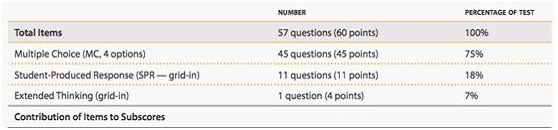
在具体的57道题中又具体分为三种题型,Multiple Choices(选择题),Student-Produced Response(答案输出题)和Extended Thinking(扩展思路题)。

2

  其中Multiple Choices(选择题)有45道,每道题1分,每道题有4个选项,占总题目数量百分比的75%;Student-Produced Response(答案输出题)有11道,每道题1分,占总题目数量百分比的18%;而最后一类Extended Thinking(扩展思路题)含有1道题,价值4分,占总题目数量百分比的7%。

去年3月的SAT改革发布会上, David Coleman关于Problem solving and data analysis(问题解决和数据分析)模块是这样陈述的:“Problem solving and data analysis include using ratios, percentages and proportional reasoning to solve problems in real world situations including science, social science and career context. No longer will the SAT only have disconnected problems, or tricky situations that students won’t likely see again.” 亦即:问题解决和数据分析包括运用比率,百分比和比例推理去解决一些现实生活中存在的问题,包括自然科学,社会科学和职业背景等方方面面。SAT考试中将不再出现与现实不相干的问题,那些非常具有技巧性的场景题目也将不再出现。

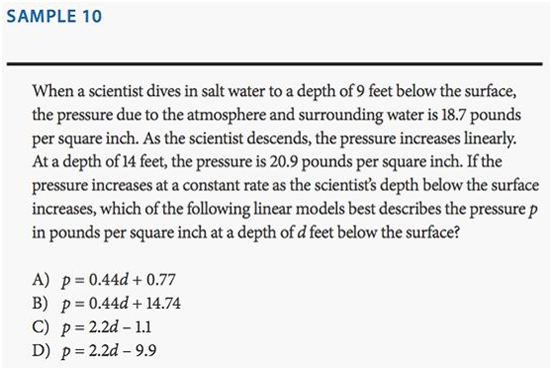
新公布的样题,果真涉及到了自然科学,社会科学,百分比,职业背景这些内容。这些题目联系生活实际,与旧SAT相比,这些题目更加接地气。例如:

3

关于heart of algebra(核心代数)部分是这样陈述的:”The heart of algebra, focuses on mastery of linear equations and systems which echo throughout many field of study.” 核心代数部分要求学生掌握线性方程和体系,这在很多学科的学习中都用得到。

尽管只是短短的一句话,却涵盖多个知识点。新公布的样题中核心代数以多种形式出现,为了做对这些题目,需要考生除了一如既往的了解和代数相关的知识点外,还需做到足够熟练才能在规定的80分钟时间内做完所有题目。旧SAT考试数学部分考生觉得时间绰绰有余的现象恐很难在新SAT数学部分中出现。这一部分题目的代表样题为:

4

关于passport to advanced math 这一部分College Board的文件指出:“The passport to advanced math is the third area on the SAT. And once again, it is the math that opens doors of opportunity. These problems on the exams focus on the math you need to pursue further study, in disciplines like science and career opportunities in the STEM field of science and technology, engineering and math. The passport to advanced math section will carefully add in more complex equations or functions and expressions, which open up fields like the calculus.”

高级数学基础是新版SAT数学的第三部分。这一部分也带来机遇,数学题注重数学在科学研究,技术研发,工程,数学研究这些主要学科中的应用。学生在未来的学习和工作中需要这样的数学知识。高级数学基础部分会有选择的加入更复杂的等式、方程、表达式,比如微积分的内容。

从新公布的新SAT的26道样题来看,并未发现哪道题需要运用微积分,但是等式、方程、表达式确实更复杂了,这是新老SAT数学部分的另一主要区别。这一部分的典型样题为:

5

在College Board于2013年2月宣布将对SAT进行改革时,我们就立刻联合中国的新东方培训集团成立了应对和研究小组,和College Board保持密切联系,并向College Board总裁兼CEO David Coleman提出了我们的建议:在SAT考试中增加一个关于数学部分的选项,亦即对那些选择在考试中不使用计算器的学生给予5%(亦即40分)的加分(bonus),用以鼓励那些靠人脑而不是电脑进行简单计算的学生,以此作为“指挥棒”,引导和推动学生提高计算能力。正是我们的建议促使College Board在改革后的新版SAT数学部分增加了不允许利用计算器的数学题目。SAT这次的改革都在我们的掌握之中,我们已经开发了针对新版SAT考试的“Review Packet”,为广大学生在2016年3月改革后的SAT考试中赢得高分助一臂之力。其实,对于基础扎实的同学,标准化考试只有Format的不同,没有本质区别,万变不离其宗,这个“宗”就是基本功。只有那些基础薄弱的学生才会闻变失色,惊慌失措。别怕,古人云:欲练神功先练内功。把内功练好才是王道。我们一定会帮你练好内功 — 数学和英语基本功!

我们的培训非常接地气,一定让学生如虎添翼,旗开得胜!欢迎联系Henry博士,email为:chiefmathtutor@gmail.com,电话为:(301) 922-9508.

资孩子的教育是投资他们的未来,投资孩子的教育胜过其它任何的投资!欲知更多关于SAT和学习数学的资讯,请看 我们发表的系列文章:

Discrete Mathematics: Building Problem Solvers, Innovators, and Future Leaders

discrete-math

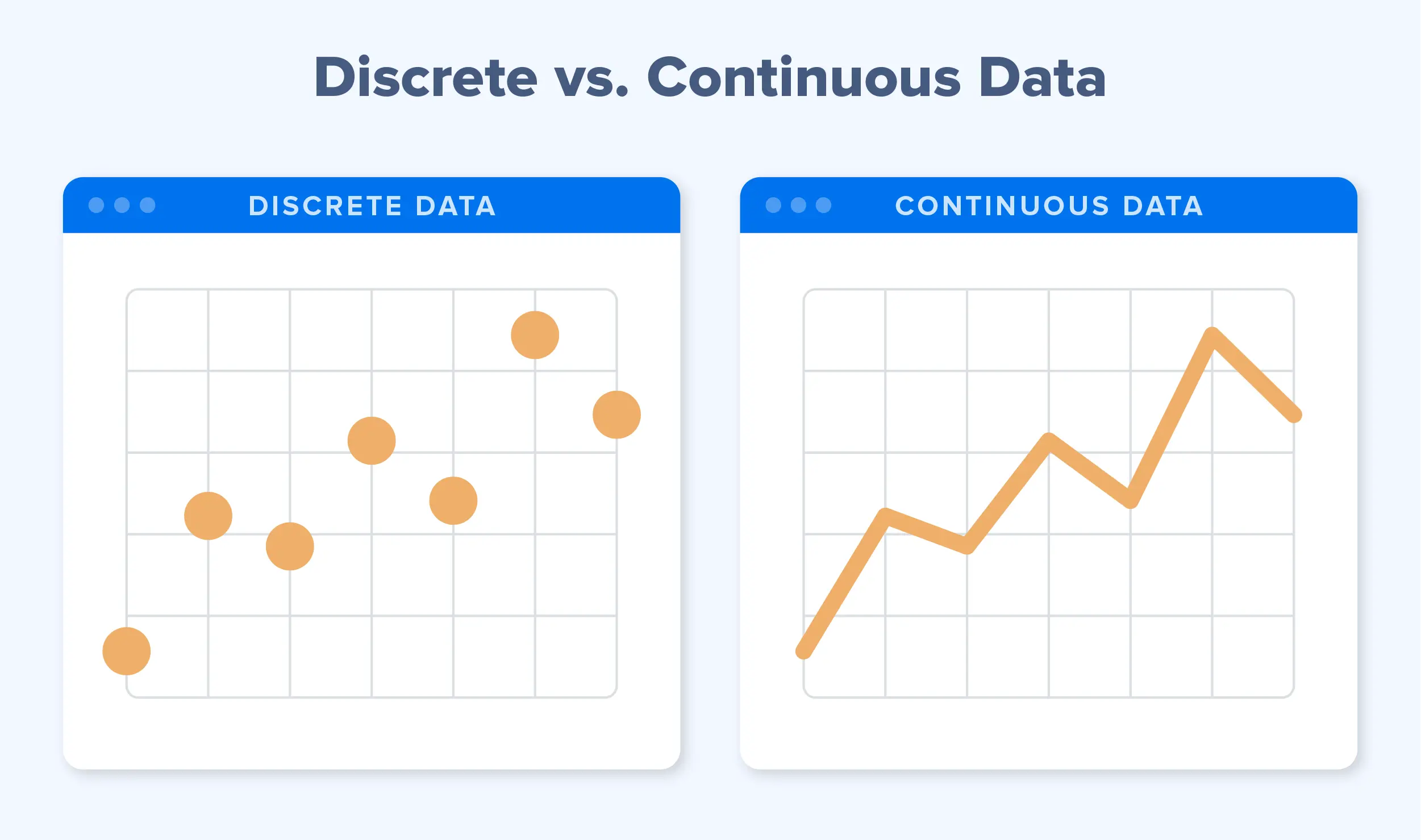
Discrete mathematics teaches students how to think logically, solve puzzles, and understand patterns behind computers, games, and real-world problems. Unlike traditional math that deals with continuous quantities like distances or measurements, discrete mathematics focuses on distinct, countable objects—like integers, graphs, and logic.

It’s not just about numbers; it’s about developing critical thinking, reasoning, and problem-solving skills that benefit students in competitions, technology, and future careers.

Image3


Why Schools Often Overlook Discrete Mathematics

Most middle and high schools in the U.S. follow a standard curriculum centered on continuous mathematics:

Pre-Algebra → Algebra 1 → Geometry → Algebra 2/Trigonometry → Precalculus → Calculus → Multivariable Calculus / Differential Equations

  • Discrete mathematics is rarely taught as a separate subject.
  • Standardized tests like the SAT and ACT do not assess discrete math.

Why it matters: Early exposure to discrete math builds skills in logic, pattern recognition, and problem-solving—giving students an edge in competitions, technology, and STEM careers.


Discrete Mathematics in Math Competitions

Discrete mathematics is the backbone of many math contests:

  • AMC (American Mathematics Competitions): 30–40% of problems involve combinatorics, number theory, or graph theory.
  • AIME (American Invitational Mathematics Examination): Over half the problems are based on discrete math.

Our Approach at Ivy League Education Center: At least one-third of our AMC prep curriculum focuses on discrete math, helping students master counting, logic, and networks.

Jesuit to Host Major Math Competition | News - Jesuit High School


Discrete Mathematics and Computer Science

Discrete math is essential for understanding:

  • Algorithms and programming logic
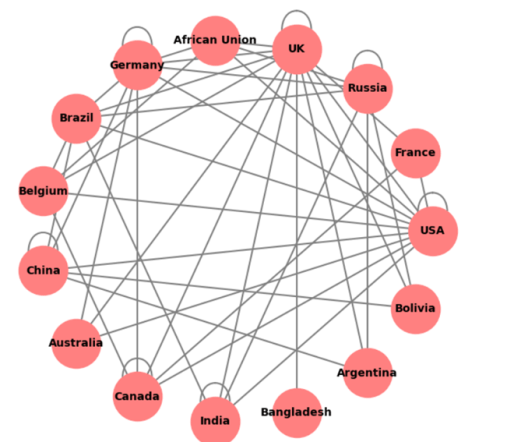
  • Data structures and graph theory
  • Cryptography and software engineering

Why it matters: Students at Ivy League Education Center gain skills that apply directly to coding, technology, and engineering careers.

Image4


Discrete Mathematics in Big Data

Discrete math provides tools for:

  • Analyzing high-dimensional data
  • Reasoning under uncertainty
  • Scaling algorithms for large datasets

Why it matters: Students develop skills for future careers in data science, analytics, and scientific research.


Discrete Mathematics and Artificial Intelligence (AI)

AI relies heavily on discrete math:

  • Graph theory: Search engines, recommendation systems, social networks
  • Logic & Boolean algebra: Rule-based reasoning, automated verification
  • Combinatorics & probability: Machine learning, model evaluation, uncertainty analysis

Why it matters: Discrete math skills help students understand and innovate in AI and technology.

Combining Neural Networks and Decision Trees


Why Students Should Start Early

Recommended focus areas:

  • Combinatorics
  • Graph theory
  • Discrete geometry
  • Number theory
  • Discrete probability

Even students with limited algebra skills can succeed in discrete math. The hands-on nature makes it intuitive, fun, and engaging while preparing them for competitions and STEM careers.

Pattern Blocks Puzzles Work Mats ~ ZOO ANIMALS ~ Activity Pictures-Task Cards


Get Started Today!

Whether your child wants to:

  • Compete in math contests
  • Explore coding and AI
  • Become a stronger problem solver

…discrete mathematics at Ivy League Education Center provides the tools to succeed.

Call to Action Buttons:

A cartoon teacher and a group of diverse children gathered around a computer, learning coding and programming concepts. Teacher kids computers illustrations


Author / Branding Footer

Written by Chief Instructor Dr. Henry Wan of Ivy League Education Center

Dedicated to cultivating problem solvers and future innovators through competitive mathematics and advanced mathematical thinking.

© 2026 Ivy League Education Center. All rights reserved.

2-castles-5

250px-Pen0305c


slide_9More articles about math competitions:

slide_3

kgldtgmc3qrgkb3qgqze

American Mathematics Contest 10 (AMC 10)

amc10The AMC 10 is lauded as the oldest, largest and most prestigious math competition in the United States. The AMC 10 is part of the series of contests administered by the MAA American Mathematics Competitions that determines the United States team in the International Math Olympiad. The AMC 10 is for students in grades 10 and below. Two different versions of the contests are given on two different dates, the A and the B. Both the AMC 10A and the AMC 10B have the same number of questions, the same scoring and the same rules for administration. The only difference is that each has a distinct set of questions, although the two contests are designed to be equal in difficulty and distribution of topics.

The main purpose of the AMC 10 is to spur interest in mathematics and to develop talent through the excitement of solving challenging problems in a timed multiple-choice format. The problems range from the very easy to the extremely difficult. Students who participate in the AMC 10 should find that most of the problems are challenging but within their grasp. The contest is intended for everyone from the average student at a typical school who enjoys mathematics to the very best student at the most special school.

A special purpose of the AMC 10 is to help identify those few students with truly exceptional mathematics talent. Students who are among the very best deserve some indication of how they stand relative to other students in the country and around the world. The AMC 10 provides one such indication, and it is the first in a series of examinations (followed in the United States by the American Invitational Examination and the USA Mathematical Olympiad) that culminate in participation in the International Mathematical Olympiad, the most prestigious and difficult secondary mathematics examination in the world. In this way the very best young mathematicians are recognized, encouraged and developed. Another valuable comparison students can make is between their own level of achievement and their levels in previous years. In particular, they are encouraged to begin taking the contests early in their mathematics studies and to look back with pride each year on how they have learned to answer questions that they could not have answered previously.

Format

The AMC 10 is a 25 question, 75 minute multiple choice test. Problems generally increase in difficulty as the exam progresses. Calculators were permitted; however, as of 2008, calculators are not allowed any more.

The AMC 10 is scored in a way that penalizes guesses. Correct answers are worth 6 points, incorrect questions are worth 0 points, and unanswered answers are worth 1.5 points, to give a total score out of 150 points. From 2002 to 2006, unanswered questions were awarded 2.5 points. In 2006 and 2007, unanswered questions were awarded 2 points. Students that score over 120 points or are in the top 2.5% of the AMC 10 contest are invited to take the AIME.

Curriculum

The AMC 10 tests mathematical problem solving with arithmetic, algebra, counting/combinatorics, geometry, number theory, and probability and other secondary school math topics. Problems are designed to be solved by students without any background in calculus or trigonometry.

 AMC10-MedalNational Awards

  • A Certificate of Distinction is given to all students who qualify to take the American Invitational Mathematics Examination.
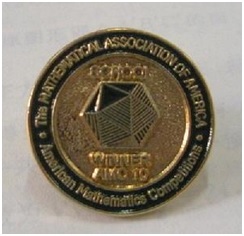
  • An AMC 10 Honor Roll of Distinction Pin is given to the top 1% of all participating students.
  • An AMC 10 Certificate of Achievement is given to high scoring students who are in 8th grade or below.

More details can be found at: http://www.maa.org/math-competitions/amc-10

More articles about math competitions:

Great Benefits of Math Competitions

Mathematics is increasingly important in our technological and scientific age. Taking enough mathematics in high school is the gateway to jobs and careers of all kinds, even those that are not explicitly mathematical, scientific, or technological.

Math%20OlympiadsThe importance of mathematics competitions has been widely recognized for three reasons:

  • they help develop imaginative capacity and thinking skills whose value far transcends mathematics;
  • they constitute the most effective way of discovering and nurturing mathematical talent;
  • they provide a means to combat the prevalent false image of mathematics held by high school students, as either a fearsomely difficult or a dull and uncreative subject.

Math Competitions are great opportunities for students who are looking to challenge themselves and advance in math.

Students with a passion for math learn and master advanced, brain-stretching, and awe-inspiring materials in Algebra, Geometry, Number Theory, and Combinatorics.

Our course is designed purposefully to help students master the AMC contests, and enrich them academically. In the classes, we will cover all concepts/topics that frequently occur on the AMC exams and teach efficient strategies required for contest-based problem solving. We will review questions drawn from previous years’ contests as well as a variety of carefully selected resources. Students will think and learn math skills outside the realm of their school classrooms. All math skills developed through these courses will be helpful not only for math competitions, but also for comprehensive exams such as PSAT, SAT, ACT, GMAT, GRE, or even college math classes.

Over the course of Math Olympiad preparation, students develop problem-solving abilities, critical thinking skills, and logical reasoning through problem solving sessions, practices, and competitions.

In an increasingly competitive college application pool, the process of mastering math skills through our courses and participating in the American Math Competitions will help students strengthen and diversify their extracurricular activities. These contests can motivate students’ interest and passion in math, and they can discover their talent through solving challenging problems different from those in the school classes. Many top colleges also request AMC scores as part of the college application process. Both MIT and Caltech have entry blanks on their official admission application forms for the applicant to enter their best AMC and AIME scores. Ivy League Colleges and Stanford ask for to the AMC and AIME scores in their Supplement to the Common Application Forms. Your children deserve the chance to list these scores on their applications! Good AMC scores will greatly enhance admission opportunities for students to elite colleges.

As a typical example, every year MIT admits about 1,400 freshmen. Out of these 1,400 students, almost 1,200 students have AMC 10 scores greater than 120. However, out of these 1,400 students there are only 2-4 students who are nationally ranked piano players. Likewise, there are only 2-4 nationally ranked swimmers. It is much easier to achieve distinguished math awards and get into MIT than to rank highly in swimming and get into MIT.

mit-1

In fact, a high score on the AMC 10 is a golden ticket into MIT, especially for girls. Why? Because in terms of extracurricular activities, prestigious colleges such as MIT and Caltech value math much more than anything else. This just reveals the critical importance of mathematics in the competitive academic environment. Students will benefit much more from participating in competitive math than participating in sports, arts, and music programs. 

It is much easier to math to than to swim to the MIT!

“Mathematics is a verb! In Ute we do not have just one word to describe mathematics—rather, we name it as we use it. When we count, build, design, cook, hunt, or fish, we are doing mathematics.” — Fabian Jenks, a Northern Ute elder

BANNER_Top_Mathletics

More articles about math competitions:

https___img_evbuc_com_https%253a%252f%252fcdn_evbuc_com%252fimages%252f14806251%252f149172474682%252f1%252foriginal

2000px-imo_logo_svg


A Little Competition Can Inspire Students to Greater Achievement

MathCompetition

Math competitions offer a challenging opportunity to test your mathematical mettle and hone your problem-solving skills.

Why do math competitions?

  • Solving Math Competitions problems is one of the best methods to learn and understand school mathematics.
  • Do it for the challenge and the fun.
  • Engage in a different kind of thinking than homework problems — much more akin to higher mathematics.
  • Do math in a collaborative group setting.
  • Do it for the teamwork and camaraderie.
  • Do it, perhaps most importantly, because the way of thinking and the problem-solving skills you pick up will make understanding more advanced mathematical ideas that much easier.

The purpose of math competitions is to encourage students to explore, discover, and learn more about mathematics and problem solving.

If you do not currently engage in math competition, I encourage you to give it a try – both for your sake, and for the sake of your students. There are many math competitions and contests for you to choose from.

The most immediate value of math contests is to inspire students’ interest in mathematics and encourage them to value intellectual pursuits. Math contests thus motivate them to become good at mathematics just like sports encourage physical fitness.

Beyond encouraging an interest in mathematics, contests also help prepare students for competition. For better or worse, much of life is competition, be it for jobs or resources or whatever. Competition of any sort trains students to deal with success and failure, and teaches them that effective performance requires practice. They also get valuable certificates that can help them differentiate from the crowd when it comes to college admissions.

Furthermore, almost every interesting and worthwhile venture in life comes with some element of pressure. Math competitions greatly teach students how to efficiently handle pressure.

数学是一切科技工程的基础,学好数学终身受益。数学不仅是一种工具,而且是一种思维模式;不仅是一种知识,而且是一种素养;不仅是一种科学,而且是一种文化,能否运用数学观念定量思维是衡量民族科学文化素质的一个重要标志。数学教育对于学生树立正确的世界观将产生长期的潜移默化的影响;数学教育在培养高素质人才(尤其是科学技术工程人才)中具有其独特的、不可替代的重要作用。

                数学是个广阔的天地,在这里是大有作为的!

                读数得间,知数达理,数通八达,数海升平!

数中自有黄金屋,数中自有颜如玉,数中自有高富帅!

mathis_1cool_math_poster-re880b3e24cd2471b97a3784f4441457a_i5kgp_8byvr_1024

Head Instructor: Paulina Lee

Paulina Lee earned a Bachelor of Arts (with Honors) in English Literature from the University of Cambridge, and a Master of Education (Ed.M.) degree from Teachers College of Columbia University. She, as a college entrance exam expert, has served over 20 years in education. She has been a private tutor, and has also volunteered her talents in high school college planning offices. Along with her professional experience she combines a thorough knowledge of the SAT and ACT. She maintains a private practice for the Critical Reading and Written portions of the SAT as well as the English, Reading, and Essay portions of the ACT.

As a long-term SAT instructor/tutor, she has extensively studied the SAT tests to find patterns and shortcuts to efficiently solve problems. She has also been an SAT Essay Reader and provides students with a detailed essay template designed to get them a double-digit essay score.

At the invitation of Mr. Michael Yu, the Founder, Board Chairman, and CEO of the New Oriental Education & Technology Group (the largest comprehensive educational company in China), Mrs. Lee joined the New Oriental as a Chief English Teaching Officer in 2004. She developed and ran an SAT preparation program at the New Oriental, which was the first one in China, designed to provide instruction and develop effective strategies needed for students to excel on the SAT.

Mrs. Lee moved back to USA at the beginning of 2011 to create the Ivy League Education Center with Dr. Henry Wan, which provides after-school and weekend school enrichment programs for talented elementary, middle, and high school students who enjoy academic challenges. They use  Small-sized Class Instruction Focused Model to offer private (1-on-1), semi-private (1-on-2 or 1-on-3), and small-group (4-10 students) lessons.

Mrs. Lee has continued tutoring because she loves seeing a student reach that “aha” moment when they’ve solved some problem they’d been having trouble with. She believes tutoring, like all types of learning, is a medium for growth and self-improvement, which leads to a boost in confidence. This is especially great for adolescents and teenagers. She loves private tutoring because she’s able to give each student exactly what he/she needs – skipping the material they’re strong on, and finding multiple ways to explain what it is they’re having trouble with.

Chief Instructor: Dr. Henry Wan

Dr. Henry Wan earned his Ph. D. in Mathematics from the University of Toronto in 1988, and conducted research in Discrete Math and Computational Molecular Biology for 16 years at Columbia University and National Institutes of Health. At the invitation of Mr. Michael Yu, the Founder, Board Chairman, and CEO of the New Oriental Education & Technology Group (the largest comprehensive educational company in China), Dr. Wan joined the New Oriental as a Chief Math Teaching Officer in 2004. He developed and ran an SAT preparation program at the New Oriental, which was the first one in China, designed to provide instruction and develop effective strategies needed for students to excel on the SAT.

He moved back to the USA at the beginning of 2011 to create Ivy League Education Center and Mathisfun Education Center, which provide after-school and weekend school enrichment programs for talented elementary, middle, and high school students who enjoy academic challenge. They use Small-sized Class Teaching Model to offer private (1-on-1), semi-private (1-on-2 or 1-on-3) and small-group (4-10 students) lessons. Recently, they developed before/after-sports math enrichment programs with the Maryland Table Tennis Center and Montgomery TennisPlex for those students who enjoy both the athletic and academic challenges.

As a senior math coach certified by the Mathematical Association of America, Dr. Wan has abundant experience training, motivating, preparing, and empowering students of all levels to achieve personal success of the PSAT/SAT/ACT/AP math and math contests, such as: AMC 8/10/12, AIME, Math Olympiads for Elementary and Middle Schools, Mathematical Kangaroo, MathCounts, USA Math Talent Search (USAMTS), Harvard-MIT Mathematics Tournament (HMMT), High School Mathematical Contest in Modeling (HiMCM), Princeton University Mathematics Competition (PUMaC), Math Prize for Girls, Johns Hopkins University High School Math Tournament, The University of Maryland High School Mathematics Competition, The Eastern Shore High School Mathematics Competition, The Newton Mathematics Competition, and George Washington University Math Competition.

Dr. Wan is involved in the Advanced Placement program at a national level and is now a Table leader, guiding other readers in interpreting and applying the standards for grading. He also has served the College Board as an AP Calculus grader for ten years.

He has developed two mathematics enrichment programs: one follows a well-defined path which focuses on “continuous mathematics:”

Pre-algebra => Algebra I => Geometry => Algebra II => Pre-Calculus => AP Calculus;

and the other follows a novel path which concentrates on “discrete mathematics:

Logic => Set theory => Number theory => Combinatorics  => Probability => Graph theory => Discrete geometry.

He and his team provide homework help that addresses gaps in knowledge, teaches students to learn the concepts, formulas, methods, steps, rules, techniques, and strategies, and assists them to improve their grades and performances on exams. He is very committed to helping students catch up, keep up, and get ahead in math.

His previous track record and publications can be found at:

http://scholar.google.com/scholar?hl=en&as_sdt=0,21&q=%22Honghui+Wan%22+OR+%22Wan+Hong+Hui%22

256x256bb

do-math-2

cat-math.jpg

lolcatthink_thumb

5259645_orig

Notable Achievements of Our Students

Amazon.com : Crown Awards Math Trophies with Custom Engraving, 6" Personalized Mathematics Kids Trophy On Black Base 1 Pack Prime : Sports & Outdoors I. Math Competitions We are only one in the Washington DC metropolitan area to offer elementary, middle, and high-school level competition math courses. Our students have received top scores and awards at prestigious national and math competitions.

In 2023, we had 8 students who won USAMO awards and 7 students who won USAJMO awards.

  • 1 USAMO Gold Award, 1 USAMO Silver Award, 4 USAMO Bronze Awards, and 2 USAMO Honorable Mention Awards.
  • 1 USAJMO Top Winner, 1 USAJMO Winner, and 5 USAJMO Honorable Mention Awards.

Read more at: 2023 USAMO and USAJMO Awardees Announced — Congratulations to Eight USAMO Awardees and Seven USAJMO Awardees In 2023, we had 90 students who obtained top scores on the AMC 8 contest!

  • 8 of our students were among the top 81 worldwide winners (Perfect Scorers).
  • 51 students received National Distinguished Honor Roll Certificates awarded to top 1% test takers. They were among the 697 worldwide winners.
  • 31 students received National Honor Roll Certificates awarded to top 5% test takers. They were among the 2,571 worldwide winners.
  • 90 out of our 93 students (96.8%) received National Awards for the AMC 8 from the Mathematical Association of America.

Read more at: 2023 AMC 8 Results Just Announced — Eight Students Received Perfect Scores

In 2022, we had 96 students who qualified for the AIME either through the AMC 10A/12A or the AMC 10B/12B. One of our students was among the 6 Perfect Scorers worldwide on the AMC 10A: Justin W. and one of our students was among the 3 Perfect Scorers worldwide on the AMC 12B: Ming Y. 

Read more at: 96 Students Qualified for the 2023 AIME and 2 Students Received Perfect Scores on the 2023 Fall AMC 10/12

In 2022, we had 3 students qualified for the Math Olympiad Summer ProgramRead more at: Brendon J., Kyle S., and Isabella Z. Qualified for the 2022 Math Olympiad Summer Program

In 2022, we had 1 student competed in International Girls’ Math OlympiadRead more at: sabella Z. Competes in International Girls’ Math Olympiad In 2022, we had 7 students qualified for the USAMO andstudents for the USAJMO. Read more at: 2022 USAMO and USAJMO Qualifiers Announced — Seven Students Qualified for the USAMO and Seven Students for the USAJMO. In 2022, we had 88 students who obtained top scores on the AMC 8 contest!

  • 10 of our students were among the top 131 worldwide winners (Perfect Scorers), as shown in Table 1. Click Here see a full list of the 131 worldwide winners.
  • 52 students received National Distinguished Honor Roll Certificates awarded to top 1% test takers. They were among the 1,010 worldwide winners. Click Here see a full list.
  • 26 students received National Honor Roll Certificates awarded to top 5% test takers. They were among the 2,449 worldwide winners. Click Here see a full list.
  • 88 out of our 91 students (96.7%) received National Awards for the AMC 8 from the Mathematical Association of America

Read more at: 2022 AMC 8 Results Just Announced — Ten Students Received Perfect Scores

In Fall 2021, we had 93 students who are qualified to take the AIME either through the AMC 10A/12A or AMC 10B/12B. One of our students was among the 5 Perfect Scorers worldwide on the AMC 10A: Nina L. and one of our students was among the 2 Perfect Scorers worldwide on the AMC 10B: Ming Y. Read more at: 93 Students Qualified for the 2021 Fall AIME and 2 Students Received Perfect Scores on the 2021 Fall AMC 10/12

  • In 2020, we have 2 students, Isabella Z. and Sameer P., who were among the 61 students selected nationwide to attend.
  • In 2020, we had 82 students who are qualified to take the AIME either through the AMC 10A/12A or AMC 10B/12B.
  • In 2019, we had 71 students who obtained top scores on the AMC 8 contest!
    • 8 of our students were among the top 151 National Winners (Perfect Scorers), including 2 sixth graders.
    • 36 students received National Distinguished Honor Roll Certificates awarded to top 1% test takers, as shown in Table 2.
    • 27 students received National Honor Roll Certificates awarded to top 5% test takers, as shown in Table 3.
    • 71 out of our 73 students (97.3%) received National Awards for the AMC 8 from the Mathematical Association of America
    • Read more at: 2019 AMC 8 Results Just Announced — Eight Students Received Perfect Scores6155
  • In 2019, we had 4 Students Qualified for the USAMO and 4 Students for the USAJMO.
  • In 2019, we had 76 students who are qualified to take the AIME either through the AMC 10A/12A or AMC 10B/12B.
    • One of our students was among the 22 Perfect Scorers worldwide on the AMC 10A: Noah W.
    • One of our students was among the 10 Perfect Scorers worldwide on the AMC 12B: Kenneth W
    • Very impressively, 32 middle schoolers and 7 elementary schoolers qualified for the AIME!
    • Read more at: 2019 AIME Qualifiers Announced — 76 Students Qualified for the AIME
  • In 2018, we had 64 students who obtained top scores on the AMC 8 contest!
    • 3 of our students were among the top 44 National Winners (Perfect Scorers): Eric B., Kevin Y., and Isabella Z.
    • 40 students received National Distinguished Honor Roll Certificates awarded to top 1% test takers.
    • 21 students received National Honor Roll Certificates awarded to top 5% test takers.
    • 64 out of our 66 students (96.5%) received National Awards for the AMC 8 from the Mathematical Association of America.
    • Read more at: 2018 AMC 8 Results Just Announced — Three Students Received Perfect Scores
  • In 2018, we had 73 students who are qualified to take the AIME either through the AMC 10A/12A or AMC 10B/12B.
    • Two of our students were among the 35 Perfect Scorers worldwide on the AMC 10A: Austen M. and Jason W.
    • Two of our students were among the 21 Perfect Scorers worldwide on the AMC 12B: Kaan D. and Edward W. 
    • Remarkably, 11 middle schoolers and 2 elementary schoolers qualified for the AIME!
    • Read more at: 2018 AIME Qualifiers Announced — 73 Students Qualified for the AIME 
  • In 2017, we had 63 students who obtained top scores on the AMC 8 contest!
    • of our students were among the top 75 National Winners (Perfect Scorers).
    • 34 students received National Distinguished Honor Roll Certificates awarded to top 1% test takers.
    • 22 students received National Honor Roll Certificates awarded to top 5% test takers.
    • 63 out of our 65 students (97%) received National Awards for the AMC 8 from the Mathematical Association of America.
    • Read more at: 2017 AMC 8 Results Just Announced — Seven Students Received Perfect Scores
  • In 2017, we had 61 students who are qualified to take the AIME either through the AMC 10A/12A or AMC 10B/12B.
    • One of our students was among the 28 Perfect Scorers worldwide on the AMC 10A: Austen M.
    • Two of our students were among the 35 Perfect Scorers worldwide on the AMC 10B: Ashwin A. and Brad Z. 
    • Remarkably, eight middle schoolers and one elementary schooler qualified for the AIME, which is geared toward high school students.
    • Very impressively, Bryan Z., a 6th grader, gained a score of 132 out of 150 on the AMC 10B.
    • Read more at: 2017 AIME Qualifiers Announced — 61 Students Qualified for the AIME
  • In 2016, we had 48 students who obtained top scores on the AMC 8 contest!
    • 11 of our students were among the top 264 National Winners (Perfect Scorers).
    • 16 students received National Distinguished Honor Roll Certificates awarded to top 1% test takers.
    • 21 students received National Honor Roll Certificates awarded to top 5% test takers.
    • 48 out of our 51 students (94%) received National Awards for the AMC 8 from the Mathematical Association of America.
    • Read more at: 2016 AMC 8 Results Announced — Eleven Students Received Perfect Scores
  • In 2016, we had 36 students who are qualified to take AIME either through AMC 10A/12A or AMC 10B/12B.
    • One of our students was among the 23 Perfect Scorers worldwide on the AMC 10A: Joel (Junyao) T.
    • Particularly, seven middle schoolers and one elementary schooler qualified for the AIME, which is geared toward high school students. Pravalika P., a 6th grader, got a 115.5 out of 150 on the AMC10B, which is very impressive.
    • Read more at: 2016 AIME Qualifiers Announced — 36 Students Qualified for AIME
  • In 2015, we had 25 students who obtained top scores on the AMC 8 contest!
    • 2 of our students were among the top 76 National Winners (Perfect Scorers).
    • 12 students received National Distinguished Honor Roll Certificates awarded to top 1% test takers.
    • 11 students received National Honor Roll Certificates awarded to top 5% test takers.
    • Read more at: 2015 AMC 8 Results Announced — Two Students Received Perfect Scores
  • 2011 – 2015:
    • In total, 77 students scored above 120 on the AMC 10 and qualified for the AIME.
    • 56 students scored above 100 on the AMC 12 and qualified for the AIME).
    • 8 students qualified for the USAMO.
    • 9 students qualified for the USJMO.
  • 2011 – 2015:
    • In total, 79 students obtained top scores on the AMC 8 contest!
      • 13 students received a perfect score.
      • 45 students received National Distinguished Honor Roll Certificates awarded to top 1% test takers.
      • 39 students received National Honor Roll Certificates awarded to top 5% test takers.
  • Vinay M., an 8th grader, scored  an outstanding 144 out of 150 points on the 2015 AMC 10B. He received a GOLD Certificate for Outstanding Achievement from the Mathematical Association of America (MAA). He was ranked in the top 1% nationally on the 2015 AMC 10, and then qualified to take the AIME, which is used to determine qualification for the USAMO.
  • Neeyanth K., an 8th grader, scored 138 out of 150 on the 2015 AMC 10B. He received a GOLD Certificate for Outstanding Achievement from the MAA. He was ranked in the top 1% nationally on the 2015 AMC 10, and was an AIME Qualifier.
  • Richard Z., a 7th grader, scored 130 out of 150 on the 2015 AMC 10B. He received a GOLD Certificate for Outstanding Achievement from the MAA. He was ranked in the top 1% nationally on the 2015 AMC 10, and was an AIME Qualifier.
  • Adam A., an 8th grader, scored 135 out of 150 on the 2015 AMC 10A. He received a GOLD Certificate for Outstanding Achievement from the MAA. He was ranked in the top 1% nationally on the 2015 AMC 10, and was an AIME Qualifier.
  • Aaditya S., an 8th grader, scored 132 out of 150 on the 2015 AMC 10A. He received a GOLD Certificate for Outstanding Achievement from the MAA. He was ranked in the top 1% nationally on the 2015 AMC 10, and was an AIME Qualifier.
  • Alex C., a 6th grader, scored 132 out of 150 on the 2014 AMC 10. He received a GOLD Certificate for Outstanding Achievement from the MAA. He was ranked in the top 1% nationally on the 2014 AMC 10, and then qualified to take the AIME.
  • Serina H., a 9th grader, scored an outstanding 141 out of 150 points on the 2014 AMC 10, and qualified to take the American Invitational Mathematics Examination (AIME).
  • Eva Q., a 6th grader, ranked in the top 1% nationally on the 2014 AMC 10, and then became an AMIE Qualifier.
  • Serina H., a 9th grader, qualified for the 2014 USA Mathematical Olympiad (USAMO).
  • Serina H., a 10th grader, won the 10th Place in the 2014 Math Prize for Girls, the country’s preeminent math competition for young women in the United States.
  • Yu Xuan (Wendy) H., a 12th grader, won the 14th Place (Honorable Mention) in the 2013 Math Prize for Girls, the country’s preeminent math competition for young women in the United States.
  • Yu Xuan (Wendy) H., a 12th grader, qualified for the 2014 USA Mathematical Olympiad (USAMO)
  • Sophia W., an 8th grader, was ranked in the top 1% nationally on the 2013 AMC 10 and qualified to take the AIME.
  • Kundan C., a 9th grader, qualified for the 2013 USA Mathematical Olympiad (USAMO)
  • Kundan C., a 9th grader, scored an outstanding 141 out of 150 points on the 2013 AMC 10, and qualified to take the AIME.

1453094507741 II. New SAT

  1. 2016 – 2019: In total, 16 students scored a perfect score of 1600 on the SAT, including an 8th grader
  2. 2016 – 2019: In total, 105 students got a perfect score of 800 on the SAT Math Section, including four 6th graders, ten 7th graders, and fifteen 8th graders
  3. 2016 – 2019: In total, 46 students gained a perfect score of 800 on the SAT English (Reading, and Writing and Language) Section

III. Old SAT 2400

  1. 2011 – 2016: In total, 10 students scored a perfect score of 2400 on the SAT, including two 8th graders
  2. 2011 – 2016: In total, 101 students scored above 2350 on the SAT, including a 6th grader, and four 8th graders
  3. 2011 – 2016: In total, 461 students got a perfect score of 800 on the SAT Math Section, including five 6th graders, twenty 7th graders, and forty five 8th graders
  4. 2011 – 2016: In total, 236 students gained a perfect score of 800 on the SAT Critical Reading Section
  5. 2011 – 2016: In total, 319 students obtained a perfect score of 800 on the SAT Writing Section
  6. 2011 – 2016: In total, 284 students received a perfect score of 12 on the SAT Essay portion

Microsoft Word - Sponsorship.docIV. SAT Subject Tests 

  • 2011 – 2019: In total, 817 students achieved a perfect score of 800 on SAT Subject Test in Math Level 2

V. AP Testsapexaminfo_0

  1. 2011 – 2018: In total, 451 students earned top grades of 5 on AP Calculus BC Test
  2. 2011 – 2018: In total, 412 students earned top grades of 5 on AP Statistics Test

VI. John Hopkins University CTY

  1. 2015 John Hopkins University CTY 8th Grader Talent Search – National First Place Award
  2. 2015 John Hopkins University CTY 7th Grader Talent Search – National Third Place Award
  3. 2015 John Hopkins University CTY 6th Grader Talent Search – National First Place Award
  4. 2014 John Hopkins University CTY 8th Grader Talent Search – National First Place Award
  5. 2013 John Hopkins University CTY 8th Grader Talent Search – National First Place Award
  6. 2012 John Hopkins University CTY 7th Grader Talent Search– National First Place Award
  7. 2011 John Hopkins University CTY 5th Grader Talent Search– National Third Place Award

math-olympiadscontests medals

Payment and Refund Policy

Ivy league Cnter-2017

PLEASE READ OUR PAYMENT AND REFUND POLICY CAREFULLY PRIOR TO MAKING ANY PURCHASE.

Payment Policy

  • Full payment must be received on or before the day of the first class.
  • late fee of $50 will be charged if you send the late payment after your child already attends the first class.
  • A $35 fee will be charged for all returned checks.
  • If a student’s request for a class transfer is approved, they will be required to pay the prorated tuition for the lessons attended in the original class prior to the transfer.

Refund Policy

  • Withdrawal before the first class of the session: 100% Full Refund! But a processing fee of $35 will be deducted from each refund for withdrawal within 24 hours before the first class.
  • Withdrawal after the first class and before 24 hours prior to the second class: refund after deduction of the prorated tuition for the first class plus a $15 drop-in fee and a $35 processing fee.
  • There is NO refund for withdrawal after 24 hours prior to the second class.
  • A $35 processing fee is charged for each refund.
  • If your child will participate in at least one whole term in the future, we will refund you our drop-in fee ($15) and processing fee ($35).
  • The refund would take 5-10 business days to process.
  • Any Claim or Chargeback on PayPal against the center stating that our services are “Not as Described” must be submitted in writing detailing your concerns/complaints and proposed solution throughout the duration of the course/session and five business days after the end of the course/session.  Any Claim or Chargeback filed on PayPal after this time period will NOT be accepted.

Returning Students

  • Students who participated in at least one whole term in the past.

All OF THESE POLICIES APPLY TO GROUP LESSONS AND ONE-ON-ONE TUTORING SESSIONS. 

Our one-on-one class packages work like a bus pass, travel card, or voucher with an expiration date calculated from the time of purchase. Each package allows a learner to attend lessons until the package expires. The packages we offer are:

  • 10-hour package: valid for 4 months

  • 20-hour package: valid for 8 months

  • 30-hour package: valid for 12 months

  • 40-hour package: valid for 16 months

  • 50-hour package: valid for 20 months

  • 60-hour package: valid for 24 months

Please note: no credit or makeup lessons will be allowed after a package expires.

For more details about our one-on-one tutoring sessions, please visit the TUTORING CENTER.

social_services_3School_Policies_image

tumblr_o0ejoktVY91u80xalo1_500