Tag Archives: education

The Golden Rule of Learning Mathematics: Transitioning from Memorization to Deep Understanding and Creative Thinking

copyright-small Henry Wan, Ph.D.

The true key to mastering mathematics lies in transforming knowledge from something external — merely memorized — into an internalized skillset that becomes second nature. To achieve this, students must go beyond rote learning and actively engage in a process of deep comprehension and creative exploration.

Step 1: Recall Testing Your Understanding

After attending a math class, immediately review the concepts covered without referring to any materials. Try to recall the key points discussed by the teacher, including formulas, theorems, and their derivations. The ability to reconstruct this information from memory is the best test of how effectively you absorbed the material during class. If you struggle to recall certain details, it signals areas that require further review.

Step 2: Derivation Reinforcing Knowledge Through Independent Thought

Take out a notebook and write down the important formulas and theorems from memory. However, do not stop at simply writing them down — challenge yourself to re-derive the formulas and prove the theorems using your own thought process. This independent thinking exercise helps pinpoint gaps in your understanding and solidifies your grasp of mathematical principles. The process of struggling through a derivation on your own is invaluable, as it forces you to connect different pieces of knowledge logically rather than just memorizing results.

Step 3: Comparison Evaluating and Refining Methods

After completing your derivations, open your textbook and class notes to compare your approach with those presented in the materials or by the teacher. This comparison often leads to valuable insights: perhaps your method is more intuitive, or maybe the textbook’s approach is more elegant and universally applicable. By analyzing the strengths and weaknesses of different methods, you develop a more profound and flexible understanding of mathematical concepts.

Step 4: Generalization Expanding Mathematical Thinking

True mastery of mathematics extends far beyond simply deriving formulas, proving theorems, or solving problems. It involves questioning assumptions, identifying patterns, and generalizing principles to uncover deeper insights. Consider the Pythagorean Theorem as an example. Memorizing, deriving, proving, and applying the Pythagorean formula for right triangles is just the starting point. To truly grasp its significance, challenge yourself with these thought-provoking questions:

  • Why does the theorem specifically apply to right triangles?
  • How does the relationship change if the triangle is acute? (Hint: The equation transforms into an inequality.)
  • How does the relationship change if the triangle is obtuse? (Hint: The equation also transforms into an inequality.)
  • How does the theorem evolve when extended from two dimensions to three, four, or eve n-dimensional space?
  • What happens when we move from Euclidean space to spherical geometry? (On a sphere, the classical Pythagorean Theorem no longer holds, and an entirely new geometric relationship emerges.)

By exploring these deeper questions, you shift from merely using mathematical tools to truly understanding their foundations, limitations, and broader implications. This approach nurtures creativity, critical thinking, innovation, and problem-solving skills — hallmarks of true mathematical mastery.

A Real Example: From Competitive Math to Cutting-Edge Research

One of our students, inspired by this approach, successfully extended the Pythagorean theorem and the Law of Cosines to higher-dimensional spaces and eventually to spherical geometry. Under our guidance, the student refined this work into a rigorous mathematical paper, which we helped recommend for publication in a prestigious journal of the Mathematical Association of America. This outstanding academic achievement became a key stepping stone, ultimately securing the student’s admission to MIT.

Why This Method Works: From Passive Learning to Active Discovery

This structured learning approach — Recall, Derivation, Comparison, and Generalization — transforms passive reception into active engagement. Rather than simply memorizing formulas, you develop a deep contextual understanding and an independent problem-solving mindset. These habits not only enhance academic performance but also cultivate the ability to think critically, explore new ideas, and innovate — skills that extend far beyond the classroom.

Mathematics is not just about solving problems — it’s about discovering patterns, questioning assumptions, and pushing the boundaries of what you know. By following this learning strategy, you will not only excel in math but also develop a lifelong ability to think deeply and creatively.

 maausasf

The Learning Trifecta: Preview, Note-taking, and Review

copyright-small Henry Wan, Ph.D.

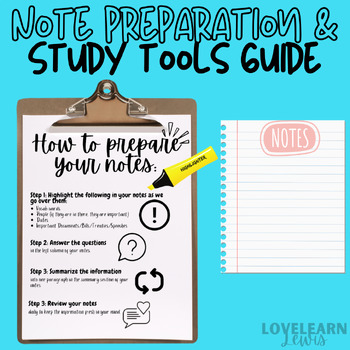
Learning effectively requires a structured approach. A good study habit includes three essential steps: previewing before class, taking notes during class, and reviewing after class. These are three interconnected and essential steps in the learning process, forming a complete learning cycle. When executed effectively, can significantly enhance your understanding and retention of knowledge.

Previewing Before Class

Before attending a class, students should take time to go through the relevant materials. Previewing helps them get a basic understanding of the topic, identify key points, and formulate any questions they may have.. This preparation not only makes it easier to follow the teacher’s explanations but also enables students to engage more actively in class discussions and absorb new knowledge more effectively.

Taking Notes During Class

During the lesson, taking clear and organized notes is essential. This skill helps students stay focused and systematically organize information. Well-taken notes capture key concepts, important formulas, and explanations that may not be found in textbooks. Writing information in one’s own words enhances understanding and retention, making it easier to review later. Additionally, structured notes serve as a valuable resource for reinforcing learning and preparing for exams.

Reviewing After Class

After class, reviewing the material is crucial for reinforcing what has been learned. Students should go through their notes, clarify any unclear points, and consolidate their knowledge by recalling key concepts and main ideas without referring to their materials. Regular review helps prevent forgetting and promotes a deeper understanding of the subject. Additionally, completing homework assignments and engaging in discussions with classmates can further strengthen their grasp of the material.

Conclusion

These three steps are interconnected and essential for effective learning. Previewing lays the groundwork for understanding new material, note-taking captures key points during the lesson, and reviewing reinforces and solidifies knowledge. By consistently following this cycle, students can enhance their comprehension, retain information more effectively, and improve their academic performance.

Developing this habit not only leads to greater academic success but also cultivates a lifelong ability to learn efficiently. Remember, learning is a continuous journey, not just a destination. By embracing this structured approach and integrating it into your study routine, you can unlock your full potential and achieve your academic goals.

How To Use A Solutions Manual Correctly?

copyright-small Henry Wan, Ph.D.

We have meticulously developed the Solutions Manual to provide detailed, step-by-step solutions for all homework problems. Each problem includes at least one solution, all of which were derived without the use of a calculator to encourage students for developing mathematical reasoning, problem-solving abilities, and creative thinking skills.

In cases where multiple solutions are presented, they are included to highlight key contrasts in problem-solving approaches. These alternative methods help students develop a deeper understanding of mathematical concepts by exploring different perspectives, such as:

  • Algebraic vs. Geometric — Solving problems through symbolic manipulation versus visual or spatial reasoning.
  • Elementary vs. Advanced — Approaching problems using fundamental techniques versus more sophisticated methods.
  • Computational vs. Conceptual — Focusing on numerical calculations versus underlying theoretical principles.
  • Explicit vs. Implicit — Directly solving for unknowns versus deriving solutions through indirect reasoning.
  • Analytic vs. Discrete — Using continuous methods versus discrete, step-by-step reasoning.
  • Forward-Solving vs. Back-Solving — Progressing logically from given information versus working backward from the desired outcome.

Understanding these different approaches helps students become more flexible and adaptable problem solvers, equipping them with the skills necessary for success in mathematical competitions and beyond.

To ensure students use the Solutions Manual as a tool for learning rather than a shortcut to answers, we have written this article, “How to Use a Solutions Manual Correctly?” This guide provides strategies to maximize the manual’s benefits while reinforcing independent problem-solving skills, ultimately fostering deeper comprehension and mathematical growth.

Many of the problems you encounter are subtle or complex, requiring careful thought — and time! — before a clear solution method emerges. The best way to learn is by attempting to solve a problem on your own, even if you don’t succeed at first. This process of grappling with challenges is crucial for deepening your understanding.

Learning mathematics requires a certain amount of “healthy frustration,” which is a natural part of developing problem-solving skills. You may need to try different approaches (some of which may lead nowhere or a dead end) until you find a viable solution. While this process can be time-consuming, it is important to persist without immediately relying on outside help. If you turn to the solutions manual too quickly, you risk missing out on the critical thinking and problem-solving skills that are key to success, particularly in competitive settings like math contests. Simply understanding the solutions provided in the manual does not mean you’ve truly mastered the material!

The solutions manual can be a helpful learning tool if used correctly, but it can also subtly hinder your progress if relied upon too heavily. How you use the manual can significantly affect your learning experience. If you use it prematurely or excessively, you may end up undermining your own efforts to master the material and perform well on contests.

The most important principle to remember is this: Do not consult the solutions manual until you have made a genuine attempt to solve the problem yourself. Ideally, you should use the manual primarily to confirm your answer. In many cases, your solution will align with the one in the manual, but occasionally, you may discover a different approach that is equally correct — or even more efficient — than the one presented. If you find an alternative method, we would love to hear about it! Please send us your solution at mathteam@ivyleaguecenter.org.

If, after a substantial effort, you still can’t find the solution, then it’s appropriate to look at solution offered in the manual. Even then, start by reading only the beginning of the solution to see if you can continue on your own. The goal is not just to arrive at the answer but to fully engage with the process, which will ultimately deepen your understanding and develop your problem-solving.

The goal is not just to reach the answer but to immerse yourself in the process, enhancing your understanding, sharpening your problem-solving skills, and fostering your creative thinking.

The goal is not just to reach the answer but to immerse yourself in the process, enhancing your understanding, sharpening your problem-solving skills, and fostering your creative thinking.

By using the solutions manual in the right way, you will maximize your learning and enhance your ability to solve problems independently — skills that are invaluable in both academic settings and math competitions.

Why Drawing a Good Diagram Is Important to Solve a Geometry Problem?

copyright-small Henry Wan, Ph.D.

Geometry is a branch of mathematics that heavily relies on visualization. Unlike algebra, where equations and numbers dominate problem-solving, geometry problems often involve shapes, angles, measurements, and spatial relationships. One of the most effective tools for tackling geometry problems is a well-drawn diagram. A clear, accurate diagram not only helps in understanding the given information but also reveals hidden relationships that might not be immediately obvious. Below are several reasons why drawing a good diagram is essential when solving geometry problems.

  1. Enhances Understanding of the Problem

A geometry problem often involves complex relationships between points, lines, angles, and shapes. Without a visual representation, these relationships can be difficult to grasp. Drawing a diagram translates abstract descriptions into concrete images, making it easier to grasp the given information and see how different elements interact. By sketching the diagram, you can identify key points, label known values, and ensure that you correctly interpret the problem statement. This step is especially useful for word problems that describe geometric figures verbally rather than presenting them visually.

  1. Helps Identify Important Geometric Properties

When solving a geometry problem, identifying key values and conditions is essential for finding the solution. Drawing a diagram allows one to clearly label known angles, lengths, and relationships such as parallel lines, perpendicular bisectors, or congruent triangles. This visual representation helps organize information systematically, reducing the risk of overlooking important details. More importantly, a well-drawn diagram highlights crucial geometric properties such as symmetry, parallelism, congruence, and similarity, which often hold the key to an efficient solution. For example, a carefully constructed diagram might reveal that two triangles are similar, enabling the straightforward application of proportional reasoning.

  1. Reduces Errors and Misinterpretations

Without a diagram, it is easy to misread a problem or overlook critical details, increasing the risk of misinterpreting given information or making calculation errors. A well-drawn diagram serves as a visual checkpoint, helping problem-solvers verify their steps and ensure their reasoning aligns with the actual figure. Incorrect assumptions can often be identified quickly by reviewing a clearly labeled diagram. Additionally, a diagram ensures that angles, side lengths, and relationships are accurately represented, minimizing the chances of computational or logical errors.

  1. Facilitates the Application of Theorems and Formulas

Many geometric theorems, such as the Pythagorean Theorem, the Angle Bisector Theorem, the properties of similar triangles, the properties of circles, or the sum of interior angles in a polygon, become easier to apply when visualized in a diagram. A well-drawn figure highlights key elements like right angles, perpendicular bisectors, and tangent lines, guiding the solver to the correct approach.

  1. Encourages Logical Thinking and Pattern Recognition

A diagram allows problem-solvers to explore different approaches and recognize patterns that may not be immediately apparent from the text alone. For example, extending a line, drawing an auxiliary shape, or marking equal segments and congruent angles can reveal insights that simplify the problem. Many competition-level geometry problems become significantly easier with a well-placed additional construction.

Additionally, a lot of geometry problems require logical reasoning, and a diagram serves as a structured visual aid to support step-by-step analysis. It helps track the flow of arguments, ensuring that conclusions logically follow from the given premises.

  1. Saves Time in Problem Solving

In competitive math settings, time is a critical factor. A good diagram often leads to a quicker solution by allowing direct visualization of relationships rather than relying on lengthy calculations. Instead of writing out multiple equations, a simple observation in a well-drawn diagram might provide an instant shortcut to the answer.

How to Draw an Effective Diagram?

To maximize the benefits of a diagram, consider the following tips:

  • Use a ruler (if time allows) or draw neatly by hand. A clear, proportional diagram prevents misinterpretation.
  • Label key points, angles, and lengths. This helps keep track of known values and relationships.
  • Mark congruent or similar segments. Highlighting these properties can make important relationships stand out.
  • Add auxiliary lines if necessary. Sometimes, drawing an extra line, such as a perpendicular or a median, simplifies the problem significantly.
  • Avoid cluttering the diagram. Too many unnecessary details can lead to confusion rather than clarity.

Conclusion

Drawing a good diagram is a fundamental skill in solving geometry problems. It enhances understanding, organizes key information, reduces errors, reveals crucial properties, displays patterns, supports logical reasoning, and facilitates the application of theorems. Whether tackling a school assignment, preparing for math competitions, or solving complex geometric proofs, investing a few moments in creating an accurate and well-structured diagram can be the key to success. By developing strong diagram-drawing habits, students can approach geometry problems with confidence and efficiency.

maausasf

2024 Special Spring Session – Competitive Math Courses

Spring is the best time to develop students’ math skills and to prepare for the American Mathematics Competitions!

Only undertake what you can do in an excellence fashion. There are no prizes for average performance.

  • 2024 AMC 810 perfect scorers. 54 students got the DHR. 29 students got the HR.
  • 2023 AMC/AIME99 AIME qualifiers. 1 AMC 10 perfect scorer. 1 AMC 12 perfect scorer.
  • 2023 JMO/AMO8 USAMO Awardees and 7 USAJMO Awardees
    • 1 USAMO Gold Award, USAMO Silver Award, 4 USAMO Bronze Awards, and 2 USAMO Honorable Mention Awards.
    • 1 USAJMO Top Winner, 1 USAJMO Winner, and 5 USAJMO Honorable Mention Awards.
  • 2023 MOP4 MOP winners.

BANNER_Top_Mathletics
Competitive Math Program — 2004 Special Spring Session Schedule

Class Day/Time Grade
Online Intensive AMC 8/Mathcounts Prep Special Spring Session: Circle Geometry and Advanced Topics

10 Weekends (EASTERN Time: 6:00 – 8:00 pm), Total: 22 Hours
3/30,  4/6,  4/13,  4/20,  4/27,  5/4,  5/11,  5/18,  5/25,  6/1

Class Handout Sample
View Course Outline

4-8
Online Intensive AMC 10/12/ARML Prep Special Spring Session: Circles and Advanced Geometry

9 Weekends (EASTERN Time: 6:00 – 8:00 pm), Total: 18 Hours

4/14,  4/21,  4/28,  5/5,  5/12,  5/19, 5/26, 6/2,  6/9 (Final Mock Exam/Review)

Class Handout Sample
View Course Outline

6-11
Online Intensive AIME Prep Special Spring Session:  Advanced Algebra

9 Classes  (EASTERN Time: 3:00 – 4:30 pm), Total: 13.5 Hours

4/14,  4/21,  4/28,  5/5,  5/12,  5/19, 5/26, 6/2,  6/9 (Final Mock Exam/Review)

Class Handout Sample
View Course Outline

6-12

We record all of our lessons as a big bonus so that our students can watch class videos after class for review and self-study.

Team_Building-338.fc.image

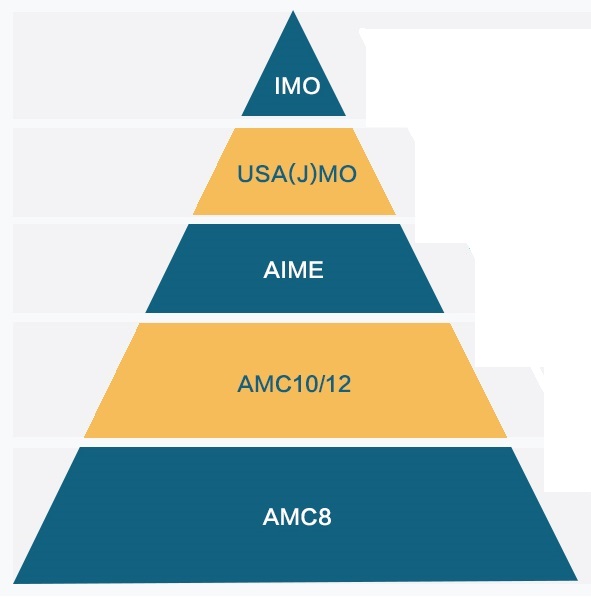
There are many math competitions in the United States. Of those, only

AMC → AIME → USAMO sequence

would take you to the IMO (International Math Olympiad), the highest level math competition for high school students in the world!

AMC-AIME-USAMO-IMOAMC-General

Featured Math Instructors

All of our sessions are taught by highly qualified instructors who are excellent experts on preparing students for the exam. We distinguish ourselves by the high quality of our instructors. Finding top-quality instructors is no easy task. We’ve hand-picked some of the best, including graduates of Ivy League institutions.

Our instructors are dedicated to teaching and student success. They are very knowledgeable, patient, available, and willing to help our students. Our students receive a quality education that goes beyond the classroom.

Meet some of them here:

IMG_2563_0

Bronze_medal

Our Students

In 2023, we had 8 students who won USAMO awards and 7 students who won USAJMO awards.

  • 1 USAMO Gold Award, 1 USAMO Silver Award, 4 USAMO Bronze Awards, and 2 USAMO Honorable Mention Awards.
  • 1 USAJMO Top Winner, 1 USAJMO Winner, and 5 USAJMO Honorable Mention Awards.

Read more at: 2023 USAMO and USAJMO Awardees Announced — Congratulations to Eight USAMO Awardees and Seven USAJMO Awardees

In 2023, we had 90 students who obtained top scores on the AMC 8 contest!

  • 8 of our students were among the top 81 worldwide winners (Perfect Scorers).
  • 51 students received National Distinguished Honor Roll Certificates awarded to top 1% test takers. They were among the 697 worldwide winners.
  • 31 students received National Honor Roll Certificates awarded to top 5% test takers. They were among the 2,571 worldwide winners.
  • 90 out of our 93 students (96.8%) received National Awards for the AMC 8 from the Mathematical Association of America.

Read more at: 2023 AMC 8 Results Just Announced — Eight Students Received Perfect Scores

In 2022, we had 96 students who qualified for the AIME either through the AMC 10A/12A or the AMC 10B/12B. One of our students was among the 6 Perfect Scorers worldwide on the AMC 10A: Justin W. and one of our students was among the 3 Perfect Scorers worldwide on the AMC 12B: Ming Y. Read more at: 96 Students Qualified for the 2023 AIME and 2 Students Received Perfect Scores on the 2023 Fall AMC 10/12

In 2022, we had students qualified for the Math Olympiad Summer ProgramRead more at: Brendon J., Kyle S., and Isabella Z. Qualified for the 2022 Math Olympiad Summer Program

In 2022, we had student Competes in International Girls’ Math OlympiadRead more at: sabella Z. Competes in International Girls’ Math Olympiad

In 2022, we had students qualified for the USAMO and 7 students for the USAJMO. Read more at: 2022 USAMO and USAJMO Qualifiers Announced — Seven Students Qualified for the USAMO and Seven Students for the USAJMO.

In 2022, we had 88 students who obtained top scores on the AMC 8 contest!

  • 10 of our students were among the top 131 worldwide winners (Perfect Scorers), as shown in Table 1. Click Here see a full list of the 131 worldwide winners.
  • 52 students received National Distinguished Honor Roll Certificates awarded to top 1% test takers. They were among the 1,010 worldwide winners. Click HERE see a full list.
  • 26 students received National Honor Roll Certificates awarded to top 5% test takers. They were among the 2,449 worldwide winners. Click HERE see a full list.
  • 88 out of our 91 students (96.7%)received National Awards for the AMC 8 from the Mathematical Association of America

Read more at: 2022 AMC 8 Results Just Announced — Ten Students Received Perfect Scores

In Fall 2021, we had 93 students who are qualified to take the AIME either through the AMC 10A/12A or AMC 10B/12B. One of our students was among the 5 Perfect Scorers worldwide on the AMC 10A: Nina L. and one of our students was among the 2 Perfect Scorers worldwide on the AMC 10B: Ming YRead more at: 93 Students Qualified for the 2021 Fall AIME and 2 Students Received Perfect Scores on the 2021 Fall AMC 10/12

In 2021, we had 6 students qualified for the USAMO and 6 students for the USAJMO. Read more at: 2021 USAMO and USAJMO Qualifiers Announced — Six Students Qualified for the USAMO and Six Students for the USAJMO

In Spring 2021, we had 91 students who are qualified to take the AIME either through the AMC 10A/12A or AMC 10B/12B. Two of our students was among the 17 Perfect Scorers worldwide on the AMC 12A: Evan L. and Suraj O. and one of our students was among the 27 Perfect Scorers worldwide on the AMC 10A: Xinchen L. Read more at: 91 Students Qualified for the 2021 AIME and 3 Students Received Perfect Scores on the 2021 AMC 10/12

In 2021, we had 8 students who got into the MathCounts state-level top 10. Yunyi L. won 9th Place in the 2021 MathCounts National Competition!

In 2020, we had 79 students who obtained top scores on the AMC 8 contest!

  • 5 of our students were among the top 57 worldwide winners (Perfect Scorers).
  • 49 students received National Distinguished Honor Roll Certificates awarded to top 1% test takers.
  • 25 students received National Honor Roll Certificates awarded to top 5% test takers.
  • 79 out of our 81 students (97.5%) received National Awards for the AMC 8 from the Mathematical Association of America.

Read more at: 2020 AMC 8 Results Just Announced — Five Students Received Perfect Scores

In 2020, we had 2 students, Isabella Z. and Sameer P., who were among the 61 students selected nationwide to attend. Read more at: Warmest congratulations to Isabella Z. and Sameer P. for being accepted into the Math Olympiad Program!

In 2020, we had 82 students who are qualified to take the AIME either through the AMC 10A/12A or AMC 10B/12B. One of our students was among the 11 Perfect Scorers worldwide on the AMC 12A: Yiyang X, and one of our students was among the 13 Perfect Scorers worldwide on the AMC 10A: Jason W.. 43 middle schoolers and 9 elementary schoolers qualified for the AIME!

Read more at: 2020 AIME Qualifiers Announced — 82 Students Qualified for the AIME

In 2019, we had 71 students who obtained top scores on the AMC 8 contest!

  • 8 of our students were among the top 151 National Winners (Perfect Scorers), including 2 sixth graders.
  • 36 students received National Distinguished Honor Roll Certificates awarded to top 1% test takers, as shown in Table 2.
  • 27 students received National Honor Roll Certificates awarded to top 5% test takers, as shown in Table 3.
  • 71 out of our 73 students (97.3%) received National Awards for the AMC 8 from the Mathematical Association of America

Read more at: 2019 AMC 8 Results Just Announced — Eight Students Received Perfect Scores

In 2019, we had 4 students qualified for the USAMO and 4 Students for the USAJMO.

  • Of the 280 USA Math Olympiad national qualifiers, 4 are our students: Luke C., Zipeng L., Sameer P., and Peter P.
  • Of the 235 USA Junior Math Olympiad national qualifiers, 4 are our students: Michael H., Noah W., Holden W., and Isabella Z.

Read more at: 2019 USAMO and USAJMO Qualifiers Announced — Four Students Qualified for the USAMO and Four Students for the USAJMO

In 2019, we had 76 students who are qualified to take the AIME either through the AMC 10A/12A or AMC 10B/12B. One of our students was among the 22 Perfect Scorers worldwide on the AMC 10A: Noah W.and one of our students were among the 10 Perfect Scorers worldwide on the AMC 12B: Kenneth WVery impressively, 32 middle schoolers and 7 elementary schoolers qualified for the AIME!

Read more at: 2019 AIME Qualifiers Announced — 76 Students Qualified for the AIME

In 2018, we had 64 students who obtained top scores on the AMC 8 contest!

  • of our students were among the top 44 National Winners (Perfect Scorers): Eric B., Kevin Y., and Isabella Z.
  • 40 students received National Distinguished Honor Roll Certificates awarded to top 1% test takers.
  • 21 students received National Honor Roll Certificates awarded to top 5% test takers.
  • 64 out of our 66 students (96.5%) received National Awards for the AMC 8 from the Mathematical Association of America

Read more at: 2018 AMC 8 Results Just Announced — Three Students Received Perfect Scores

In 2018, we had 73 students who are qualified to take the AIME either through the AMC 10A/12A or AMC 10B/12B. Two of our students were among the 35 Perfect Scorers worldwide on the AMC 10A: Austen M. and Jason W.  and two of our students were among the 21 Perfect Scorers worldwide on the AMC 12B: Kaan D. and Edward W. Remarkably, 11 middle schoolers and 2 elementary schoolers qualified for the AIME!

Read more at: 2018 AIME Qualifiers Announced — 73 Students Qualified for the AIME

In 2017, we had 63 students who earned top scores on the AMC 8 contest!

  • of our students were among the top 75 National Winners (Perfect Scorers).
  • 34 students received National Distinguished Honor Roll Certificates awarded to top 1% test takers.
  • 22 students received National Honor Roll Certificates awarded to top 5% test takers.
  • 63 out of our 65 students (97%) received National Awards for the AMC 8 from the Mathematical Association of America

Read more at: 2017 AMC 8 Results Just Announced — Seven Students Received Perfect Scores

In 2017, we had 61 students who are qualified to take the AIME either through the AMC 10A/12A or AMC 10B/12B. One of our students was among the 28 Perfect Scorers worldwide on the AMC 10A: Austen M., and two of our students were among the 65 Perfect Scorers worldwide on the AMC 10B: Ashwin A. and Brad Z. Remarkably, eight middle schoolers and one elementary schooler qualified for the AIME, which is geared toward high school students. Very impressively, Bryan Z., a 6th grader, gained a score of 132 out of 150 on the AMC 10B.

Read more at: 2017 AIME Qualifiers Announced — 61 Students Qualified for the AIME

In 2016, we had 36 students who are qualified to take AIME either through AMC 10A/12A or AMC 10B/12B. One of our students was among the 23 Perfect Scorers worldwide on the AMC 10A: Joel (Junyao) T. Particularly, seven middle schoolers and one elementary schooler qualified for the AIME, which is geared toward high school students. Pravalika P., a 6th grader, got a 115.5 out of 150 on the AMC10B, which is very impressive.

Read more at: 2016 AIME Qualifiers Announced — 36 Students Qualified for AIME

2011 – 2015: In total, 37 students scored above 120 on the American Mathematics Contest 10 (AMC 10) and qualified for the American Invitational Mathematics Examination (AIME); 26 students scored above 100 on the American Mathematics Contest 12 (AMC 12) and qualified for the American Invitational Mathematics Examination (AIME); 3 students qualified for the USA Mathematical Olympiad (USAMO), the highest level of math competition for high school students in the USA

2011 – 2015: In total, 23 students achieved perfect scores of 28 on the AMC 8

Read more at: Notable Achievements of Our Students

AAEAAQAAAAAAAAKeAAAAJDkzYTk2ZjE5LTk1YWQtNDBkNy1hZDhjLTVjOTA2YWQ2NmQ2Mw

Our Uniqueness

We have a long history of close collaboration with the MAA‘s American Mathematics Competitions (AMC), which are dedicated to strengthening the mathematical capabilities of our nation’s youth, and are the first of a series of competitions in high school mathematics that determine the United States team for the International Mathematical Olympiad (IMO).

We are only one in the Washington DC metropolitan area to offer elementary, middle, and high-school level competition math courses. Our students have received top scores and awards at prestigious national math competitions.

Great Benefits of Math Competitions

In an increasingly competitive college application pool, the process of mastering math skills through our courses and participating in the American Math Competitions will help students strengthen and diversify their extracurricular activities. These contests can motivate students’ interest and passion in math, and they can discover their talent through solving challenging problems different from those in the school classes. Many top colleges also request AMC scores as part of the college application process. Both MIT and Caltech have entry blanks on their official admission application forms for the applicant to enter their best AMC and AIME scores. Ivy League Colleges, Caltech, and Stanford ask for to the AMC and AIME scores in their Supplement to the Common Application Forms. Your children deserve the chance to list these scores on their applications! Good AMC scores will greatly enhance admission opportunities for students to elite colleges.

Read more:

Contact Information:

Ivy League Education Center
Tel:  240-300-4380     or     240-406-3402(中文专线)
Email:  chiefmathtutor@gmail.com

education priceless treasure
2014124135627709Click HERE find out more about Math Competitions!sat-logo-3Click HERE to find out more about SAT Prep!1090007ad4f9061d818%e6%95%b0%e5%ad%a6%e5%a4%a7%e6%9c%89%e4%bd%9c%e4%b8%baAIME_RGB%e6%95%b0%e4%b8%ad%e8%87%aa%e6%9c%89%e9%bb%84%e9%87%91%e5%b1%8bAMCAMC_Airlines_logo_svgeducation priceless treasure3mathis_1IMOLogos-gudder-quote-the-essence-of-mathematics-is-not-to-make-simple-things

2024 AMC 8 Results Just Announced — Ten Students Received Perfect Scores

HEARTFELT CONGRATULATIONS TO THE STUDENTS WHO EARNED TOP SCORES ON THE 2024 AMC 8 CONTEST!

  • 10 of our students were among the top 116 worldwide winners (Perfect Scorers).
  • 54 students received National Distinguished Honor Roll Certificates awarded to top 1% test takers. They were among the 697 worldwide winners. 
  • 29 students received National Honor Roll Certificates awarded to top 5% test takers. They were among the 2,683 worldwide winners. 
  • 93 out of our 96 students (96.9%) received National Awards for the AMC 8 from the Mathematical Association of America

Image result for amc8

The 2024 AMC 8 (American Mathematics Competitions 8) was held on January 18, 2024 through January 24, 2024. The AMC 8 is the most rigorous nationwide mathematics competition at the middle school level, dedicated to the goal of strengthening the mathematical capabilities of our nation’s youth. The AMC 8 has a total score of 25. Ten of our students were among the 116 Worldwide Winners (Perfect Scorers).

p-8winner

In 2024, there were 96 students in grades 4-8 who attended our AMC 8 Prep, AMC 10/12 Prep, and AIME Prep Classes, including One-on-One Private Coaching and Small Group (4-10 students) Classes. All of them attended the AMC 8 contest on January 18, 2024 through January 24, 2024, and their average score is 20.6. Particularly, 93 students received National Awards for the AMC 8 from the Mathematical Association of America. Furthermore, 37 students in grade 6 or under received National Awards.

All our students who achieved the top scores on the AMC 8 actually attended our high level AMC 10/12/AIME classes, not our standard level AMC 8 classes. They know that in order to get a top score, they must aim even higher!shoot-for-the-mooneven-if-you-missyoull-land-among-the-stars-inspirational-quote

There was a total of 272,0359 students worldwide participated in the 2024 AMC 8 contest from over 2,000 schools. In the USA, 231,478 students participated, and the overall national average score is 10.54 out of a maximum of 25. All our students achieved an average score of 22.8 that is much higher than the overall national average score.

385691160__46049.1465571906.1280.1280

Top scorers and statistics can be found at http://amc-reg.maa.org/reports/generalreports.aspx

Read more at:

Click HERE find out more about Math Competitions!

cof-8meritamc8

MAAUSASF

mathis_1

2024 AMC 8 Honor Roll and Honor Roll of Distinction Cut-off Scores

AMC-8-Banner

  • Honor Roll of Distinction (Top 1%): Score of 22
  • Honor Roll of Certificate (Top 5%): Score of 18
  • Achievement Honor Roll (6th Grade and below): Score of 15.

AMC 8-New

This year’s contest is of intermediate difficulty compared to the contests in the last 5 years. For more details, please see:

MAA AMC 8

7

Read more at:

AMC Logo.png

Click HERE find out more about Math Competitions!sat-logo-3

Click HERE to find out more about SAT Prep!

tumblr_o0ejoktVY91u80xalo1_500

amc8

https_cdn.evbuc.comimages34925891948981000171original

cof-8merit

AMC Logoamc-8-logo

How to Prepare for the AMC 10

AMC 10-2017

The AMC 10 is one of the most prestigious high school Math competitions in the USA and the world. It provides a way for students interested in math to use their knowledge and skills to experience the joy of competiting against others.

The best way to prepare for the AMC 10 is to attend our AMC 10/12 training program. This is a comprehensive one-year program offering an entire course to cover all the topics that will be tested on the AMC 10/12. Students who participate in our training program will have free access to video recordings of every single class. Students who are not able to attend our training program can also purchase our course materials and recordings, including tutorial handouts, recorded videos, detailed solutions of homework problems, and mock tests, to learn all our course content. Starting each November just after the AMC 10/12 contests, we offer these sessions in sequence, as shown below.

Sessions Topics Course Outlines
Winter Session Arithmetic and Algebra Course Outline
Spring Session Geometry Course Outline
Summer Session Number Theory, and Counting and Probability Course Outline
Fall Session Comprehensive Problem Reasoning and Solving for AMC 10/12 Course Outline

It imust be stressed that in each session, no old material is repeated. Each session contains new, unique material, as well as a brand new comprehensive art of problem solving. We strongly believe that learning should be a long-term process of acquiring new material, information, and knowledge.

The easiest way to prepare is to practice solving previous official AMC 10 problems. Click the links below to visit our Practice Page for:

More articles about math competitions:

 maausasf

How to Prepare for the AMC 12

AMC 12-New

The AMC 12 is one of the most prestigious high school Math competitions in the USA and the world. It is a great way for younger students to gain valuable experience with math competitions and develop powerful problem solving skills.

The best way to prepare for the AMC 12 is to attend our AMC 10/12 training program. This is a well developed, comprehensive, systematic one-year program offering an entire course to cover all the topics that will be tested on the AMC 12. Students who participate in our training program will have free access to video recordings of every single class. Students who are not able to attend our training program can also purchase our course materials and recordings, including tutorial handouts, recorded videos, detailed solutions of homework problems, and mock tests, to learn all our course content. Starting each November just after the AMC 12 contests, we offer these sessions in sequence, as shown below.

Sessions Topics Course Outlines
Winter Session Arithmetic and Algebra Course Outline
Spring Session Geometry Course Outline
Summer Session Number Theory, and Counting and Probability Course Outline
Special Summer Session Precalculus Course Outline
Fall Session Comprehensive Problem Reasoning and Solving for AMC 10/12 Course Outline

It is very worth emphasizing that in each session, no old material is repeated. Each session contains new, unique material, as well as a brand new comprehensive art of problem solving. We strongly believe that learning should be a long-term process of acquiring new material, information, and knowledge.

The easiest way to prepare is to practice solving previous official AMC 12 problems. Click the links below to visit our Practice Page for:

More articles about math competitions:

 maausasf

How to Prepare for the AIME

aime2

The AIME is a prestigious math competition whose successful completion provides a path towards the International Mathematics Olympiad (IMO), the most premier international high school level problem solving contest. It provides the exceptional students who are invited to take it with yet another opportunity to challenge their mathematical abilities, and means towards furthering mathematical development and interest.

The best way to prepare for the AIME is to attend our AIME training program. This is a well developed, comprehensive, systematic one-year program offering an entire course to cover all the topics that will be tested on the AIME. The course is thoughtfully structured to delve into advanced mathematical concepts and hone problem-solving strategies and arts, with a particular emphasis on the kinds of challenges commonly encountered in questions 5-12 of the AIME, which are renowned for their moderate level of difficulty.

Students who participate in our training program will have free access to video recordings of every single class. Students who are not able to attend our training program can also purchase our course materials and recordings, including tutorial handouts, recorded videos, detailed solutions of homework problems, and mock tests, to learn all our course content. Starting each February just after the AIME contest, we offer these sessions in sequence, as shown below.

Sessions Topics Course Outlines
Spring Session Advanced Algebra Course Outline
Summer Session Combinatorics and Number Theory Course Outline
Fall Session Advanced Geometry Course Outline
Winter Session Comprehensive Problem Reasoning and Solving for AIME Course Outline

It must be pointed out that in each session, no old material is repeated. Each session contains new, unique material, as well as a brand new comprehensive art of problem solving. We strongly believe that learning should be a long-term process of acquiring new material, information, and knowledge.

The easiest way to prepare is to practice solving previous official AIME problems. Click the links below to visit our Practice Page for:

  • Archived Exams: A full archive of every year’s AIME I and II tests. Students can take a practice exam that includes the real questions, timing, and scoring of each exam.
  • AIME Mock Tests: Practice exams are also available for purchase. Our team developed 20 different sets of AIME mock tests for students to practice with. They are intended to mimic the actual AIME exam with 15 brand new questions all calibrated to be at the same style and difficulty level as the real AIME. In particular, they are peer-reviewed by at least two experts in math education outside our center. These simulated tests are extremely helpful for assessing students’ level of preparation for the AIME. Our team also devised detailed solutions to all 15 problems on our 20 sets of AIME mock tests.  All these mock tests and their detailed solutions are a golden fountain of knowledge for our students, who are the ultimate beneficiaries. Surprisingly, some problems in our previous mock tests appeared in the recent official AIME tests.

More articles about math competitions:

Ivy League Education Center | Education is not the filling of a pail, but  the lighting of a fire. Genius is 1% inspiration and 99% perspiration!

There are many math competitions in the United States. Of those, only

AMC → AIME → USAMO sequence

would take you to the IMO (International Math Olympiad), the highest level math competition for high school students in the world!

AMC-AIME-USAMO-IMOAMC-General

Featured Math Instructors

 maausasf