2022 AMC 10A/12A Problems and Answers

The 2022 AMC 10A/12A will be held on Thursday, November 10, 2022. We posted the 2022 AMC 10A Problems and Answers, and 2022 AMC 12A Problems and Answers at 8:00 a.m. on November 11, 2022. Your attention would be very much appreciated.

Continue reading

Online Intensive AMC 10/12/ARML Prep (for 6th to 12th Graders) Winter Weekend Course (Algebra) Starting Nov. 20

It’s time to prepare for the 2022 AMC contests!  “Chance favors only the prepared mind.” Success is doing ordinary things EXTRAordinarily well!

Purpose: To prepare for the AMC 10/12A —Friday, November 10, 2023 and AMC 10/12B — Thursday, November 16, 2023.

BANNER_Top_Mathletics
Course Outline

Winter Session (Algebra)
10 Classes (Eastern Time: 6:00 – 8:00 pm), Total: 20 Hours
11/20, 11/27, 12/4, 12/11, 12/18, 1/8, 1/15, 1/22, 1/29, 2/5

Online Registration is now open! Click HERE to register and pay.

  • This is a live class, not a pre-recorded one. Instructors will ask students questions, and students can also ask questions during the class or email their questions to instructors after class.
  • We record all of our lessons as a big bonus so that our students can watch class videos after class for review and self-study
Tuition (including all materials)
New Student: $900   Buy Now Button
Returning Student: $880   Buy Now Button

Although the last round of this year’s AMC 10/12 will be coming at a close on November 16, 2022, we must prepare in advance for the 2023 AMC 10/12 contests. As the great scientist Louis Pasteur said, “Chance favors only the prepared mind.” Those who strive to prepare early, and work hard are the ones who achieve the best results. The AMC is a complex math competition that requires dedication and focus. Therefore, the earlier our students start preparing, the better their scores will be.

AMC 10-12-New

You are very welcome to sign up for our online course which offers a quick, efficient way for students to interact with teachers over long distance. We use Google Meet to video chat and easily connect with students to teach them our tricks and shortcuts to getting an amazing score on their contests, as well as offer them our guidance and support. Students can ask questions face-to-face, and can complete problems with the supervision of our teachers/coaches. Click HERE to see detailed instruction.

A commitment to the whole course can maximize the benefit of learning all the math ideas, methods, strategies, tactics, skills, and techniques.

  • We will help students gain a deeper understanding of the fundamental math concepts, build a solid foundation in math, and develop the critical thinking and problem-solving skills different from those in the school classes, motivation, and perseverance for reaching their full potential.
  • We will focus on efficient tricks, shortcuts, and strategies to solve competitive math problems, especially those hard problems on the AMC 10/12 and easy problems on the AIME, as well as test-taking tactics.
  • The emphasis of this class will be on systematic, comprehensive, and in-depth problem-solving in algebra, which is extremely common in competitive math, but is not included in school curriculum.
  • We will utilize a highly effective teaching model as described in the article: Small-sized Class Instruction-focused Model.

Instructors:

Contact Information:
Ivy League Education Center
Tel:  301-922-9508     or        240-406-3402
Email:  chiefmathtutor@gmail.com

math-olympiad-web

Specific Goal: 

To earn a score of 120 or more out of 150 on the American Mathematics Contest 10 (AMC 10), or a score of 100 or more out of 150 on the American Mathematics Contest 12 (AMC 12), and then qualify for the American Invitational Mathematics Examination (AIME), which is used to determine qualification for the United States of America Mathematical Olympiad (USAMO). See for more details: Optimal Strategies to Solve Hard AMC Problems

AMC-General

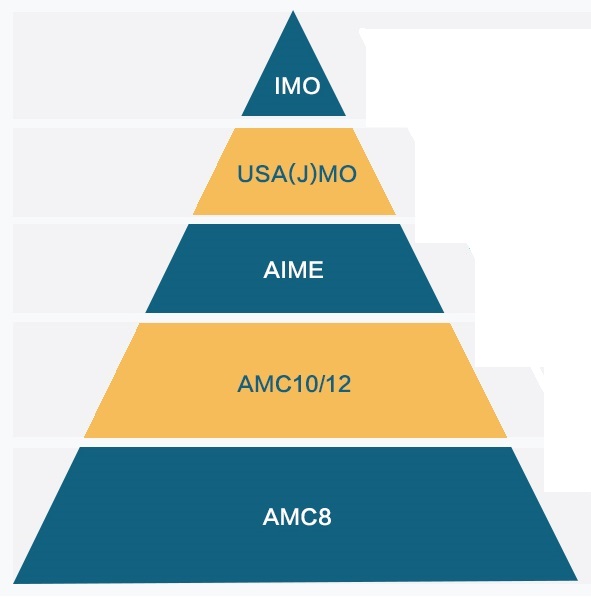
There are many math competitions in the United States. Of those, only

AMC → AIME → USAMO sequence

would take you to the IMO (International Math Olympiad), the highest level math competition for high school students in the world!

AMC 10-12-New

Click here to read more!

imagesFX9CEY3L

Who should take this class: 

This class is very appropriate for 7th-12th grade students who are hoping to qualify for the AIME.

Benefits:

  • 10 tutorial handouts (>500 pages) developed by Dr. Henry Wan and 500 new problems similar to AMC 10/12 level from the licensed AMC Database.
  • 2 FREE mock tests that are intended to mimic an actual math competition exam, each of which has 25 questions similar to AMC 10/12 level taken from the licensed AMC Database. These simulated tests help students assess their level of preparation for the Math Competitions. After attempting the test, students get answers, explanations, and a detailed score report and wise performance summary.
  • FREE registration for the AMC 10/12A — Friday, November 10, 2023 and AMC 10/12B — Thursday, November 16, 2023. Please see: The 2023 AMC 10/12 Contests at the Ivy League Center on Nov. 10, 2023, and Nov. 16, 2022

Weekly Homework:

At least 3 hours per week. Problem sets include all problems from 92 past real AMC 10/12 test booklets from 2000-2022, and 500 brand new problems having similar difficulty and style as the real AMC 10/12 problems, extracted from the licensed AMC Database.

The focus will on the final 15 problems on the AMC 10/12, and the first 5 problems on the AIME, as well as those hard problems on the ARML. Note that some hard problems on the recent AMC 10 and 12 are exactly the same as previous ARML Problems.

Read More at:

Each week, we will carefully review and check 2 students’ homework, and correct any mistakes. The next week, we will check another 2 students’ homework, and this will continue on a rotational basis until all students have had their homework checked at least once and the cycle will start again. Based on the work of the 2 students that week, we will provide the those 2 students with individualized proposal and support.

Qualifying AIME

Class Outline:
We will focus on efficient tricks, shortcuts, and strategies to solve AMC problems as well as test-taking tactics. The emphasis of this class will be on systematic, comprehensive, in-depth problem-solving in algebra, which is very common in competitive math. We will also help students develop quick problem solving strategies and effective time management skills.

Class Date Topic
1 11/20, Sun Arithmetic Ratios
2 11/27, Sun Exponentials and Radicals
3 12/4, Sun Algebraic Manipulations
4 12/11, Sun Newly-Defined Functions and Operations
5 12/18 Sun Quadratic Functions
6 1/8, Sun Polynomials
7 1/15, Sun Arithmetic and Geometric Sequences and Series
8 1/22, Sun Recursive Sequences and Telescoping Series
9 1/29, Sun Floor and Ceiling Functions
10 2/5, Sun Binomial and Multinomial Theorems, and Algebraic Methods in Counting and Probability

AMC Logo

Small-sized Class Teaching Model: 

We utilize the highly effective small-sized class teaching model. Smaller classes lead to pupils receiving more individual attention from teachers, and having more active interactions with them. We focus on every individual, not the whole class. Students will thrive from the smaller class sizes that allow them to reach their full potential. Particularly, students can benefit tremendously from high-frequent individualized student-teacher interactions leading to establishment of a stronger foundation for lifelong learning.

Our main purpose is to help our students gain deeper understanding of the fundamental math concepts, build a solid foundation in math, and develop the critical thinking and problem-solving skills that are so valuable to success in any career. We are big believers in the FUNDAMENTALS! Our students will receive the LIFELONG BENEFITS from learning math.

IMG_2563_0

Regardless of his/her math level, each student will have the opportunity to learn math in a fun, friendly, cooperative, supportive learning environment. The most important thing is to have fun.

Bronze_medal

Our Students

In 2022, we had 3 students qualified for the Math Olympiad Summer ProgramRead more at: Brendon J., Kyle S., and Isabella Z. Qualified for the 2022 Math Olympiad Summer Program

In 2022, we had 1 student competed in International Girls’ Math OlympiadRead more at: sabella Z. Competes in International Girls’ Math Olympiad

In 2022, we had 7 students qualified for the USAMO andstudents for the USAJMO. Read more at: 2022 USAMO and USAJMO Qualifiers Announced — Seven Students Qualified for the USAMO and Seven Students for the USAJMO.

In 2022, we had 88 students who obtained top scores on the AMC 8 contest!

  • 10 of our students were among the top 131 worldwide winners (Perfect Scorers), as shown in Table 1. Click Here see a full list of the 131 worldwide winners.
  • 52 students received National Distinguished Honor Roll Certificates awarded to top 1% test takers. They were among the 1,010 worldwide winners. Click Here see a full list.
  • 26 students received National Honor Roll Certificates awarded to top 5% test takers. They were among the 2,449 worldwide winners. Click Here see a full list.
  • 88 out of our 91 students (96.7%) received National Awards for the AMC 8 from the Mathematical Association of America

Read more at: 022 AMC 8 Results Just Announced — Ten Students Received Perfect Scores

In Fall 2021, we had 93 students who are qualified to take the AIME either through the AMC 10A/12A or AMC 10B/12B. One of our students was among the 5 Perfect Scorers worldwide on the AMC 10A: Nina L. and one of our students was among the 2 Perfect Scorers worldwide on the AMC 10B: Ming Y. Read more at: 93 Students Qualified for the 2021 Fall AIME and 2 Students Received Perfect Scores on the 2021 Fall AMC 10/12

In 2021, we had 6 students qualified for the USAMO and 6 students for the USAJMO. Read more at: 2021 USAMO and USAJMO Qualifiers Announced — Six Students Qualified for the USAMO and Six Students for the USAJMO

In Spring 2021, we had 91 students who are qualified to take the AIME either through the AMC 10A/12A or AMC 10B/12B. Two of our students was among the 17 Perfect Scorers worldwide on the AMC 12A: Evan L. and Suraj O. and one of our students was among the 27 Perfect Scorers worldwide on the AMC 10A: Xinchen L. Read more at: 91 Students Qualified for the 2021 AIME and 3 Students Received Perfect Scores on the 2021 AMC 10/12

In 2021, we had 8 students who got into the MathCounts state-level top 10. Yunyi L. won 9th Place in the 2021 MathCounts National Competition!

In 2020, we had 79 students who obtained top scores on the AMC 8 contest!

  • 5 of our students were among the top 57 worldwide winners (Perfect Scorers).
  • 49 students received National Distinguished Honor Roll Certificates awarded to top 1% test takers.
  • 25 students received National Honor Roll Certificates awarded to top 5% test takers.
  • 79 out of our 81 students (97.5%) received National Awards for the AMC 8 from the Mathematical Association of America.

Read more at: 2020 AMC 8 Results Just Announced — Five Students Received Perfect Scores

In 2020, we had 82 students who are qualified to take the AIME either through the AMC 10A/12A or AMC 10B/12B. One of our students was among the 11 Perfect Scorers worldwide on the AMC 12A: Yiyang X, and one of our students was among the 13 Perfect Scorers worldwide on the AMC 10A: Jason W.. 43 middle schoolers and 9 elementary schoolers qualified for the AIME! Read more at: 2020 AIME Qualifiers Announced — 82 Students Qualified for the AIME

In 2019, we had 71 students who obtained top scores on the AMC 8 contest!

  • 8 of our students were among the top 151 National Winners (Perfect Scorers), including 2 sixth graders.
  • 36 students received National Distinguished Honor Roll Certificates awarded to top 1% test takers.
  • 27 students received National Honor Roll Certificates awarded to top 5% test takers.
  • 71 out of our 73 students (97.3%) received National Awards for the AMC 8 from the Mathematical Association of America.

Read more at: 2019 AMC 8 Results Just Announced — Eight Students Received Perfect Scores

In 2019, we had 4 Students Qualified for the USAMO and 4 Students for the USJMO.

  • Of the 280 USA Math Olympiad national qualifiers, 4 are our students: Luke C., Zipeng L., Sameer P., and Peter P.
  • Of the 235 USA Junior Math Olympiad national qualifiers, 4 are our students: Michael H., Noah W., Holden W., and Isabella Z.

Read more at: 2019 USAMO and USAJMO Qualifiers Announced — Four Students Qualified for the USAMO and Four Students for the USAJMO

In 2019, we had 76 students who are qualified to take the AIME either through the AMC 10A/12A or AMC 10B/12B. One of our students was among the 22 Perfect Scorers worldwide on the AMC 10A: Noah W. and one of our students were among the 10 Perfect Scorers worldwide on the AMC 12B: Kenneth WVery impressively, 32 middle schoolers and 7 elementary schoolers qualified for the AIME!

In 2018, we had 64 students who obtained top scores on the AMC 8 contest!

  • of our students were among the top 44 National Winners (Perfect Scorers): Eric B., Kevin Y., and Isabella Z.
  • 40 students received National Distinguished Honor Roll Certificates awarded to top 1% test takers.
  • 21 students received National Honor Roll Certificates awarded to top 5% test takers.
  • 64 out of our 66 students (96.5%) received National Awards for the AMC 8 from the Mathematical Association of America

Read more at: 2018 AMC 8 Results Just Announced — Three Students Received Perfect Scores

In 2018, we had 73 students who are qualified to take the AIME either through the AMC 10A/12A or AMC 10B/12B. Two of our students were among the 35 Perfect Scorers worldwide on the AMC 10A: Austen M. and Jason W.  and two of our students were among the 21 Perfect Scorers worldwide on the AMC 12B: Kaan D. and Edward W. Remarkably, 11 middle schoolers and 2 elementary schoolers qualified for the AIME!

In 2017, we had 63 students who earned top scores on the AMC 8 contest!

  • of our students were among the top 75 National Winners (Perfect Scorers).
  • 34 students received National Distinguished Honor Roll Certificates awarded to top 1% test takers.
  • 22 students received National Honor Roll Certificates awarded to top 5% test takers.
  • 63 out of our 65 students (97%) received National Awards for the AMC 8 from the Mathematical Association of America

Read more at: 2017 AMC 8 Results Just Announced — Seven Students Received Perfect Scores

In 2017, we had 61 students who are qualified to take the AIME either through the AMC 10A/12A or AMC 10B/12B. One of our students was among the 28 Perfect Scorers worldwide on the AMC 10A: Austen M., and two of our students were among the 65 Perfect Scorers worldwide on the AMC 10B: Ashwin A. and Brad Z. Remarkably, eight middle schoolers and one elementary schooler qualified for the AIME, which is geared toward high school students. Very impressively, Bryan Z., a 6th grader, gained a score of 132 out of 150 on the AMC 10B.Read more at: 2017 AIME Qualifiers Announced — 61 Students Qualified for the AIME

In 2016, we had 36 students who are qualified to take AIME either through AMC 10A/12A or AMC 10B/12B. One of our students was among the 23 Perfect Scorers worldwide on the AMC 10A: Joel (Junyao) T. Particularly, seven middle schoolers and one elementary schooler qualified for the AIME, which is geared toward high school students. Pravalika P., a 6th grader, got a 115.5 out of 150 on the AMC10B, which is very impressive. Read more at: 2016 AIME Qualifiers Announced — 36 Students Qualified for AIME

2011 – 2015: In total, 37 students scored above 120 on the American Mathematics Contest 10 (AMC 10) and qualified for the American Invitational Mathematics Examination (AIME); 26 students scored above 100 on the American Mathematics Contest 12 (AMC 12) and qualified for the American Invitational Mathematics Examination (AIME); 3 students qualified for the USA Mathematical Olympiad (USAMO), the highest level of math competition for high school students in the USA

2011 – 2015: In total, 23 students achieved perfect scores of 28 on the AMC 8

Read more at: Notable Achievements of Our Students

AAEAAQAAAAAAAAKeAAAAJDkzYTk2ZjE5LTk1YWQtNDBkNy1hZDhjLTVjOTA2YWQ2NmQ2Mw

Our Uniqueness

We have a long history of close collaboration with the MAA’American Mathematics Competitions (AMC), which are dedicated to strengthening the mathematical capabilities of our nation’s youth, and are the first of a series of competitions in high school mathematics that determine the United States team for the International Mathematical Olympiad (IMO).

We are only one in the Washington DC metropolitan area to offer elementary, middle, and high-school level competition math courses. Our students have received top scores and awards at prestigious national and math competitions.

Great Benefits of Math Competitions

In an increasingly competitive college application pool, the process of mastering math skills through our courses and participating in the American Math Competitions will help students strengthen and diversify their extracurricular activities. These contests can motivate students’ interest and passion in math, and they can discover their talent through solving challenging problems different from those in the school classes. Many top colleges also request AMC scores as part of the college application process. Both MIT and Caltech have entry blanks on their official admission application forms for the applicant to enter their best AMC and AIME scores. Ivy League Colleges and Stanford ask for to the AMC and AIME scores in their Supplement to the Common Application Forms. Your children deserve the chance to list these scores on their applications! Good AMC scores will greatly enhance admission opportunities for students to elite colleges.

Read more at::

education priceless treasure

2014124135627709

Click HERE find out more about Math Competitions!sat-logo-3

Click HERE to find out more about SAT Prep!

amc

testa005

1090007ad4f9061d818

AIME_RGBAMCAMC_Airlines_logo_svg

education priceless treasure

31eaba7d8a4376fedc290c94d5702d429

6e2ad27c20314a60cdd086927f15b524

001YIeUmgy6X1ziaAW4d0&690

0

rosie_the_riveter_poster

Online Intensive AMC 8/Mathcounts Prep (for 4th to 8th Graders) Winter Weekend Course Starting Nov. 19

Winter is the BEST time to prepare for the AMC 8 and Mathcounts!

The period of time between 4th-8th grade is most critical to the development of students’ mathematical fascinations, interests, and skills!

Winter  Session (Comprehensive Problem-Solving)
9 Classes (Eastern Time: 6:00 – 8:00 pm), Total: 18 Hours
11/19, 11/26, 12/3, 12/10, 12/17, 12/24, 12/31, 1/7, 1/14

Course Outline

Online Registration is now open! Click HERE to register and pay.

Tuition (including all materials)

New Student:    $630   Buy Now Button  

Returning Student:   $620   Buy Now Button  

Click HERE to see payment and refund policy.

You are very welcome to sign up for our online course which offers a quick, efficient way for students to interact with teachers over long distance. We use the Google Meet to video chat and easily connect with students to teach them our tricks and shortcuts to getting an amazing score on their contests, as well as offer them our guidance and support. Students can ask questions face-to-face, and can complete problems with the supervision of our teachers/coaches. Click HERE to see detailed instruction.

commitment to the whole course can maximize the benefit of learning all the math ideas, methods, strategies, tactics, skills, and techniques.

  • This is a live class, not a pre-recorded one. Instructors will ask students questions, and students can also ask questions during the class or email their questions to instructors after class.
  • We record all of our lessons so that our students can watch them after class for review and self-study.

Instructors: Dr. Henry Wan

mathequalsawesomelogo

Purpose: To prepare for math competitions, such as

Contact Information:
Ivy League Education Center
Tel:  301-922-9508
Email:  chiefmathtutor@gmail.com

Math-Competitions

Specific Goal of the 2023 AMC 8:

To become part of the top 5% of scorers on the AMC 8, and then receive National Honor Roll Certificates.

Specific Goal of the 2023 AMC 10:

To earn a score of 90 or more out of 150 on the AMC 10, and then receive National Achievement Honor Roll Certificates.

Specific Goal of the MathCounts:

To become one of the top winners in the individual competition at the chapter level and then advance to the state competition.

AMC-General

There are many math competitions in the United States. Of those, only

AMC → AIME → USAMO sequence

would take you to the IMO (International Math Olympiad), the highest level math competition for high school students in the world!

amc8

Click here to read more!

1519880981742

Description:
Our curriculum focuses on advancing the mathematical skills of 4th-8th graders to prepare them for math competitions, such as AMC 8, AMC 10, Mathcounts, Math Olympiads for Elementary and Middle Schools (MOEMS), Math Kangaroo, and Math League. A variety of contest questions, including all past official AMC 8 problems, the first 15 problems on each old AMC 10 tests, and MathCounts Competition problems at the school, chapter, state, and national level, are used to teach students strategies to solve problems and help students prepare for the competitions. These problems stimulate their interest and enthusiasm for critical thinking and problem solving, broaden their mathematical intuition, and develop their brainpower. The topics taught in this class are not covered in regular school math classes, allowing our students to stay one step ahead.

Benefits:

Grade Levels: Grades 4-8

AMC Logo

Class Outline:

This class focuses on efficient tricks, shortcuts, and strategies to solve competitive math problems as well as test-taking tactics. The emphasis of this class will be on comprehensively problem-solving, which is the most important to competitive math. In particular, we will help students use mental math for accurately and quickly solving contest questions in their heads. 

Class

Date

Topic

1

11/19, Sat

Plane Geometry

2

11/26, Sat

Solid Geometry

3

12/3, Sat

Sequences and Patterns

4

11/10, Sat

Number Theory

5

11/17, Sat

Counting and Combinatorics

6

12/24, Sat

Probability

7

12/31, Sat

Statistics and Data Analysis

8

1/7, Sat

Arithmetic Ratio and Proportional Reasoning

9

1/14, Sat

Equations and Algebraic Methods

We reserve the right to adjust the teaching content and pace according to the actual performance of students.

Homework:

The focus will be on the final 15 problems on the AMC 8, and the first 15 problems on the AMC 10, as well as those Those medium and hard-level difficulty questions on the MathCounts. We will provide students with 500 brand new problems, extracted from the licensed AMC Database, having similar difficulty and style as the hard real AMC 8 problems.

On average, at least 6 hours per week, as described in the article: Homework assignments are a fundamental part of our courses. Click HERE to see a typical homework sample we developed. Each week, we will carefully review and check 3 students’ homework, and correct any mistakes. The next week, we will check another 3 students’ homework, and this will continue on a rotational basis until all students have had their homework checked at least once and the cycle will start again. Based on the work of the 3 students that week, we will provide the those 3 students with individualized proposal and support. More details can be found in the article: Homework Correction is very Important — We Give an Extensive Correction of the Incorrect Answers of All Homework.

do-math

We have to face the simple truth that to do well on these grueling contests, we will need to practice. Just like it is for sports and music, the key to success is repetition and practice. We strongly believe in effort and the malleability of intelligence. Intelligence can be enhanced through effort. People can develop impressive levels of expertise through hard work and practice. Effort and persistence are the keys to success. Hard work always pays off: practice makes perfect!

All problems from past AMC 8 exams (1985-2022),  AMC 10 exams (2000-2022), and MathCounts (1990–2022) form our “big data” system. Based on artificial intelligence (AI), machine learning, and deep learning, we devised a data mining and predictive analytics tool for math problem similarity searching. Using this powerful tool, we examined the types, styles, frequencies, characteristics, and traits of questions in all these materials, and then completely “decoded” the AMC, and MathCounts. We always completely show all the “secret code” cracked from the above big data to our students, and teach them to totally grasp and “control” the AMC and MathCounts. For all questions on the recent AMC/MathCounts contests, we can find their “ancestors” and “roots” from the old AMC/MathCounts problems. Therefore, the best way to prepare for the contest is to practice by solving old AMC/MathCounts problems.

https___img_evbuc_com_https%253A%252F%252Fcdn_evbuc_com%252Fimages%252F14806251%252F149172474682%252F1%252Foriginal

Main Purpose:

Our main purpose is to help our students gain deeper understanding of the fundamental math concepts, build a solid foundation in math, and develop the critical thinking and problem-solving skills that are so valuable to success in any career. We are big believers in the FUNDAMENTALS! Our students will receive the LIFELONG BENEFITS from learning math.

Regardless of his/her math level, each student will have the opportunity to learn math in a fun, friendly, cooperative, supportive learning environment. The most important thing is to have fun.

Bronze_medal

Our Students

In 2022, we had 3 students qualified for the Math Olympiad Summer ProgramRead more at: Brendon J., Kyle S., and Isabella Z. Qualified for the 2022 Math Olympiad Summer Program

In 2022, we had 1 student Competes in International Girls’ Math OlympiadRead more at: sabella Z. Competes in International Girls’ Math Olympiad

In 2022, we had 7 students qualified for the USAMO andstudents for the USAJMO. Read more at: 2022 USAMO and USAJMO Qualifiers Announced — Seven Students Qualified for the USAMO and Seven Students for the USAJMO.

In 2022, we had 88 students who obtained top scores on the AMC 8 contest!

  • 10 of our students were among the top 131 worldwide winners (Perfect Scorers), as shown in Table 1. Click Here see a full list of the 131 worldwide winners.
  • 52 students received National Distinguished Honor Roll Certificates awarded to top 1% test takers. They were among the 1,010 worldwide winners. Click Here see a full list.
  • 26 students received National Honor Roll Certificates awarded to top 5% test takers. They were among the 2,449 worldwide winners. Click Here see a full list.
  • 88 out of our 91 students (96.7%) received National Awards for the AMC 8 from the Mathematical Association of America

Read more at: 022 AMC 8 Results Just Announced — Ten Students Received Perfect Scores

In Fall 2021, we had 93 students who are qualified to take the AIME either through the AMC 10A/12A or AMC 10B/12B. One of our students was among the 5 Perfect Scorers worldwide on the AMC 10A: Nina L. and one of our students was among the 2 Perfect Scorers worldwide on the AMC 10B: Ming Y. Read more at: 93 Students Qualified for the 2021 Fall AIME and 2 Students Received Perfect Scores on the 2021 Fall AMC 10/12

In 2021, we had 6 students qualified for the USAMO and 6 students for the USAJMO. Read more at: 2021 USAMO and USAJMO Qualifiers Announced — Six Students Qualified for the USAMO and Six Students for the USAJMO

In 2021, we had 8 students who got into the MathCounts state-level top 10. Yunyi L. won 9th Place in the 2021 MathCounts National Competition!

In Spring 2021, we had 91 students who are qualified to take the AIME either through the AMC 10A/12A or AMC 10B/12B. Two of our students was among the 17 Perfect Scorers worldwide on the AMC 12A: Evan L. and Suraj O. and one of our students was among the 27 Perfect Scorers worldwide on the AMC 10A: Xinchen L. Read more at: 91 Students Qualified for the 2021 AIME and 3 Students Received Perfect Scores on the 2021 AMC 10/12

In 2020, we had 79 students who obtained top scores on the AMC 8 contest!

  • 5 of our students were among the top 57 worldwide winners (Perfect Scorers).
  • 49 students received National Distinguished Honor Roll Certificates awarded to top 1% test takers.
  • 25 students received National Honor Roll Certificates awarded to top 5% test takers.
  • 79 out of our 81 students (97.5%) received National Awards for the AMC 8 from the Mathematical Association of America.

Read more at: 2020 AMC 8 Results Just Announced — Five Students Received Perfect Scores

In 2020, we had 82 students who are qualified to take the AIME either through the AMC 10A/12A or AMC 10B/12B. One of our students was among the 11 Perfect Scorers worldwide on the AMC 12A: Yiyang X, and one of our students was among the 13 Perfect Scorers worldwide on the AMC 10A: Jason W.. 43 middle schoolers and 9 elementary schoolers qualified for the AIME!

In 2019, we had 71 students who obtained top scores on the AMC 8 contest!

  • 8 of our students were among the top 151 National Winners (Perfect Scorers), including 2 sixth graders.
  • 36 students received National Distinguished Honor Roll Certificates awarded to top 1% test takers, as shown in Table 2.
  • 27 students received National Honor Roll Certificates awarded to top 5% test takers, as shown in Table 3.
  • 71 out of our 73 students (97.3%) received National Awards for the AMC 8 from the Mathematical Association of America

Read more at: 2019 AMC 8 Results Just Announced — Eight Students Received Perfect Scores

In 2019, we had 4 Students Qualified for the USAMO and 4 Students for the USJMO.

  • Of the 280 USA Math Olympiad national qualifiers, 4 are our students: Luke C., Zipeng L., Sameer P., and Peter P.
  • Of the 235 USA Junior Math Olympiad national qualifiers, 4 are our students: Michael H., Noah W., Holden W., and Isabella Z.

Read more at: 2019 USAMO and USAJMO Qualifiers Announced — Four Students Qualified for the USAMO and Four Students for the USAJMO

In 2019, we had 76 students who are qualified to take the AIME either through the AMC 10A/12A or AMC 10B/12B. One of our students was among the 22 Perfect Scorers worldwide on the AMC 10A: Noah W. and one of our students were among the 10 Perfect Scorers worldwide on the AMC 12B: Kenneth WVery impressively, 32 middle schoolers and 7 elementary schoolers qualified for the AIME!

In 2018, we had 64 students who obtained top scores on the AMC 8 contest!

  • of our students were among the top 44 National Winners (Perfect Scorers): Eric B., Kevin Y., and Isabella Z.
  • 40 students received National Distinguished Honor Roll Certificates awarded to top 1% test takers.
  • 21 students received National Honor Roll Certificates awarded to top 5% test takers.
  • 64 out of our 66 students (96.5%) received National Awards for the AMC 8 from the Mathematical Association of America

Read more at: 2018 AMC 8 Results Just Announced — Three Students Received Perfect Scores

In 2018, we had 73 students who are qualified to take the AIME either through the AMC 10A/12A or AMC 10B/12B. Two of our students were among the 35 Perfect Scorers worldwide on the AMC 10A: Austen M. and Jason W.  and two of our students were among the 21 Perfect Scorers worldwide on the AMC 12B: Kaan D. and Edward W. Remarkably, 11 middle schoolers and 2 elementary schoolers qualified for the AIME!

In 2017, we had 63 students who earned top scores on the AMC 8 contest!

  • of our students were among the top 75 National Winners (Perfect Scorers).
  • 34 students received National Distinguished Honor Roll Certificates awarded to top 1% test takers.
  • 22 students received National Honor Roll Certificates awarded to top 5% test takers.
  • 63 out of our 65 students (97%) received National Awards for the AMC 8 from the Mathematical Association of America

Read more at: 2017 AMC 8 Results Just Announced — Seven Students Received Perfect Scores

In 2017, we had 61 students who are qualified to take the AIME either through the AMC 10A/12A or AMC 10B/12B. One of our students was among the 28 Perfect Scorers worldwide on the AMC 10A: Austen M., and two of our students were among the 65 Perfect Scorers worldwide on the AMC 10B: Ashwin A. and Brad Z. Remarkably, eight middle schoolers and one elementary schooler qualified for the AIME, which is geared toward high school students. Very impressively, Bryan Z., a 6th grader, gained a score of 132 out of 150 on the AMC 10B.Read more at: 2017 AIME Qualifiers Announced — 61 Students Qualified for the AIME

In 2016, we had 36 students who are qualified to take AIME either through AMC 10A/12A or AMC 10B/12B. One of our students was among the 23 Perfect Scorers worldwide on the AMC 10A: Joel (Junyao) T. Particularly, seven middle schoolers and one elementary schooler qualified for the AIME, which is geared toward high school students. Pravalika P., a 6th grader, got a 115.5 out of 150 on the AMC10B, which is very impressive. Read more at: 2016 AIME Qualifiers Announced — 36 Students Qualified for AIME

2011 – 2015: In total, 37 students scored above 120 on the American Mathematics Contest 10 (AMC 10) and qualified for the American Invitational Mathematics Examination (AIME); 26 students scored above 100 on the American Mathematics Contest 12 (AMC 12) and qualified for the American Invitational Mathematics Examination (AIME); 3 students qualified for the USA Mathematical Olympiad (USAMO), the highest level of math competition for high school students in the USA

2011 – 2015: In total, 23 students achieved perfect scores of 28 on the AMC 8

Read more at: Notable Achievements of Our Students

AAEAAQAAAAAAAAKeAAAAJDkzYTk2ZjE5LTk1YWQtNDBkNy1hZDhjLTVjOTA2YWQ2NmQ2Mw

Our Uniqueness

We have a long history of close collaboration with the MAA’American Mathematics Competitions (AMC), which are dedicated to strengthening the mathematical capabilities of our nation’s youth, and are the first of a series of competitions in high school mathematics that determine the United States team for the International Mathematical Olympiad (IMO).

We are only one in the Washington DC metropolitan area to offer elementary, middle, and high-school level competition math courses. Our students have received top scores and awards at prestigious national and math competitions.

Great Benefits of Math Competitions

In an increasingly competitive college application pool, the process of mastering math skills through our courses and participating in the American Math Competitions will help students strengthen and diversify their extracurricular activities. These contests can motivate students’ interest and passion in math, and they can discover their talent through solving challenging problems different from those in the school classes. Many top colleges also request AMC scores as part of the college application process. Both MIT and Caltech have entry blanks on their official admission application forms for the applicant to enter their best AMC and AIME scores. Ivy League Colleges and Stanford ask for to the AMC and AIME scores in their Supplement to the Common Application Forms. Your children deserve the chance to list these scores on their applications! Good AMC scores will greatly enhance admission opportunities for students to elite colleges.

Read more at:

2014124135627709

Click HERE find out more about Math Competitions!sat-logo-3

Click HERE to find out more about SAT Prep!

AMC 8-New

1090007ad4f9061d818

AMCAMC_Airlines_logo_svg

education priceless treasure

3.jpgMathCompetition4

tumblr_o0ejoktVY91u80xalo1_500

Online Intensive AIME Prep Winter Weekend Course Starting Nov. 20

Winter is the crucial time to develop students’ math skills and prepare for the American Invitational Mathematics Examination!

Winter Session I (Contest Geometry)
6 Classes (EASTERN Time: 3:00 – 5:00 pm),  Total: 12 Hours 
11/20, 11/27, 12/4, 12/11, 12/18, 12/24

Winter Session II (Comprehensive Problem Solving)
6 Classes (EASTERN Time: 3:00 – 5:00 pm),  Total: 12 Hours 
12/31, 1/8, 1/15, 1/22, 1/29, 2/5

Course Outline
Online Registration is now open! Click HERE to register and pay.

  • This is a live class, not a pre-recorded one. Instructors will ask students questions, and students can also ask questions during the class or email their questions to instructors after class.
  • We record all of our lessons as a big bonus so that our students can watch class videos after class for review and self-study.
Tuition (including all materials)
Session I: New Student: $600 Buy Now Button
Returning Student: $590 Buy Now Button
Session II: New Student: $600  Buy Now Button
Returning Student: $590 Buy Now Button
Sessions I & II: New Student: $1,185 Buy Now Button
Returning Student: $1,165 Buy Now Button
Click HERE to see payment and refund policy.

commitment to the whole course can maximize the benefit of learning all the math ideas, methods, strategies, tactics, skills, and techniques.

aime2
This program has been carefully designed for the students who have higher expectation for their American Invitational Mathematics Examination (AIME) scores. While enriching their resume through exciting math competition experience, honing the test skill for AIME becomes even more critical.

AMC-General

The AIME is used to determine qualification for the United States of America Mathematical Olympiad (USAMO). There are many math competitions in the United States. Of those, only

AMC → AIME → USAMO sequence

would take you to the IMO (International Math Olympiad), the highest level math competition for high school students in the world!

You are very welcome to sign up for our online course which offers a quick, efficient way for students to interact with teachers over long distance. We use the Google Meet to video chat and easily connect with students to teach them our tricks and shortcuts to getting an amazing score on their contests, as well as offer them our guidance and support. Students can ask questions face-to-face, and can complete problems with the supervision of our teachers/coaches. Click HERE to see detailed instruction.

Instructors:

Contact Information:
Ivy League Education Center
Tel:  301-922-9508     or        240-780-8828
Email:  chiefmathtutor@gmail.com

Purpose: To prepare for AIME I (Tuesday, February 7, 2023) and AIME II (Wednesday, February 15, 2023)AIME-Logo

  • Improve student scores by working on both fundamental theorems and ideas
  • Develop and foster creative problem solving strategies
  • Make the USA(J)MO!!!

For Whom?
This AIME course is aimed at those students with AMC 10/12 scores of 100+ to students who have scored around 4 on the AIME.

AIME_RGB

What?
This class will focus mostly on building strong basics in the five main pillars of Combinatorics, Number Theory, Geometry, Algebra, and Probability. The goal is for students to obtain the mental agility required to tackle these complex problems and hopefully get them within and past range of qualification for the USAMO and USAJMO, or around 9 problems.

How?
Focus on basic concepts and essential knowledge before moving on developing the skills and intuition to find and pursue good lines of attack for complex problems.

Class Outline:
This class focuses on efficient tricks, shortcuts, and strategies to solve AIME problems as well as test-taking tactics. We reserve the right to adjust the teaching content and pace according to the actual performance of students.

Session I (Geometry)

Class Date Topic
1 11/20, Sun Triangle Geometry
2 11/27, Sun Circle Geometry
3 12/4, Sun  Polygon Geometry
4 12/11, Sun Analytical Geometry
5 12/18, Sun Trigonometry Bashing
6 12/24, Sun Spatial Geometry

Session II (Comprehensive Problem Solving)

7 12/31, Sun Using the Advanced Algebra Toolkit to Solve the AIME Problems
8 1/8, Sun Logarithmic and Exponential Functions, Trigonometric Functions, and Complex Numbers
9 1/15, Sun The Art and Craft for Solving AIME Number Theory Problems
10 1/22, Sun  Advanced Topics in Number Theory
11 1/29, Sun Tricks and Shortcuts for Solving AIME Combinatorics Problems
12 2/5, Sun Advanced Topics in Combinatorics

Benefits:

  • 12 tutorial handouts (>480 pages) developed by Dr. Henry Wan and 500 new problems at the AIME level from the licensed AMC Database
  • 2 FREE mock tests that are intended to mimic an actual math competition exam, each of which has 15 questions similar to the AIME level taken from the licensed AMC Database. These simulated tests help students assess their level of preparation for the Math Competitions. After attempting the test, students get answers, explanations, and a detailed score report and wise performance summary.

Homework: At least 2 hour of homework per class. Students are expected to complete all of the previous AIME contests in the past 10 years, which is over 60 hours of practice. Our instructors are open to questions on any previous AIMEs.
AIME_large

All problems from all of the previous 63 AIME contests (1983-2022) form our “big data” system. We have used data mining and predictive analytics to examine the types and the frequencies of questions in all these materials, and then completely “decoded” the AIME. We will show all the “secret code” cracked from the above big data to students, and teach them to totally grasp and “control” the AIME. For all questions on the recent AIME contests, we can find their “ancestors” and “roots” from the old AIME problems. Therefore, the best way to prepare for the contest is to practice by solving old AIME problems.

Bronze_medal

Our Students

In 2022, we had 3 students qualified for the Math Olympiad Summer ProgramRead more at: Brendon J., Kyle S., and Isabella Z. Qualified for the 2022 Math Olympiad Summer Program

In 2022, we had 1 student Competes in International Girls’ Math OlympiadRead more at: sabella Z. Competes in International Girls’ Math Olympiad

In 2022, we had 7 students qualified for the USAMO andstudents for the USAJMO. Read more at: 2022 USAMO and USAJMO Qualifiers Announced — Seven Students Qualified for the USAMO and Seven Students for the USAJMO.

In 2022, we had 88 students who obtained top scores on the AMC 8 contest!

  • 10 of our students were among the top 131 worldwide winners (Perfect Scorers), as shown in Table 1. Click Here see a full list of the 131 worldwide winners.
  • 52 students received National Distinguished Honor Roll Certificates awarded to top 1% test takers. They were among the 1,010 worldwide winners. Click Here see a full list.
  • 26 students received National Honor Roll Certificates awarded to top 5% test takers. They were among the 2,449 worldwide winners. Click Here see a full list.
  • 88 out of our 91 students (96.7%) received National Awards for the AMC 8 from the Mathematical Association of America

Read more at: 022 AMC 8 Results Just Announced — Ten Students Received Perfect Scores

In Fall 2021, we had 93 students who are qualified to take the AIME either through the AMC 10A/12A or AMC 10B/12B. One of our students was among the 5 Perfect Scorers worldwide on the AMC 10A: Nina L. and one of our students was among the 2 Perfect Scorers worldwide on the AMC 10B: Ming Y. Read more at: 93 Students Qualified for the 2021 Fall AIME and 2 Students Received Perfect Scores on the 2021 Fall AMC 10/12

In 2021, we had 6 students qualified for the USAMO and 6 students for the USAJMO. Read more at: 2021 USAMO and USAJMO Qualifiers Announced — Six Students Qualified for the USAMO and Six Students for the USAJMO

In 2021, we had 8 students who got into the MathCounts state-level top 10. Yunyi L. won 9th Place in the 2021 MathCounts National Competition!

In Spring 2021, we had 91 students who are qualified to take the AIME either through the AMC 10A/12A or AMC 10B/12B. Two of our students was among the 17 Perfect Scorers worldwide on the AMC 12A: Evan L. and Suraj O. and one of our students was among the 27 Perfect Scorers worldwide on the AMC 10A: Xinchen L. Read more at: 91 Students Qualified for the 2021 AIME and 3 Students Received Perfect Scores on the 2021 AMC 10/12

In 2020, we had 79 students who obtained top scores on the AMC 8 contest!

  • 5 of our students were among the top 57 worldwide winners (Perfect Scorers).
  • 49 students received National Distinguished Honor Roll Certificates awarded to top 1% test takers.
  • 25 students received National Honor Roll Certificates awarded to top 5% test takers.
  • 79 out of our 81 students (97.5%) received National Awards for the AMC 8 from the Mathematical Association of America.

Read more at: 2020 AMC 8 Results Just Announced — Five Students Received Perfect Scores

In 2020, we had 82 students who are qualified to take the AIME either through the AMC 10A/12A or AMC 10B/12B. One of our students was among the 11 Perfect Scorers worldwide on the AMC 12A: Yiyang X, and one of our students was among the 13 Perfect Scorers worldwide on the AMC 10A: Jason W.. 43 middle schoolers and 9 elementary schoolers qualified for the AIME!

Read more at: 2020 AIME Qualifiers Announced — 82 Students Qualified for the AIME

In 2019, we had 4 Students Qualified for the USAMO and 4 Students for the USAJMO.

  • Of the 280 USA Math Olympiad national qualifiers, 4 are our students: Luke C., Zipeng L., Sameer P., and Peter P.
  • Of the 235 USA Junior Math Olympiad national qualifiers, 4 are our students: Michael H., Noah W., Holden W., and Isabella Z.

Read more at: 2019 USAMO and USAJMO Qualifiers Announced — Four Students Qualified for the USAMO and Four Students for the USAJMO

In 2019, we had 76 students who are qualified to take the AIME either through the AMC 10A/12A or AMC 10B/12B. One of our students was among the 22 Perfect Scorers worldwide on the AMC 10A: Noah W.and one of our students were among the 10 Perfect Scorers worldwide on the AMC 12B: Kenneth WVery impressively, 32 middle schoolers and 7 elementary schoolers qualified for the AIME!

In 2018, we had 64 students who obtained top scores on the AMC 8 contest!

  • of our students were among the top 44 National Winners (Perfect Scorers): Eric B., Kevin Y., and Isabella Z.
  • 40 students received National Distinguished Honor Roll Certificates awarded to top 1% test takers.
  • 21 students received National Honor Roll Certificates awarded to top 5% test takers.
  • 64 out of our 66 students (96.5%) received National Awards for the AMC 8 from the Mathematical Association of America

Read more at: 2018 AMC 8 Results Just Announced — Three Students Received Perfect Scores

In 2018, we had 73 students who are qualified to take the AIME either through the AMC 10A/12A or AMC 10B/12B. Two of our students were among the 35 Perfect Scorers worldwide on the AMC 10A: Austen M. and Jason W.  and two of our students were among the 21 Perfect Scorers worldwide on the AMC 12B: Kaan D. and Edward W. Remarkably, 11 middle schoolers and 2 elementary schoolers qualified for the AIME!

In 2017, we had 63 students who earned top scores on the AMC 8 contest!

  • of our students were among the top 75 National Winners (Perfect Scorers).
  • 34 students received National Distinguished Honor Roll Certificates awarded to top 1% test takers.
  • 22 students received National Honor Roll Certificates awarded to top 5% test takers.
  • 63 out of our 65 students (97%) received National Awards for the AMC 8 from the Mathematical Association of America

Read more at: 2017 AMC 8 Results Just Announced — Seven Students Received Perfect Scores

In 2017, we had 61 students who are qualified to take the AIME either through the AMC 10A/12A or AMC 10B/12B. One of our students was among the 28 Perfect Scorers worldwide on the AMC 10A: Austen M., and two of our students were among the 65 Perfect Scorers worldwide on the AMC 10B: Ashwin A. and Brad Z. Remarkably, eight middle schoolers and one elementary schooler qualified for the AIME, which is geared toward high school students. Very impressively, Bryan Z., a 6th grader, gained a score of 132 out of 150 on the AMC 10B.Read more at: 2017 AIME Qualifiers Announced — 61 Students Qualified for the AIME

In 2016, we had 36 students who are qualified to take AIME either through AMC 10A/12A or AMC 10B/12B. One of our students was among the 23 Perfect Scorers worldwide on the AMC 10A: Joel (Junyao) T. Particularly, seven middle schoolers and one elementary schooler qualified for the AIME, which is geared toward high school students. Pravalika P., a 6th grader, got a 115.5 out of 150 on the AMC10B, which is very impressive. Read more at: 2016 AIME Qualifiers Announced — 36 Students Qualified for AIME

2011 – 2015: In total, 37 students scored above 120 on the American Mathematics Contest 10 (AMC 10) and qualified for the American Invitational Mathematics Examination (AIME); 26 students scored above 100 on the American Mathematics Contest 12 (AMC 12) and qualified for the American Invitational Mathematics Examination (AIME); 3 students qualified for the USA Mathematical Olympiad (USAMO), the highest level of math competition for high school students in the USA

2011 – 2015: In total, 23 students achieved perfect scores of 28 on the AMC 8

Read more at: Notable Achievements of Our Students

AAEAAQAAAAAAAAKeAAAAJDkzYTk2ZjE5LTk1YWQtNDBkNy1hZDhjLTVjOTA2YWQ2NmQ2Mw

Our Uniqueness

We have a long history of close collaboration with the MAA‘s American Mathematics Competitions (AMC), which are dedicated to strengthening the mathematical capabilities of our nation’s youth, and are the first of a series of competitions in high school mathematics that determine the United States team for the International Mathematical Olympiad (IMO).

We are only one in the Washington DC metropolitan area to offer elementary, middle, and high-school level competition math courses. Our students have received top scores and awards at prestigious national and math competitions.

We have extracted 5,000 brand new problems at the level of the AIME from the licensed AMC Database. In addition, we have also collected all AMC8/10/12 and AIME Official Solutions as shown in the article “American Mathematics Competitions (AMC) Materials.” All these materials have formed a golden resource for our students, who are the ultimate beneficiaries.

2014124135627709

Click HERE find out more about Math Competitions!sat-logo-3

Click HERE to find out more about SAT Prep!

beckmathclub-19-728

aime

Aime_hi_res_logo_colour

logo-aime logoaime2

education priceless treasure

How to Learn Math

You can learn math both inside and outside of the classroom, and it doesn’t have to be stressful or overwhelming! Once you have a good grasp of the basics, learning the more complex stuff will feel a lot easier. This article will teach you those basics (addition, subtraction, multiplication, and division) and also give you strategies you can use in and out of the classroom to help you better learn math.

Part 1

Keys to Being a Good Math Student

Step 1 Show up for class.
  • Come to class on time. In fact, come a little early and open your notebook to the right place, open your textbook and take out your calculator so that you’re ready to start when your teacher is ready to start.
  • Only skip class if you are sick. When you do miss class, talk to a classmate to find out what the teacher talked about and what homework was assigned.
Step 2 Work along with your teacher.
 
 
If your teacher works problems at the front of your class, then work along with the teacher in your notebook.
  • Make sure that your notes are clear, easy to read and cover all of the steps you need to solve the problems.[2] Don’t just write down the problems. Also write down anything that the teacher says that increases your understanding of the concepts.
  • Work any sample problems that your teacher posts for you to do. When the teacher walks around the classroom as you work, answer questions.
  • Participate while the teacher is working a problem. Don’t wait for your teacher to call on you. Volunteer to answer when you know the answer, and raise your hand to ask questions when you’re unsure of what’s being taught.
Step 3 Do your homework the same day as it's assigned.
 
 
When you do the homework the same day, the concepts are fresh on your mind. Sometimes, finishing your homework the same day isn’t possible. Just make sure that your homework is complete before you go to class.[3]
 
 
Step 4 Make an effort outside of class if you need help.
[4] 
 
Go to your teacher during his or her free period or during office hours.
  • If you have a Math Center at your school, then find out the hours that it’s open and go get some help.
  • Join a study group.[5] Good study groups usually contain 4 or 5 people at a good mix of ability levels. If you’re a “C” student in math, then join a group that has 2 or 3 “A” or “B” students so that you can raise your level. Avoid joining a group full of students whose grades are lower than yours.
  • If you’re still struggling, consider hiring a tutor. They’ll address the areas you’re having trouble with and help you build a solid foundation in math.[6]

Part 2

Learning Math in School

Step 1 Start with arithmetic.
 
 
In most schools, students work on arithmetic during the elementary grades. Arithmetic includes the fundamentals of addition, subtraction, multiplication and division.[7]
  • Work on drills. Doing a lot of arithmetic problems again and again is the best way to get the fundamentals down pat. Look for software that will give you lots of different math problems to work on. Also, look for timed drills to increase your speed.
  • Repetition is the basis of math. The concept has to be not only learned, but put to work for you to remember it!
  • You can also find arithmetic drills online, and you can download arithmetic apps onto your mobile device.
Step 2 Progress to pre-algebra.
 
 
This course will provide the building blocks that you’ll need to solve algebra problems later on.[8]
  • Learn about fractions and decimals. You’ll learn to add, subtract, multiply and divide both fractions and decimals. Regarding fractions, you’ll learn how to reduce fractions and interpret mixed numbers. Regarding decimals, you’ll understand place value, and you’ll be able to use decimals in word problems.
  • Study ratios, proportions and percentages. These concepts will help you to learn about making comparisons.
  • Solve squares and square roots. When you’ve mastered this topic, you’ll have perfect squares of many numbers memorized. You’ll also be able to work with equations containing square roots.
  • Introduce yourself to basic geometry. You’ll learn all of the shapes as well as 3D concepts. You’ll also learn concepts like area, perimeter, volume and surface area, as well as information about parallel and perpendicular lines and angles.
  • Understand some basic statistics. In pre-algebra, your introduction to statistics mostly includes visuals like graphs, scatter plots, stem-and-leaf plots and histograms.
  • Learn algebra basics. These will include concepts like solving simple equations containing variables, learning about properties like the distributive property, graphing simple equations and solving inequalities.

Step 3 Advance to Algebra I.
 
 
In your first year of algebra, you will learn about the basic symbols involved in algebra. You’ll also learn to:[9]
  • Solve linear equations and inequalities that contain 1-2 variables. You’ll learn how to solve these problems not only on paper, but sometimes on a calculator as well.
  • Tackle word problems. You’ll be surprised how many everyday problems that you’ll face in your future involve the ability to solve algebraic word problems. For example, you’ll use algebra to figure out the interest rate that you earn on your bank account or on your investments. You can also use algebra to figure out how long you’ll have to travel based on the speed of your car.
  • Work with exponents. When you start solving equations with polynomials (expressions containing both numbers and variables), you’ll have to understand how to use exponents. This may also include working with scientific notation. Once you have exponents down, you can learn to add, subtract, multiply and divide polynomial expressions.
  • Understand functions and graphs. In algebra, you’ll really get into graphic equations. You’ll learn how to calculate the slope of a line, how to put equations into point-slope form, and how to calculate the x- and y-intercepts of a line using slope-intercept form.
  • Figure out systems of equations. Sometimes, you’re given 2 separate equations with both x and y variables, and you have to solve for x or y for both equations. Fortunately, you’ll learn many tricks for solving these equation including graphing, substitution and addition.

Step 4 Get into geometry.
 
 
In geometry, you’ll learn about the properties of lines, segments, angles and shapes.[10]
  • You’ll memorize a number of theorems and corollaries that will help you to understand the rules of geometry.
  • You’ll learn how to calculate the area of a circle, how to use the Pythagorean theorem and how to figure out relationships between angles and sides of special triangles.
  • You’ll see a lot of geometry on future standardized tests like the SAT, the ACT and the GRE.
Step 5 Take on Algebra II.
 
 
Algebra II builds on the concepts that you learned in Algebra I but adds more complex topics involving more complex non-linear functions and matrices.[11]
 
Step 6 Tackle trigonometry.
 You know the words of trig: sine, cosine, tangent, etc. Trigonometry will teach you many practical ways to calculate angles and lengths of lines, and these skills will be invaluable for people who go into construction, architecture, engineering or surveying.[12]
 
Step 7 Count on some calculus.
 Calculus may sound intimidating, but it’s an amazing tool chest for understanding both the behavior of numbers and the world around you.[13]
  • Calculus will teach you about functions and about limits. You’ll see the behavior or a number of useful functions including e^x and logarithmic functions.
  • You’ll also learn how to calculate and work with derivatives. A first derivative gives you information based on the slope of a tangent line to an equation. For instance, a derivative tells you the rate at which something is changing in a non-linear situation. A second derivative will tell you whether a function is increasing or decreasing along a certain interval so that you can determine the concavity of a function.
  • Integrals will teach you how to calculate the area beneath a curve as well as volume.
  • High school calculus usually ends with sequences and series. Although students won’t see many applications for series, they are important to people who go on to study differential equations.
  • Calculus is still only the beginning for some. If you are considering a career with a high involvement of math and science, like an engineer, try going a bit farther![14]
 

The Heart of Mathematics: Beauty, Exactness, Simplicity, and Crazy Ideas

Israel Gelfand

The Unity of Mathematics

“The Unity of Mathematics” was an International Conference in honor of the 90th Birthday of Israel M. Gelfand. It was held in Cambridge, MA on August 31st to September 4th, 2003.

Below are his conference talk and his dinner talk (given at the conference dinner at Royal East Restaurant).

MATHEMATICS AS AN ADEQUATE LANGUAGE

(a few remarks)

PDF of the full talkINTRODUCTION

This conference is called The Unity of Mathematics. I would like to make a few remarks on this wonderful theme.

I do not consider myself a prophet. I am simply a student. All my life I have been learning from great mathematicians such as Euler and Gauss, from my older and younger colleagues, from my friends and collaborators, and most importantly from my students. This is my way to continue working.

Many people consider mathematics to be a boring and formal science. However, any really good work in mathematics always has in it: beauty, simplicity, exactness, and crazy ideas. This is a strange combination. I understood earlier that this combination is essential on the example of classical music and poetry. But it is also typical in mathematics. Perhaps it is not by chance that many mathematicians enjoy serious music.

This combination of beauty, simplicity, exactness, and crazy ideas is, I think, common to both mathematics and music. When we think about music we do not divide it into specific areas as we often do in mathematics. If we ask a composer what is his profession, he will answer, “I am a composer.” He is unlikely to answer, “I am a composer of quartets.” Maybe this is the reason why when I am asked what kind of mathematics I do, I just answer, “I am a mathematician.”

I was lucky to meet the great Paul Dirac, with whom I spent a few days in Hungary. I learned a lot from him.

In the 1930’s, a young physicist, Pauli, wrote one of the best books on quantum mechanics. In the last chapter of this book, Pauli discusses the Dirac equations. He writes the Dirac equations have weak points because they yield improbable and even crazy conclusions:

  1. These equations assume that, besides an electron, there exists a positively charged particle, the positron, which no one ever observed.
  2. Moreover, the electron behaves strangely upon meeting the positron. The two annihilate each other and form two photons.
    And what is completely crazy:
  3. Two photons can turn into an electron-positron pair.

Pauli writes that despite this, the Dirac equations are quite interesting and especially the Dirac matrices deserve attention.

I asked Dirac,
“Paul, why, in spite of these comments, did you not abandon your equations and continue to pursue your results?”

“Because they are beautiful.”

Now there is a radical perestroika of the fundamental language of mathematics. I will talk about this later. During this time, it is especially important to remember the unity of mathematics, to remember its beauty, simplicity, exactness and crazy ideas. I want to remind you that when the style of music changed in the 20th century many people said that the modern music lacked harmony, did not follow standard rules, had dissonances, and so on. However, Shoenberg, Stravinsky, Shostakovich and Schnitke were as exact in their music as Bach, Mozart and Beethoven.

read the full talk

DINNER TALK OF ISRAEL GELFAND

(given at the conference dinner at Royal East Restaurant on September 3, 2003)

It is a real pleasure to see all of you. I was asked many questions. I will try to answer some of them.

  • The first question is: Why at my age I can work in mathematics?
  • The second: What we must do in mathematics?
  • And the third: What is the future of mathematics?

I think these questions are too specific. I will instead try to answer my own question:

  • What is mathematics? (Laughter)

Let us begin with the last question: What is mathematics?

From my point of view, mathematics is a part of our culture like music, poetry and philosophy. I talked about this in my lecture at the conference.

There, I have mentioned the closeness between the style of mathematics and the style of classical music or poetry. I was happy to find the following four common features: first — beauty, second — simplicity, third — exactness, fourth — crazy ideas. The combination of these four things: beauty, exactness, simplicity and crazy ideas is just the heart of mathematics, the heart of classical music. Classical music is not only the music of Mozart, or Bach, or Beethoven. It is also the music of Shostakovich, Schnitke, Shoenberg (the last one I understand less). All this is classical music. And I think, that all these four features are always present in it. For this reason, as I explained in my talk, it is not by chance that mathematicians like classical music. They like it because it has the same style of psychological organization.

There is also another side of the similarity between mathematics and classical music, poetry, and so on. These are languages to understand many things. For example, in my lecture I discussed a question which I will not answer now, but I have the answer: Why did great Greek philosophers study geometry? They were philosophers. They learned geometry as philosophy. Great geometers followed and follow the same tradition — to narrow the gap between vision and reasoning. For example, the works of Euclid summed up this direction in his time. But this is another topic.

An important side of mathematics is that it is an adequate language for different areas: physics, engineering, biology. Here, the most important word is adequate language. We have adequate and nonadequate languages. I can give you examples of adequate and nonadequate languages. For example, to use quantum mechanics in biology is not an adequate language, but to use mathematics in studying gene sequences is an adequate language. Mathematical language helps to organize a lot of things. But this is a serious issue, and I will not go into details.

Why this issue is important now? It is important because we have a “perestroika” in our time. We have computers which can do everything. We are not obliged to be bound by two operations — addition and multiplication. We also have a lot of other tools. I am sure that in 10 to 15 years mathematics will be absolutely different from what it was before.

The next question was: How can I work at my age? The answer is very simple. I am not a great mathematician. I speak seriously. I am just a student all my life. From the very beginning of my life I was trying to learn. And for example now, when listening to the talks and reading notes of this conference, I discover how much I still do not know and have to learn. Therefore, I am always learning. In this sense I am a student. Never a “Fuhrer”.

I would like to mention my teachers. I cannot explain who all my teachers were because there were too many of them. When I was young, approximately 15-16 years old, I began tutoring in mathematics. I did not have the formal education, I never finished any university, I “jumped” through this. At the age of 19, I became a graduate student, and I learned from my older colleagues.

At that time one of the most important teachers for me was Schnirelman, a genius mathematician, who died young. Then there were Kolmogorov, Lavrentiev, Plesner, Petrovsky, Pontriagin, Vinogradov, Lusternik. All of them were different. Some of them I liked, some of them — I understood how good they were but I did not agree with their, let us say softly, point of view. (Laughter) But they were great mathematicians. I am very grateful to all of them, and I learned a lot from them.

At the end, I want to give you an example of a short statement, not in mathematics, which combines simplicity, exactness, and other features I mentioned. This is a statement of a Nobel Prize winner, Isaac Bashevis Singer: “There will be no justice as long as man will stand with a knife or with a gun and destroy those who are weaker than he is.”

Text written by Tatiana V. Gelfand.

taken from the Unity of Mathematics website.

数学大师华罗庚的数学教育思想

我虽然从学生时代起就多次见过华罗庚先生,但并无机会当面聆听他的谈话。这里提到的华先生的数学教育思想,都已经公开发表。这些耳熟能详的名言,已经深刻刻印在中国数学教育的历史上。我只是千千万万受益者中的普通一员。

20世纪中国数学教育深受两位数学大家的影响。一位是苏步青先生,他亲临中小学第一线,主编教材,为中学数学教师授课,设立苏步青数学教育奖,嘉惠后人。另一位便是华罗庚先生,他并没有关于中小学数学教育的直接论述,而是通过本人的传奇故事,怎样学习数学的谈话,以及倡导数学竞赛、撰写科普文章、使用杨辉三角等民族化数学命名等途径,深刻地影响了中国数学教育的进程。

我觉得在他的许多论述中,有四句话最有代表性,就是“熟能生巧”、“厚薄读书法”、“数形结合”以及“弄斧到班门”。这四句话, 科学地、辩证地处理了“基础与创新”新关系。时至今日,重温华先生的这些名言,仍然具有巨大的现实意义。

从熟能生巧说起

“熟能生巧”是中国的教育古训。不过,时下的教育理念,却完全摒弃了这一观点。这句话翻译成英是“Practice  make  perfect”,国外的教育家大多不赞成。国内的教育家也认为“熟能生巧”几近于“死记硬背”,将它丢在一边不予理睬。

那么我们看看华先生是怎么说的。华先生在“聪明在于学习,天才由于积累” [1]一文中认为:向科学进军必须“脚踏实地,循序前进,打好基础”。接着,有一段非常精辟的论述:

“我想顺便和大家谈谈两个方法问题。我认为,方法中最主要的一个问题,就是‘熟能生巧’。 搞任何东西都要熟,熟了才能有所发明和发现。但是我这里所说的熟,并不是要大家死背定律和公式,或死记人家现成的结论。不,熟的不一定会背,背不一定就熟。如果有人拿过去读过的书来念十遍、二十遍,却不能深刻地理解和运用,那我说这不叫熟,这是念经,熟就是要掌握你所研究的学科的主要环节,要懂得前人是怎样思考和发明这些东西的。”

古老的教育箴言“熟能生巧”,经过华先生一解释,将它和死记硬背区分开来,就可以成为数学教育的一个基本出发点。我们在中小学教学中, 对一些基本的内容,必须做到“熟能生巧”。

一个有意思的事情是,数学大师陈省身,同样在数学教育中倡导“熟能生巧”。2004年12 月7日,中央电视台《东方之子》播出对陈省身“几何人生”的采访,记者李小萌评论说:“面对成功, 陈省身说他只是熟能生巧而已。”接着,陈先生说:“ 所有这些东西一定要做得多了,比较熟练了,对于它的奥妙有了解,就有意思。所以比方说在厨房里头炒菜,你做个菜,炒个木须肉,这个菜炒了几十年以后,是了解得比较多,很清楚,数学也这样子,有些工作一定要重复,才能够精,才能够创新,才能做新的东西。”

两位大师的见解如此相同,我们当知“熟能生巧”对创新的重要性了。现如今,讲创新的言论遍地皆是,却对“熟能生巧”讳莫如深,实在不是一种好的倾向。

读书要“从薄到厚”,然后“从厚到薄”

如果说“熟能生巧”,还是借用古人的话来谈打好基础的重要性,那么华先生关于“厚薄读书法”则是关于“基础与创新”的全新创见。1962年,华先生在《中国青年》发表《学与识》的文章,根据他多年积累的治学经验,明确地提出了“由薄到厚”和“由厚到薄”的 两阶段读书法。这一充满个性的语言,立即传遍大江南北,现已成为中国数学教育理论的宝贵遗产,至今我还清楚地记得当初读到这篇文章时的心灵震撼。

做研究要打好基础,人所共知;做学问要弄懂弄通,人所共求。但究竟怎样算打好基础了?什么是把知识“弄懂”了?却难以说得清楚,心理学上有种种界定,也是云里雾里。华先生的这一“厚薄读书法”,就把这层窗户纸捅破了。华先生说:

“有人说,基础、基础,何时是了?天天打基础,何时是够?据我看来,要真正打好基础,有两个必经的过程:即‘由薄到厚’和‘由厚到薄的过程。‘由薄到厚’是学习、接受的过程,‘由厚到薄’是消化、提炼的过程。

经过‘由薄到厚”和‘由厚到薄’的过程,对所学的东西做到懂,彻底懂,经过消化的懂,我们的基础就算是真正的打好了,有了这个基础,以后学习就可以大大加快,这个过程也体现了学习和科学研究上循序渐进的规律。”

打基础与创新的关系,是当前数学教育一个十分重大的课题。国家需要创新人才,但是中小学教育是基础教育。基础教育要打基础,天经地义。在基础教育阶段,学生还没有能力做到真正的“创新”。那么,基础教育应该怎么做呢?按照华先生的意见,就应该是按照“厚薄读书法”的含义去做。第一步是让学生吸取知识,反复练习,广泛涉猎,加进自己的理解,把书读“厚”,然后是第二步,帮助学生通过反复咀嚼,消化吸收,自己总结经验,包括数学问题解决的经验,能够提纲挈领,如数家珍似的把知识融会贯通。

这样做,既是打基础,又是创新。中小学生能够做到这样,将来的发展前途必然广阔,创新的机会大大增多。这对当前的某些假“创新”之名,行功利之实的浮躁风气,实在是一剂令人清醒的良药。

这里,我们也不妨引用吴文俊先生的话加以佐证。吴先生说[2]:

“关于创新的含义,牛顿曾说,他之所以能够获得众多成就,是因为他站在过去巨人的肩膀上,得以居高而望远。我国也有类似的说法,叫推陈出新。我非常赞成和推崇‘推陈出新’这句话。有了陈才有新,不能都讲新,没有陈哪来新!创新是要有基础的,只有了解得透,有较宽的知识面,才会有洞见,才有底气,才可能创新!其实新和旧之间是有辩证的内在联系的。所谓陈,包括国内外古往今来科技方面所积累的许多先进成果。我们应该认真学习,有分析有批判地充分吸收。”

基础教育的创新,不能强求学生去做一些他们不喜欢的所谓“探究”工作。学生的创新,主要在于把“陈”了解得透,把“厚”书读“薄”。

数学见识之一:“数形结合百般好”

华先生的数学教育名言中,以“数形结合”一词流传最广。你走到任何一所学校,问任何一位数学老师,没有不知道“数形结合”的。我没有考证,在华先生之前,是否有人提出过“数形结合”,但是可以肯定,“数形结合”能够走进中国每一位数学教师的心田,是从华罗庚先生的一首教学诗开始的:

数与形,本是相倚依,焉能分作两边飞。
数缺形时少直觉,形少数时难入微。
数形结合百般好,隔裂分家万事非。
切莫忘,几何代数统一体,永远联系切莫离。

华先生在谈到“知识、学识、见识”[3]时说道:“知了,学了,见了,这还不够,还要有个提高过程,即识的过程。因为我们要认识事物的本质,达到灵活运用,变为自己的东西,就必须知而识之,学而识之,见而识之,不断提高。”什么是“识”?我想“数形结合”就是一个范例。

清代袁枚说过“学如箭簇,才如弓弩,识以领之,方能中鹊”。说得很对。我们的数学教育理论中,强调不能只学知识,还要培养能力。这当然对。但是,你有能力却没有见识,把箭乱放一通,怎能打中目标?

华先生提倡“识”,对数学教育的启示是,需要培养数学意识,用你的能力,把箭发向那个需要射中的目标。如何培养学生的“识”,是一个值得研究的课题。

“弄斧班门”

最后,我们要提到华先生关于“弄斧必到班门”的名言。真正的“弄斧班门”,需要勇气、自信、胆量和能力,不是每个人都能达到的。但是作为期望的目标,还是要有一点精神,正如“不想做元帅的士兵不是好士兵”的说法那样。值得提到的是,华罗庚先生在1980年应邀在国际数学教育大会上作大会发言,题目是“在中华人民共和国普及数学方法的若干个人体会”[4]。这几乎是一个数学教育工作者能够得到的最高荣誉。

华先生离开我们30多年了。但是他的传奇故事,奋斗精神,爱国情怀,以及有关数学教育的思想等,一定会在未来岁月发挥更大影响。

作者:张奠宙
来源:《数学教学》

华罗庚:学数学要“熟”、“练”、“化” 

学数学要“熟”、“练”、“化”

——华罗庚先生向北京师大附中高中学生讲话摘要(1963年)

今天,我来给大家谈谈学习数学的方法问题。我准备讲“熟”、“练”、“化”三个字,其中重点讲“化”字。我认为学习数学要达到“化”的标准。为什么要达到“化”的标准,怎样才能达到,达到了又有什么好处呢?我下面就着重讲讲“化”的问题。

首先“化”,就是不要死记硬背。

最近,我看到不少中学生有这样的情况:念书时念到后面忘了前面;课本讲的都会,但一到活用时就不会了;有的上课时,老师讲的能听懂,一做习题困难就来了;有的学生只会做书上的题,另外出题,稍一灵活就不行了,等等。原因在哪儿呢?原因就在于学的东西没有消化。知识不消化,不把书本上的知识变成自己消化、理解了的东西,在运用中自然会遇到很多因难。

比如在学习解一元二次方程的时候,有的同学死记公式 ,满以为就够了,就会做习题和应付考试了,但是过了些时间就模糊了,-b有没有负号,没把握了;b²-4ac也许记成b²-ac了。这就是不消化的后果。

相反,如果不是死记公式,而是记住了“配方”的原则,就是公式偶尔忘了,只要配了方,公式是照样可以写出来的。因此,我认为着重搞清“配方”是很重要的,不要认为“配方”只是在解二方程时才用,其实中学里用到“配方”的地方很多,特别是不等式的处理,就是学高等数学也要用“配方”(比如二次型,泛函分析,正交级数等等都要用“配方”)。

从上述例子看出,初中学的“配方”是一条基本原理,如果学习时把这条基本原理消化了,尽管各个阶段不同,知识加深了,但可以用同一原理去解决,而不必去死记各种公式。知识要能灵活运用。

再谈谈“化”的好处。

数学是一种工具,学习的目的在于实际运用。做习题是运用;但更重要的是你们将来参加社会主义建设以后的实际运用。你们知道在社会主义建设中遇到的问题,是不可能标上符号,告诉你们可以用代数第几册第几定理去解决的,甚至不知道是不是数学问题,也不知道用什么方法才能解决。要解决这样的问题,最重要的一点就是学得的知识要消化,要养成独立思考的能力,有时有这样的情况,即在解决同一问题时,有的人因为把知识消化了,很容易地用初等数学就解决了,可是自己没有消化,虽然学了不少数学,但费尽了思索,却怎么也找不到解决的途径。

我认为做到“化”有以下几点好处:

第一、已经学过的东西不容易忘记;

第二、学习新的东西时容易掌握,它只是在原有的基础上添上一点——关键性的一点,而不是整块整块地硬堆上去;

第三、也是最重要的,就是“化”了以后能够用,能够活用,能够适应各种各样具体情况来活用。

消化是一个过程,不能着急。知识不是一下子就能消化得了的。某些知识和技能甚至需要几个反复,才能消化和掌握,但是每走一步都细细咀嚼一下,消化就会好一些。在消化的过程中,适当做点儿难题是有好处的。做难题可以达到进一步训练思维的目的,可以开阔眼界,使得思维更灵活。

有的同学怕做难题,我认为是不必怕的。要知道做一道难题所遇到的因难和你们将来参加会主义建设所遇到的困难相比,是算不了什么的。而且我们所说的这些难题都离不开书本,既是书本上有的东西,肯定是能够用书本上的知识来解决的。

当然,我也不提倡一味的做难题。所谓难题是比较而言的,而且是在学好基本知识、练好基本功的前提下,有一部分同学可以适当的做些难题。如果为做难题而做难题,不注意扎扎实实地学好基本知识,是不妥当的。

关于“化”的标准。

把书本上的题都演了,算不算达到“化”了呢?不算。但是“化”的标准也不是高不可攀的。“化”的标准就是我们常说的“由薄到厚”再“由厚到薄”。在学习的过程中,听老师讲解后懂得的东西多了,原先不懂的,现在懂了,这也就是“由薄到厚。而“由厚到薄”,不是说把学的东西忘了,而是经常体会、运用、理解了,消化了。

大家可以回忆:学二元一次方程组时,学了好几种解答的方法,有消元法、代人法、公式法等,至少有五、六种。书上讲一种方法,篇幅要占两页,学六种方法就有十几页,事实上,需不需要记住那么多呢?实际上,解二元一次方程组的要点是消掉一个变数,留下一个变数,各种方法都是为了达到这目的。解三元一次方程组,同样是先消去一个变数,留下两个变数,然后再消去一个变数,留下一个变数。高三的同学学过了行列式 (编者注:现行高中教材中没有行列式的知识),你们知道,对于计算行列式,消元法也是很重要的。不论一个方程组有多少个未知数,去解时都要用消元法。

因此,“化”的标准就是要看,在学习以后究竟变“薄”了没有,也就是说,是否概括掌握所学的知识的要点,是否掌握到问题的本质,是否能够举一反三,触类旁通。

要达到“化”,就要“熟”和“练”。

同学可以说,学知识要消化,我们同意,但怎样才能达到消化的程度呢?我认为要达到“化”,不外“熟”和 “练”。

什么叫“熟”?把知识念“熟”很重要,但是我说的“熟”不是和尚念经那样的熟,而是消化了的“熟”,就是每复习一遍都有所提高。什么叫“练”呢?大家可能想“练”就是多做习题。这当然不错,但是练不能盲目的练,要有先复习后作题的习惯,要会分析题,真正弄明白了再去做习题,不要机械地套公式。练也不只是多练,经常练,而且更重要的是活练。比如,同学们家中可能有小弟弟,小妺妹,他(她)们来问你问题,你不愿回答,这样,一是风格不够高,再就是你失去了一个练的机会。这实际上是一个很好的锻炼机会,看了会不会,会,就启发小弟弟小妹妹去做,不会,你就复习复习,说明有些东西过去没搞清楚再加加工,这是好机会,别等数学考试考不出来才去复习。

在锻炼里,最重要的问题是“活练”,也是今天讲的中心问题。活练的意思是:看见问题就想一想,问一问为什么?动动手看会不会。

有没有问题?问题多得很。如茶杯有没有问题,有人说这是喝茶的,没有数学问题。其实看到茶杯可以想到很多数学问题:第一,从来没有见到茶杯盖掉进茶杯里,但方的茶叶筒盖子却经常掉进去,椭圆的也会掉进去。思考问题就来了: 是不是还有别的形状的盖子不能掉进去?这样后来试了试,方的不行,六角的、八角的,椭圆的都不行,这样就会想到,除了圆以外都不行了。但我要告诉大家,的确有别的图形掉不进去,如拿一个两脚规,固定一端为圆心划弧,然后把另一端固定在所划弧上,以同样半径划弧,再以两弧的交点为圆心,以同样的半径划弧,就得到三个弧交点的图形(图1)。这样的图形掉得下去否,大家不妨试一下,想一想。

图1 Reuleaux三角形,由机械师Reuleaux发现的,他发现用这样的形状代替圆盘可以节约材料

又例如,在搞农业硏究时,研究光合作用,需要量稻叶的面积,怎么量?同学的回答一定是不会量,因为大家只学了三角形、四边形和圆的面积。农业科学家有一个办法,他们是用 长度ⅹ宽度/1.2的公式,长是稻叶顶端到柄的距离,宽是叶子最宽的地方。这公式是根据统计材料得出来的,是一个植物学家量了多少万张稻叶得出来的这个规律。但有一次,在一实验里密植高度的情况下,他们也这么量,长宽相乘再除1.2,我说这个不能除1.2,如果这样做误差太大了。一量的确是误差很大。他们很奇怪,就问我“为什么你能说误差很大呢?”学过数学的人听了这个方法就要想一想,1.2是什么意思?首先我想到如果是两个长方形加一个三角形(图2),不是6:5吗?刚好是1.2,所以如果稻叶收尖在2/3的地方,这个方法是误差不大的,但是密植出来的稻叶收尖开始得早了,再用这个公式当然就不合适了。

图2

类似这样的问题很多,甚至走路都会走出问题来。比如,当我们看到城市里指挥交通的红、黄、绿三种灯时,就出现了是否要三盏灯的问题。(两盏行不行,先思考一下,再考虑一下红灯是停止信号,黄灯有透雾作用等等。)

上面讲到茶杯,就会想到茶杯为什么不矮一点呢?立刻就会想到:一个茶杯盛同样多的水,怎样构造用的材料最少?高中的同学都可试试想能不能解决这个问题,假定是圆柱体,分有盖、没盖两种情况来研究。

这个图是取自 Peter Lax 等著《微积分及其应用》(林开亮等译,科学出版社,2018年)

再例如,看到房梁就会想到,如果给了一块木头,要做一个方梁,怎样截取受压最好的问题。这牵扯到材料力学了,同学们还解决不了。我告诉大家一个切法。如果给的是一个圆柱,那么可以把它的值径分成三等分(图3),在距直径一端1/3的地方向上作垂线,和圆相交于一点,连接这点和直径的两端。同样,在距直径另一端为1/3的地方,向下作垂线,也可以得到另外一交点,连接这个点和直径的两端。按这样的图形切下来的方梁受压最好。

再以计算洲际导弹射程为例:如果从地球北半球上某一地点向南面某一地区——比如象图5所表示的有P₁,P₂,P₃,P₄四点坐标的地区——发射洲际导弹,我们可以从这已知的四点算出导弹的射程有多少;也可以找到它的发射地点。试想一想,为什么看了四点就知道射程了呢?

我们还是先来看个例子。普通打枪打炮时,他一定会给出一个扇形的危险区域。因为打炮时有两种可能性,一种是炮口上下摆动;一种是炮口左右摆动,出发点是同一个。如果要防止别人受伤,一定要给个有把握的范围,这样就给出了扇形的上下和左右边。我们一知道范围,就知道炮弹是从那儿打出来的,即扇形左右两边延长线的交点就是(图4)。

现在我们把洲际导弹射达区域放到地球上 (P₁,P₂,P₃,P₄)来,见图5,不解释大家也知道,通过左面两点和球心作一平面,再过右面两点和球心作一平面,得到两个大圆,它们在球面上的交点,就是我们所要找的发射地点了。当然是不会那么准确。因为这是中学生的办法。这个问题不只启发了这一点,还可以把它的准确度算来。还有,上面的两点距离长,下面的两点距离短,是因为它的射程超过了地球周长的1/4,为了帮助低年级的同学们了解得更好,我们用一个更简单的办注,拿一个地球仪来,把这四点的位置钉上大头针,用两根铅丝做成两个和地球仪赤道半径相同的圆周,通过给定的左面和右面的两点套上去,这样两个圆的交点就是我们所要求的地方。有人问:“哪一年级的学生能算出来?”我认为,念过立体几何的可以试一试,学过立体解析几何的一定行。当然,学过球面三角会更好些。对数学好一点的人,没学过立体几何也能算出来。

从这里看出,要学好数学,一定要经过艰苦的劳动,不断的思考问题,经过失败,然后才能解决问题。有的同学问,学数学是不是要有天才,我个人看法,最主要的还是在于努力。两个人,有一个天资稍差一点,但他努力,主观上艰苦些,碰到问题多想想,反而还会长进得快些。

大家一定很爱看课外读物,像《十万个为什么?》等书,这是好书,我个人也很喜欢。看这些书主要问题是用什么样的水乎去看,你是用小孩的身份看,还是用大人身份看。象《十万个为什么》这样类型的通俗读物有些同学看了,多想一想,很可能想出的比十万个问题还多。

例如有些书上说人造卫星第一宇宙速度是8公里/秒,一般书上说的理由是,圆形的轨道就掉不下来。但是椭圆轨道的人造卫星不是也掉不下来吗?为什么8公里得出圆形轨道?又说卫星有时走得快,有时走得慢,书上也有个解答。难道这些就能满足我们的求知欲吗?(这些问题大家念到微积分时,就可以进一步得到解答。)

最近,我看了一批通俗书,谈到关于 蜂房的问题,书上是这么说的:

如果把蜜蜂放大到人体一样大小,那么蜂箱就会成为一个上面挂下来的面积二十公顷、开口向上的密集的立体市镇。上面有成千上万个六角形的蜂房。为什么是六角形?这到底有什么好处呢?

十八世纪,法国一个学者 马拉尔琪(Giacomo F. Maraldi)曾经测量过蜂窝的尺寸,得到一个有趣的发现,即蜂房的六角有一定规律,钝角有109°28′,锐角等于72°32′,难道这是偶然的现象吗?法国一个物理学家 列奥缪拉想,是不是为了使材料最节省,容积最大呢?他请了法国科学院院士、瑞士数学家 克尼格(Johann Samuel König),经他计算的精果,使人非常震惊,因为他从理论上计算出,要使消耗材料最少,制成最大的菱形容器,一个角是109°26′,另一个角是70°34′。这与蜂窝的角度只差两分。给大家介绍一下两分是多少。时钟的钟面是360°,5分钟就是30°,一分钟是6°,把一度再分成60分,而在这里才相差两分。相差的已经是很少了。后来,苏格兰一位数学家 麦克劳林(Colin Maclaurin)进行了计算,发现科学院院士算错了,因为他用的对数表有错,刚巧用到的是错误的数字。这很有趣,达尔文有句话“ 如果有人看见密蜂窝,看到这样构造而不倍加赞扬,那么这个人一定是糊涂虫。

有些同学可能也看到过这个问题,碰到这个问题是不是就来个“有趣”,等于看了段《西游记》就过去了呢?不能这样,要问一问,我们是不是能算出109°28′?由这个问题启发我思考了好几个月。困难在那里?首先这个问题题不能成为数学问题,因为它是六角形,钝角是109°28′,锐角是70°32′,我不懂。六角形内角和是720°,平均一个角是120°,每一个角都比120°大,它所说的最大的不过是109°28′,这是什么意思?又说是菱形,怎么立体图形是六角形又是菱形?猜过来猜过去不对头,刚巧有机会碰到一位昆虫学家,给我个蜂窝看看,看过之后了解了,确实挺简单,几分钟内就解决了。现在给大家介绍一下。

给了个六棱柱,(图6)。它的一端的形状是ABCDEF正六角形,通过AC,一刀切(斜切)下一角,拿这个角(四面体)过去,装到顶上,过AE,CE如此同样各切一刀,所堆成的形状(图7)就是蜂房底部的形状。

数学老师要求你们学好数学有三点:一是熟练的运算能力;二是严格的逻辑推理;三是空间的几何想象能力。刚才讲的是一个六棱柱,通过不相邻的两个顶点切下来的是一个四面体,然后将这三个四面体堆在六棱柱顶上,四面体的顶点(B,D,F三点)和底面的中心重合,这样就成为以六棱柱为基础的三块菱形收尖的形状的物体(图7)。书上说的那个角度,就是这个菱形的角度,不是六角形的角度。它的底是一个六棱柱,顶是个尖顶形。

大家看了后,脑子会糊涂,我们用个简单问题启发一下,例如一个四方柱(图8),可以切成许多不同的形状,一个办法是在距一双对边各1/4的两个地方切下来(斜切),然后把它们竖到顶上。这样得到一个上面象一个房顶(屋脊),下部是一个四方柱的物体(图9)。

还有许多别的切法,如过相邻两边的中点切下来,得到四个四面体(图10)将它们竖到四方柱的顶上,得到一个下部是四方柱,上部是四个菱形收尖的物体(图11),看了这两个例子,六棱柱的切法就容易想象了。

现在我先提一个初等问题,然后再说难一点的问题,还是拿六柱来作例子(图6),通过A,C两点在B棱上取X长切下来,然后过C、E点在D棱上取X长切下来,在下棱上过A,E两点和上面作法一样。现在问:怎样的X,使所得的尖顶六棱柱表面积最小,这问题比较好办。 (我和大家说明,并不是这个问题搞了我三个月。首先,碰到这个问题就放到脑子里了,不过我没有把它丢在脑后。当然,有许多理由我可以把它丢在脑后,例如这是人家已经解决的问题,可以不必想了;第二个理由是我的教学任务很忙,又有硏究工作,可能还要开会。这些都是理由,都可以使我放弃这个锻炼机会。不过有一个理由我不能放弃,就是我不会,不会就得想一想,我就是根据这个理由和大家提出这个用题来的。)这样就把原先是几何问题化成了代数问题,变成X在什么情况下,函数取最小值的问题。

把问题从几何学问题转到求最小值的问题,像我们念过高等数学的,知道用微积分一下就出来了。但不能满足,我还要对中学生作报告,就想想能不能用初等方法(例如高中数学)来解决。我给了四个方法,后来我去南京师院附中给学生讲过后,他们来三个方法,有一个高的同学也拿来做了,北京师大女附中的一位高一同学也给了我一个很好的解法,所以这个问题不是个难题。

可是,这个题还末达到应有的高度,因为我们还要想一想,是不是只有这一个切法,为什么只能从六棱柱切下来,用四棱柱是不是好一点?这样出现的题就更多了。所以,问题的真正提法是,不提四棱、六棱,只告诉要造一个对象,凑起来填满空间需要的材料最少是什么?这个问题难了,不是中学生的水平能解决的。

有兴趣的同学可以看看华罗庚所著《谈谈与蜂房结构有关的数学问题》,该书是《数学小丛书》中的一册,《数学小丛书》一共18册。

同学们不妨试一试:求出使切出的面积最小的X,看菱形的角度是不是109°28′,70°32′。第二个问题是六棱柱有没有别的切法也能达到同样的作用(可以填满空间),如果是切拼后的四方柱,是不是对得起来?在什么样的情况下,用的材料最少,表面积最小。大家可以拿这几个问题练练功。

注意练完不能就算完了,还可以再想一想,例如蜂房这个图形在别的地方见到过没有,看到这个109°28′很怪,实际上在结晶学和化学中都有这种情况,这样我们就发现,这并不是从天上掉下来的。

我讲的主要目的是给大家上一堂补充课。有的同学让我谈数学有什么用场,为什么学数学?我讲到这几点,大家可以看出,数学有这么多用场,而且在许多领城中都会用到。为什么?这是因为数学是研究数量关系和空间形式的科学。凡是有数量关系的地方,都有数学问题。在日常生活和生产劳动中,有很多重要的数量问题需要我们去解决。因此,数学是一门重要课程。在中学时代必须认真学好这门课程,掌握这一工具,把基础打好。

现代技术科学知识发展极为迅速,为了尽快地把我国建成为社会主义的强国,党号召我们树雄心,立大志,攀登世界科学技术高峰。在攀登科学技术高峰中,数学是其中的一个重要方面,同时也是其它科学的主要工具和助手。我希望你们努力学好这门课程,将来在祖国的建设事业中做出更多的贡献来。

1963年11月

华罗庚:谈谈同学们学科学的几个问题

学科学需要热诚,更需要持久的热诚

在这样光辉的时代里,每个青年当然都会有学习科学的无比热诚。但我还要提醒大家一句,仅仅有一时的热诚,还是不够的,还须要有连续的持久的热诚。所谓持久,也不是指十天半个月,一年两年;也不是说中学六年,大学四年;也不是说大学毕业之后再干它三年五载,而是说无限期的持久。

如果说科学是有止境的,到达了之后可以休息,那是无稽之谈。科学是精益求精,日新月异,永远前进的。科学成就是由一点一滴积累起来的。唯有长时期的积聚才能由点滴汇成大海。科学本身在经常不断的考验自己,在经常考验中把人类的经验积累起来,这样,才会解决更大的问题,才会更完整地解决问题。

“一曝十寒”固然要不得,就是“一曝一寒”也要不得,我们需要不断地锻炼,不断地提高;我们需要经常地紧张工作;我们需要有持久的热诚。经验告诉我们,在科学领域里,成功的科学家几乎没有一个不是辛劳的耕耘者。不少例证说明,科学上的重要发现,是在科学家脑海中反复深思达二三十年之久方始成熟的。因而要想顺手捡来的伟大科学发明是不可想象的;唯有由于持久热诚所支持着的不断努力,才是能有所成就的唯一的可靠保证。

学科学要有雄心,但不能越级而进,更不能钻牛角尖

科学是积累性的东西,如果第一步不了解,第二步就会发生困难,而第三步更跟不上去,也许原来的目的想跳过一步,求快,但结果呢?反而搞成了不能前进。我曾见过好高鹜远的人的失败的情况:对初级课程自以为念过了,懂得了,而高深的却钻不进去,很窘。我以为学科学的要点在于一步不懂,不要轻易地去跨第二步;并要有坚持性,一天不懂再研习一天。只有这样,科学的宝塔才会逐渐建筑得又高又大,不然有如沙上建塔,必塌无疑。

同样的时间,同样的精力,如果脚踏实地做去,有可能把自己提到更高的水准。越级而进和钻牛角尖,只会把自己送进不可自拔的泥坑。

唯有按部就班的前进,唯有步步踏实地钻研,才可化雄心为现实。在这样基础上生长的雄心,才不是幻想,才不是白昼梦。

学科学要能创造,但也要善于接受已有的成果

研究科学最宝贵的精神之一,是创造的精神,是独立开辟荒原的精神。科学之所以得有今日,多半是得力于这样的精神,在“山穷水尽疑无路”的时候,卓越的科学家往往另辟蹊径,创造出“柳暗花明又一村”的境界。所以独立开创能力的培养,是每一个优秀科学家所必须具备的优良品性之一(注意:独立不是孤立)。独立开创与拒不接受他人的经验并无丝毫相同之处。科学的工作如接力赛跑,人愈多,路程也便会跑得愈远。我所理解的“开创”,应当是基本上了解了前人成果之后的开创工作。因为在愈高的基础上努力,所得的结果也更高。

但学习前人的经验,并不是说要拘泥于前人的经验,我们可以也应当怀疑与批判前人的成果。但怀疑和批判必须从事实出发,必须从了解旁人出发,如此才可以把新的结论建筑在更结实的基础上面。

总之,我们要善于总结及利用前人的经验,再在已有的经验上进一步地提高──发展性或创造性的提高。更为后人开辟道路。

注:原载1953年3月3日《中国青年报》。选编时有删节。

华罗庚:和同学们谈谈学习数学

数学是一门非常有用的科学。我想同学们一定都知道,我们要建设祖国,保卫祖国,必须有数学知识,而数学是一切科学有力的助手,我们掌握了数学,才能进入科学的大门。在日常生活里,我们也到处要用到数学。你们现在学的算术、代数、几何,都是数学里极基本的一部分,应当学好它。

数学的用处还不只这些。加里宁曾经说过,数学是锻炼思想的“体操”。体操能使你身体健康,动作敏捷;数学能使你的思想正确,敏捷。有了正确、敏捷的思想,你们才有可能爬上科学的大山。所以,不论将来做什么工作,数学都能给你们很大的帮助。

有的同学说,“数学的重要我知道,可是太难了。我看见数学就头痛,对它实在没有兴趣。”

华罗庚在给同学们答疑(来源:《中国科学报》)

数学真的很难吗?我看不是。数学既然是思想的“体操”,那也就和普通的体操一样,只要经常锻炼,任何人都可以达到一定的标准。拿跳高来说,任何人只要经过适当的锻炼,都能跳过一米二。数学也一样,只要经常锻炼,经常练习,就能达到一定标准,并不需要任何天才。

以我自己来说,我在小学里,数学勉强及格。初中一年级的时候,也不见得好。到了初中二年级才有了根本上的改变。因为我那时认识了这一点:学习就是艰苦的劳动,只要刻苦钻研,不怕困难,没有解决不了的问题。旁的同学用一小时能解决的问题,我就准备用两小时解决。是不是别人一小时的工作,我一定要用两小时呢?那也不见得;由于我不断地刻苦练习,后来别人要花一小时才能解决的问题,我往往只要用半小时,甚至更短的时间就解决了。

不怕困难,刻苦练习,是我学好数学最主要的经验。我就是这样学完了基础的数学。这一宝贵的经验,直到今天,对我还有很大的用处。我和其他数学家研究问题的时候,当时虽然都懂了,回来我还要仔细地思考研究一遍。我不轻视容易的问题,今天熟练了容易的,明天碰到较难的也就容易了。我也不害怕难的问题,我时刻准备着在必要时把一个问题算到底。我相信,只要辛勤劳动,没有克服不了的困难,没有攻不破的堡垒。

还有些同学说:“数学就是太枯燥,又是数目字,又是公式,一点没有趣味。”数学是不是很枯燥,很没有趣味呢?我想:你们既然知道祖国建设需要数学,怎么还会感觉数学没有趣味呢?其实,数学本身,也有无穷的美妙。认为数学枯燥无味,没有艺术性,这看法是不正确的。就像站在花园外面,说花园里枯燥乏味一样。只要你们踏进了大门,你们随时随地都会发现数学上也有许许多多趣味的东西。我现在举个极简单的例子:“我家有九个人,每人每天吃半两油,一个月(以三十天算)共吃几斤几两?”(当时使用的是一斤十六两制)这个问题,我想你们都会算,算式是:1/2×9×30÷16。

但是如果你们动一动脑筋:每人每天半两,每人每月不是一斤差一两吗?九人每月吃油就是九斤差九两,即八斤七两。算起来岂不又快又方便?你们还可以把一个月当三十一天,用上面两个方法算一算,比较一下,就知道数学是个怎样有趣、怎样活泼的一门科学了。

同学们,在长知识的时候,数学是你学习其它科学有力的助手,我希望你们把数学学好!只要不怕困难,刻苦练习,一定学得好。(原载1955年1月《中学生》)